Service History
The
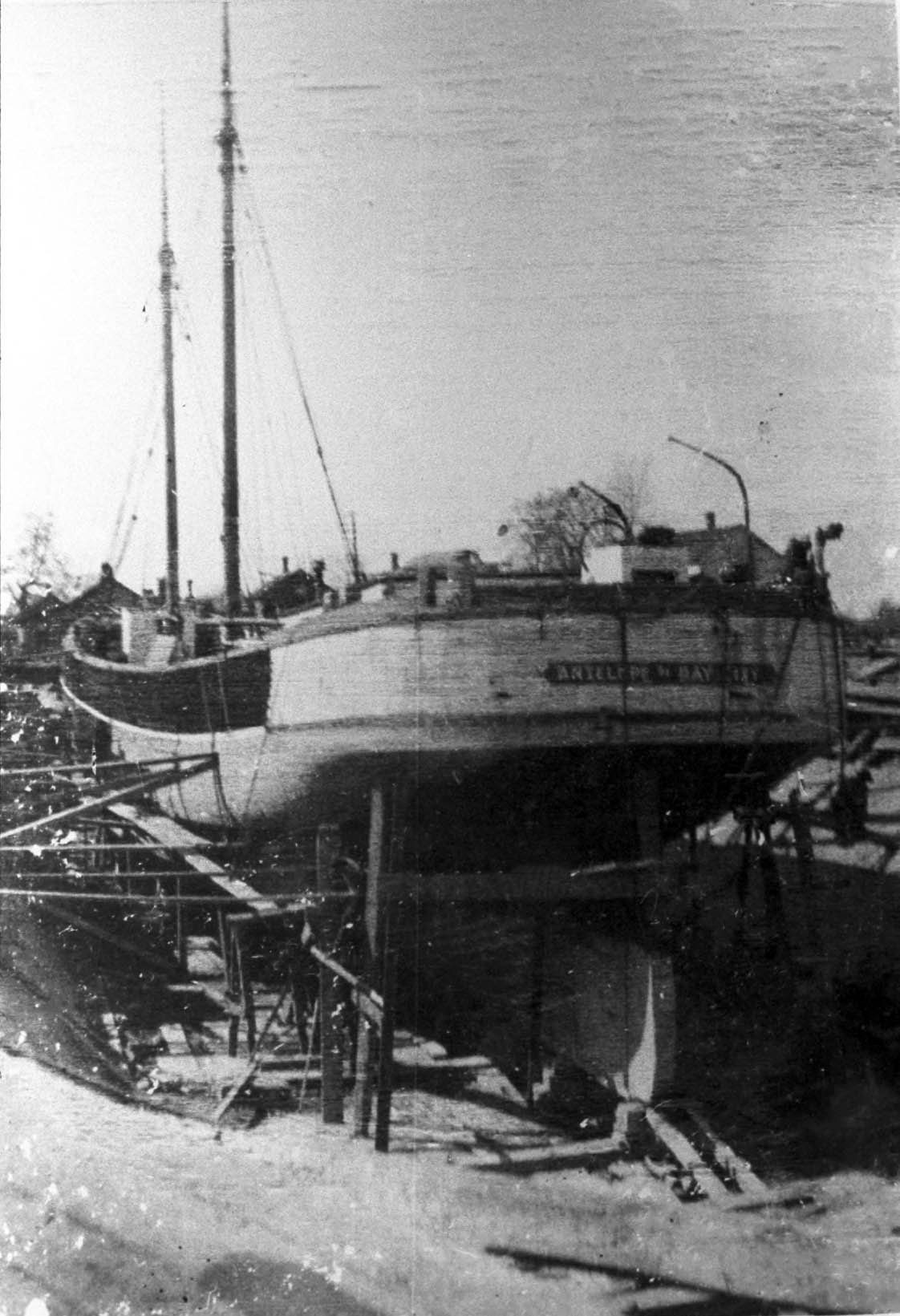

Antelope was initially built as a propeller in August 1861 as a passenger packet running in the Eber B. Ward, Esquire's Ward Line of steamers. The ship would sail on Lake Michigan and Lake Superior, visiting ports in Canada, Wisconsin, and Michigan carrying crops, meat, and sundries. It caught fire on November 17, 1867, in Buffalo and burned to its waterline. The ship and its cargo were thoroughly destroyed by the blaze, and it was thus sold to Ballentine. Crawford & Co. who converted the ship into a steam lumber barge. It was put back into service on May 10, 1869. The
Antelope hauled lumber of upwards of 6 million board feet with its various barges; it would continue this work even after being sold in 1875. After its sale in 1878, the steam barge would tow schooner
Rutherford B. Hayes, along with other consorts on occasion, shipping crops, lumber, and ore. The
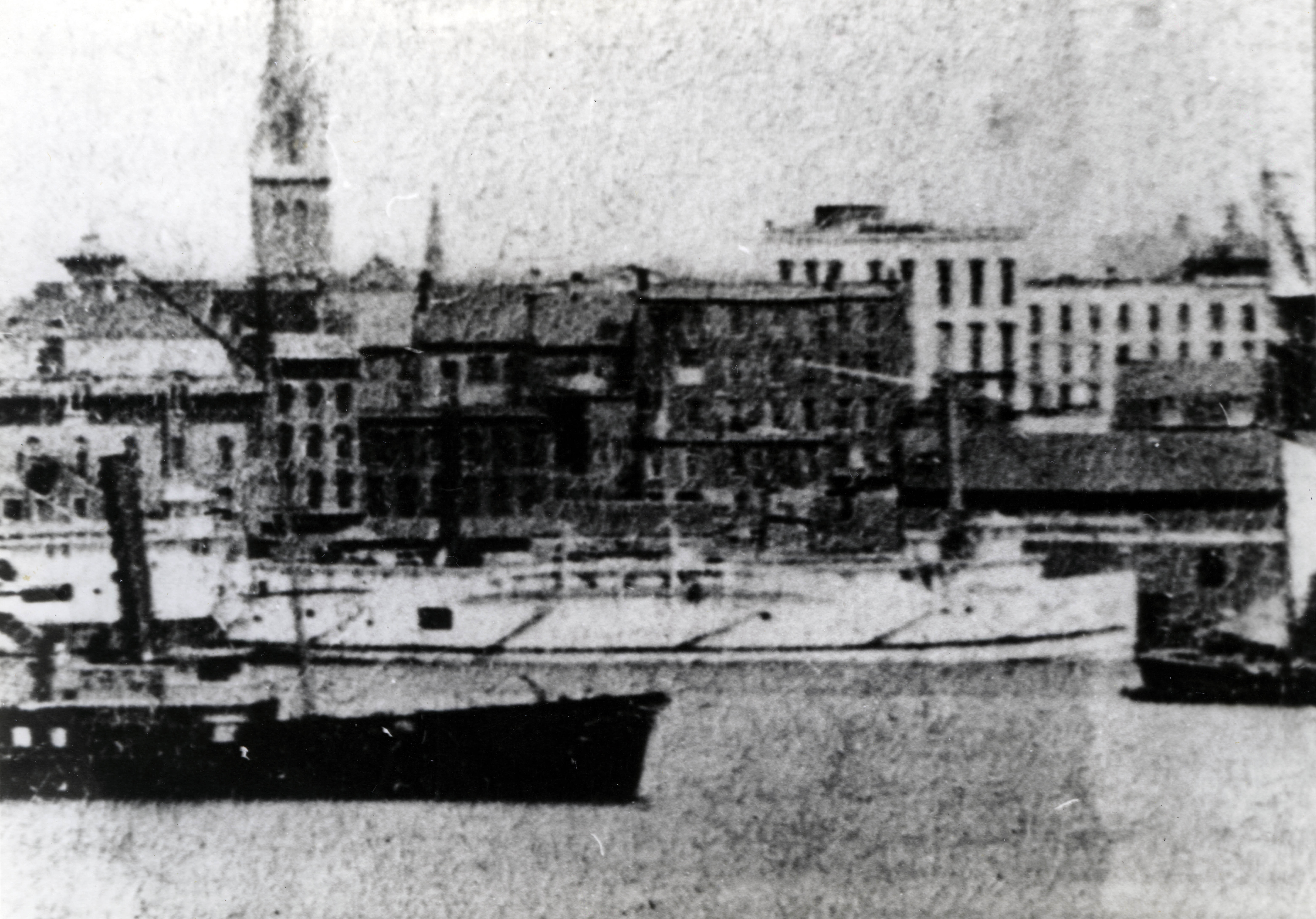
Antelope, while it was a steam barge, is reported towing up to eleven barges at a time, creating mile-long strings of vessels. It started the 1880s traveling a route between Bay City, Michigan; Buffalo, New York; and Erie, Pennsylvania. On November 23, 1882, the ship was high in the water when rough seas started to tear the ship apart; both of its arches were damaged, its port arch and smokestack were carried away, and its galley were thrown into a heap.
After the accident the

Antelope had its machinery removed and was converted into a tow-barge. It was towed by various steam barges, carrying stone and lumber, continuing to visit Buffalo, Bay City, and Erie. After its sale in April of 1893, the ship was rigged to that of a schooner with three masts. The ship took on a route between Buffalo, Erie, Cleveland and Lake Superior ports. It often carried coal in these final years.
Final Voyage
On October 7, 1897, the
Antelope was bound up with a cargo of coal to be dropped off at the Ashland Coal Company dock in Ashland, Wisconsin. It was in tow of the steamer
Hiram W. Sibley, whose captain was towing the schooner at 11 miles per hour, too fast in the choppy waves. The thirty-six-year-old
Antelope's seams opened; pumps were started, but water rushed in faster than it could be pumped out, and it was soon realized that the ship could not be saved. The
Antelope's crew transferred to the
Hiram W. Sibley and was taken to safety in Duluth.
Wreckage of the
Antelope, including the cabin and other loose material, was sighted by the crew of the schooner
Gawn off Michigan Island. A period account reports the loss in about 360 feet of water. The vessel and cargo were valued at $13,500. The ship's enrollment was surrendered at Port Huron on November 17, 1897.
Today
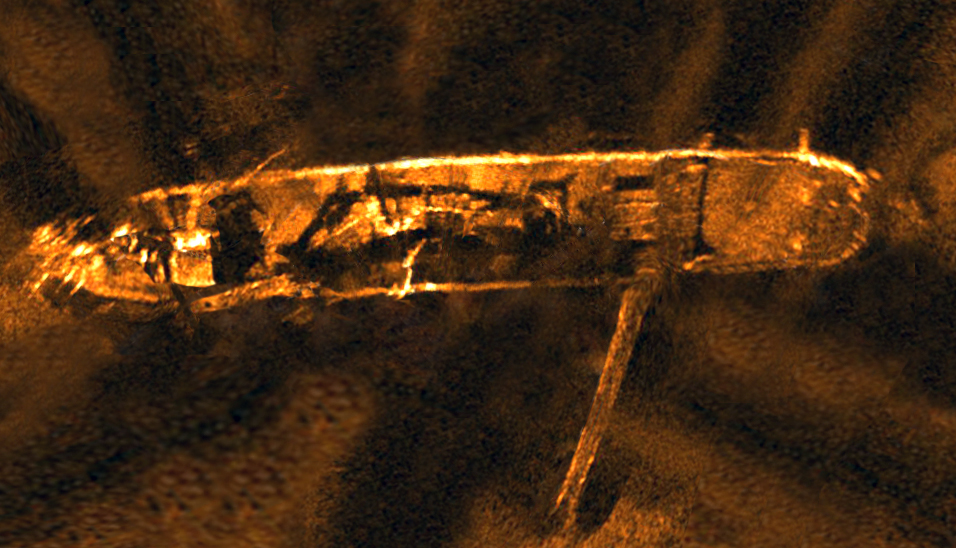
Located 7.5 miles southeast of Michigan Island in Lake Superior, the wreck site of the
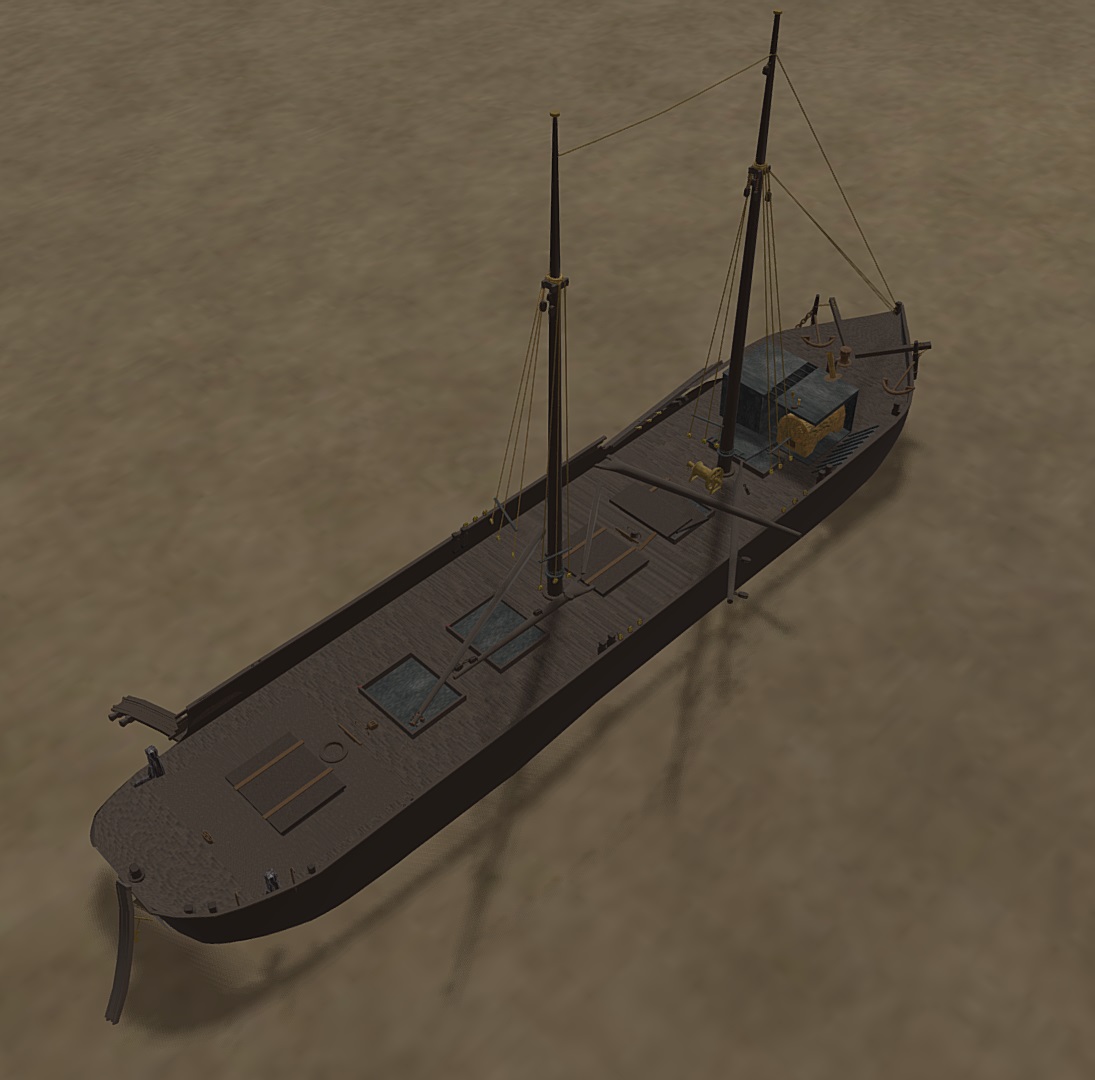
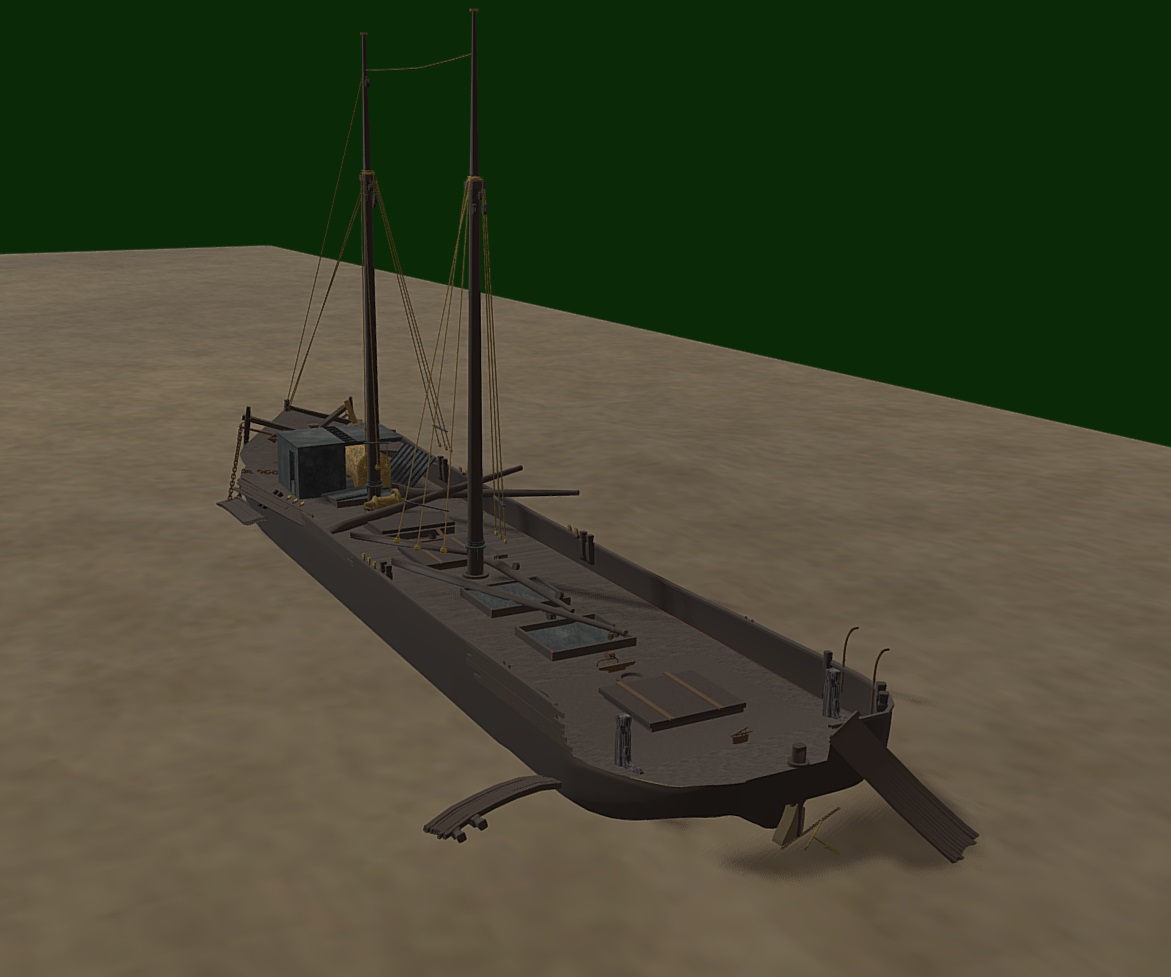
Antelope lays imbedded in the lakebed in 300 feet of water. It was discovered on the September of 2016 by Ken Merryman, Kraig Smith, and Jerry Eliason after a six-year search for the vessel. Investigation by remote-operated vehicle from Crossmon Consulting, LLC and Wisconsin Historical Society was conducted the month after. The vessel remains almost entirely intact, with only its stern cabin structure missing. Despite multiple conversions throughout its service history, the original hull, keelson structure, stern, and ship lines maintain their original integrity from when the
Antelope was built in 1861. A debris field lies off the stern of the vessel, and includes a broken ceramic jug, a white porcelain bowl, a stove base and bottom with broken glass near it, and an intact ceramic jug with a single handle. Various artifacts remained scattered on deck.

_0002.jpg)
_0003.jpg)
_0001.jpg)