Service History
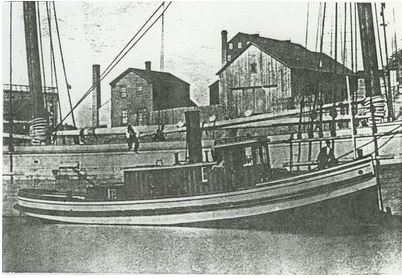
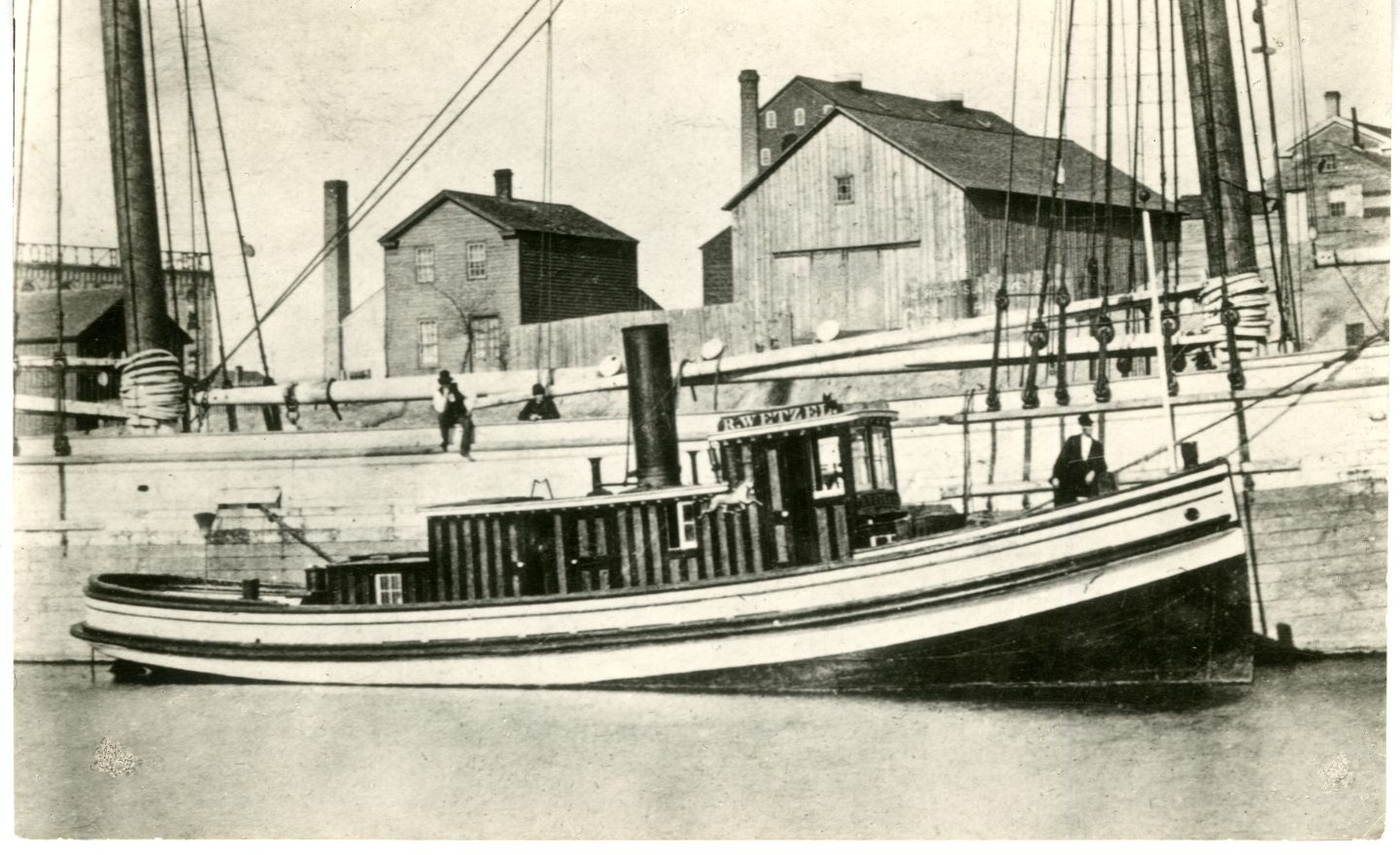
Rudolph Wetzel was built by established shipwright George H. Notter in 1870 in Buffalo, New York. The vessel measured about 56 feet in length, 14 feet in beam, and 6.5 feet in depth of hold. The official registry number was 21944. Its first enrollment lists John Wetzel as the tug’s master. John and his brothers, Leonard and Philip, had been operating tugs on Lake Erie in Cleveland, Ohio, since at least 1866. The Wetzel brothers brought
Rudolph Wetzel to Cleveland in April 1870, replacing one of their previous tugs. A year later, the brothers sold Wetzel to new owners in Racine.
In January 1873, Racine native Frank F. Lovell purchased a share of the tug and became captain of
Rudolph Wetzel. Lovell, born in Beloit in 1851, got his start in the maritime trades at only 16. He worked his way up from fireman to engineer to captain while running tugs out of the Chicago River. From 1873 to 1882, Lovell captained
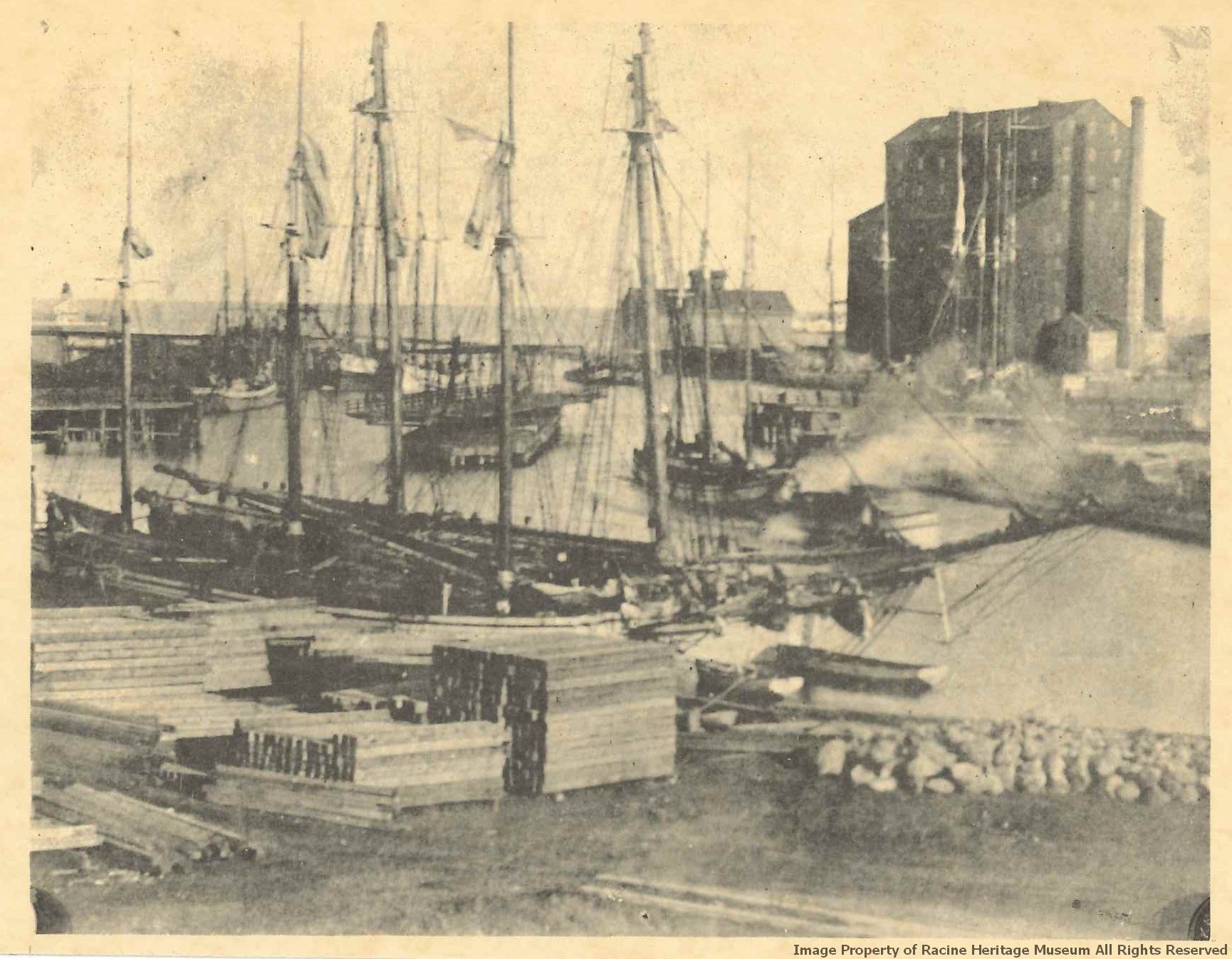
Rudolph Wetzel and towed vessels into and out of Racine harbor and to and from Racine, Kenosha, Milwaukee, and Chicago. Frank Lovell was celebrated as an experienced and courageous tug captain, known for setting out in harrowing storms to tow disabled vessels into port when no other tug dared. But courage and daring sometimes sit side by side with recklessness and pride.
In 1879, towing in Racine took a dark turn. The tug
Henry S. Sill, owned by Edward Gillen and Fred M. Knapp, came to Racine that season, creating competition for
Wetzel. The two tugs quickly developed a fierce rivalry, with
Wetzel and
Sill racing each other to pick up tows. In April 1879, as
Wetzel was towing the schooner
Clipper City out of the harbor,
Sill came alongside. Lovell and
Sill’s captain, Tom Lillis, traded insults and soon came to blows. The two captains were separated before serious injury occurred, but the affair set the tone for towing in Racine. In the spring of 1880,
Wetzel's boiler was overhauled and the hull was rebuilt in Milwaukee. In May 1882 after
Wetzel succeeded in securing a tow for which the two tugs were racing, Edward Gillen boarded
Wetzel and threatened to whip Captain Lovell. As Gillen advanced, Lovell raised an axe and swung at Gillen, gashing him in the head. Gillen dodged a second swing and miraculously managed to avoid serious injury. Lovell was charged and arrested, but as the case wound its way through the court system, he continued to captain
Wetzel. In July 1882, the
Milwaukee Republican reported that the tugs raced each other all the way from Racine to Fox Point north of Milwaukee, as distance of about 30 miles.
Logic soon went out the window as the rivalry intensified. In August 1882,
Sill began towing the schooner
Souvenir out of Racine harbor and into Lake Michigan. Outside the harbor, the schooner
Marsh set its colors indicating that the vessel was requesting a tow into the harbor.
Wetzel started for
Marsh to provide a tow. Despite that
Sill was actively towing,
Sill let go of
Souvenir’s towline and raced
Wetzel to the schooner
Marsh.
Sill succeeded in reaching
Marsh first and took the vessel in tow while the abandoned schooner
Souvenir drifted ashore.
Wetzel went to
Souvenir’s assistance and managed to pull the schooner off the shore with minimal damage. But the competition between the two tugs had clearly exceeded the bounds of reason.
On 28 October 1882, the fierce rivalry reached a tragic conclusion.
Final Voyage
On 28 October 1882,
Sill and
Wetzel left Racine harbor in the morning and raced north to find a tow. Captain Clinton Putnam of
Sill later related that as they raced closely astern of Wetzel about three miles off Oak Creek, the crew of
Sill saw
Wetzel’s fireman, Thomas White, run up to the pilothouse to speak to Captain Lovell. White ran back to the engine room and spoke to engineer William Kelley, who appeared to turn a valve as he stepped into the engine room. Seconds later, an explosion rocked
Sill, breaking cabin windows, blackening the pilothouse interior, covering Captain Putnam in dirt and debris, and knocking down
Sill’s fireman, Daniel Hanley. As the smoke cleared,
Wetzel was nowhere to be seen and wreckage floated in the water. Pieces of the tug, including the vessel’s nameboard; personal effects of the crew; and what appeared to be partial remains of one of the crew were found on
Sill’s deck.
Sill’s crew searched the area for two hours, but found only Captain Lovell’s overcoat, a blanket, and some of the tug’s papers. Other than the partial remains on
Sill, the bodies of Lovell, White, and Kelley were never found. About nine days after the explosion, two fishermen from Jones Island, sailing off Southpoint about six miles north of Oak Creek, found a large piece of wreckage painted similarly to
Wetzel. The wreckage was about 25 feet long and included part of the bow and side, stanchions, bulwarks, rails, and stringers.
The cause of the explosion was hotly debated, with some blaming engineer William Kelley, who had joined the crew only days before. But despite extensive searching by Knapp and Gillen and Lovell’s brothers and relatives, the wreck could not be located, precluding a definitive answer to the explosion’s cause. Over the next few years, Thomas White’s hat, a few pieces of wreckage, and part of the tug’s tow book were located on the beach near Oak Creek, but nothing else was found. Exactly what happened on that tragic day in October 1882 and the location of the wreck of the ill-fated
Rudolph Wetzel remain a mystery closely guarded by the deep, dark, silent waters of Lake Michigan. At the time of loss,
Wetzel was thought to be valued at $5,000.
Last Document of Enrollment: Surrendered: Milwaukee: 6/30/1883: "Total Loss."
Today
The remains of the
Rudolph Wetzel have yet to be found.

 Confirmed Location
 Unconfirmed location