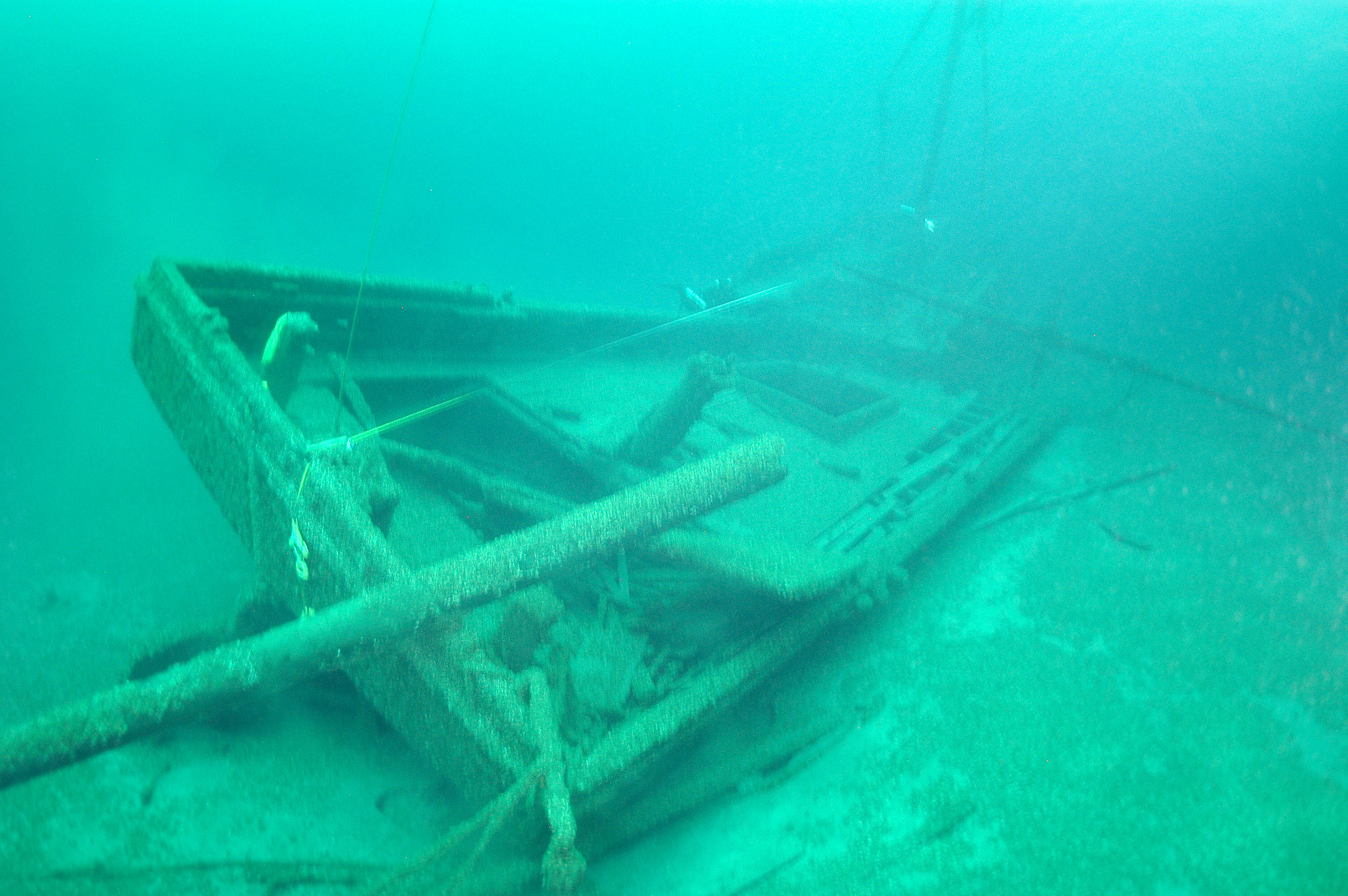
Silver Lake (1889)
Gallery
img
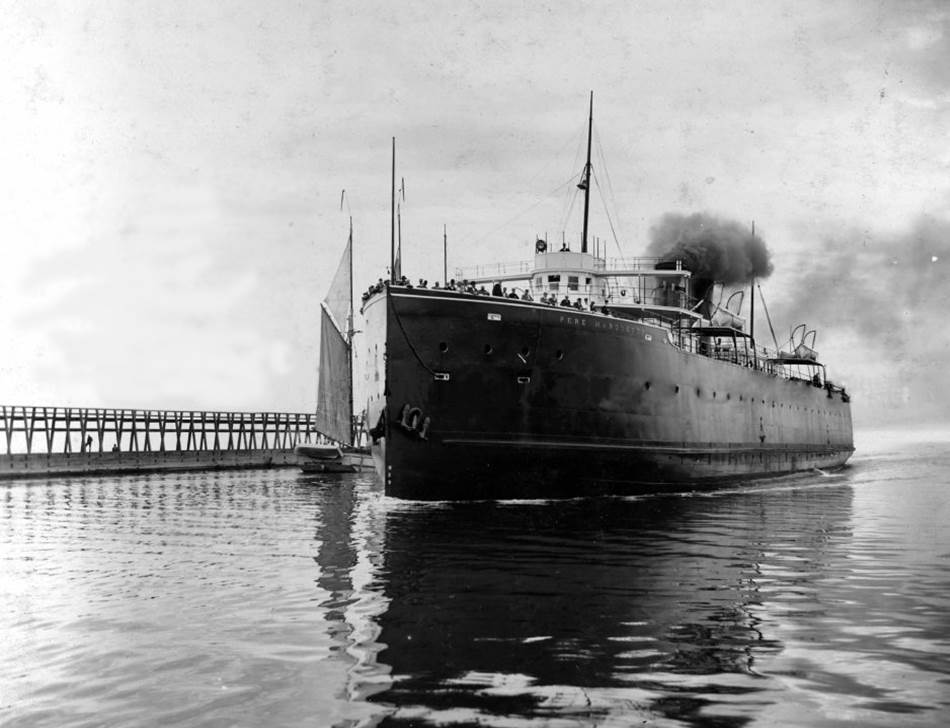
Historic Image of the Silver Lake departing Manitowoc. Coincidentally with the Pere Marquette, the Ship that would Eventually Sink it.
img
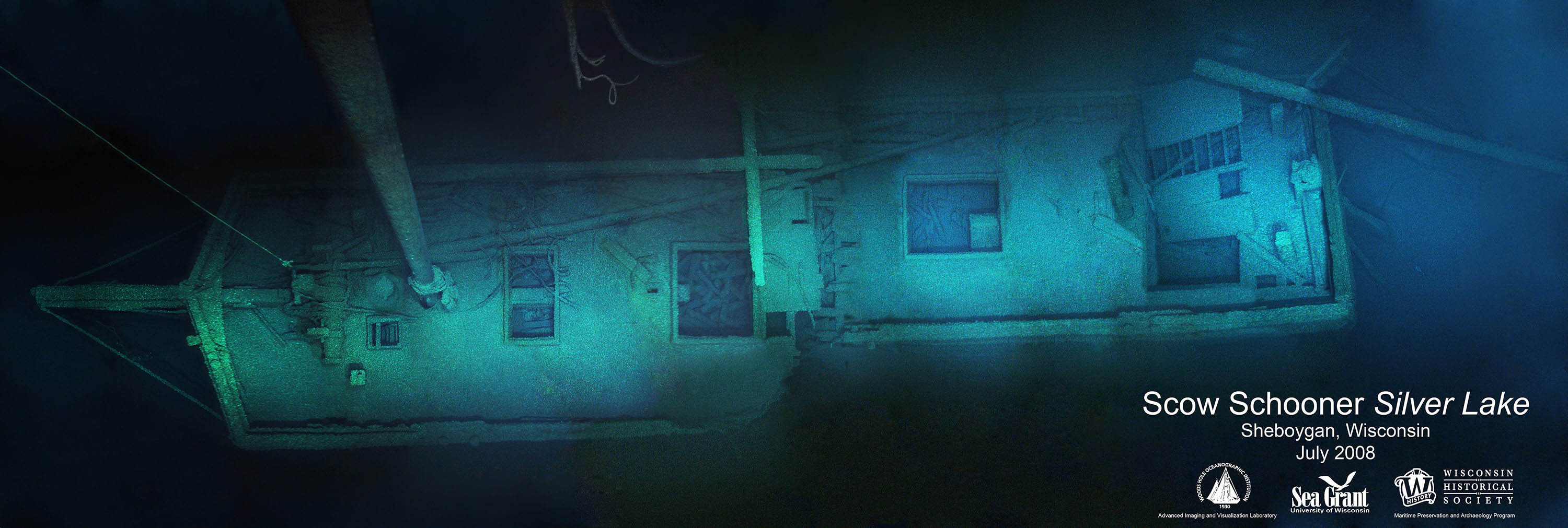
A Photo Mosaic of the Silver Lake
img
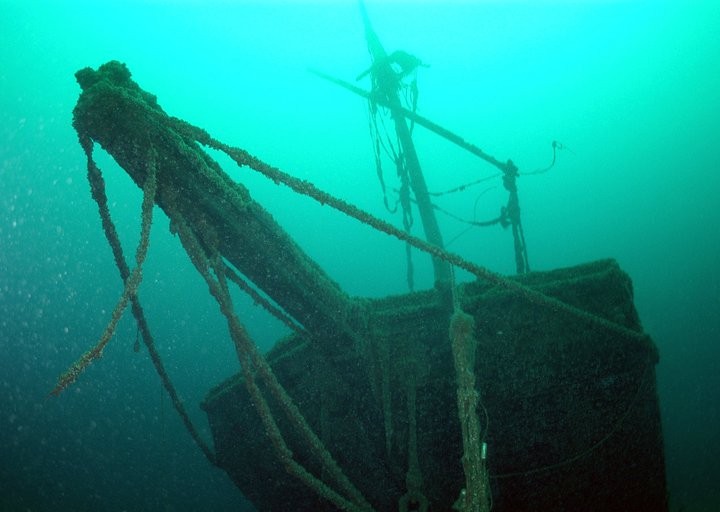
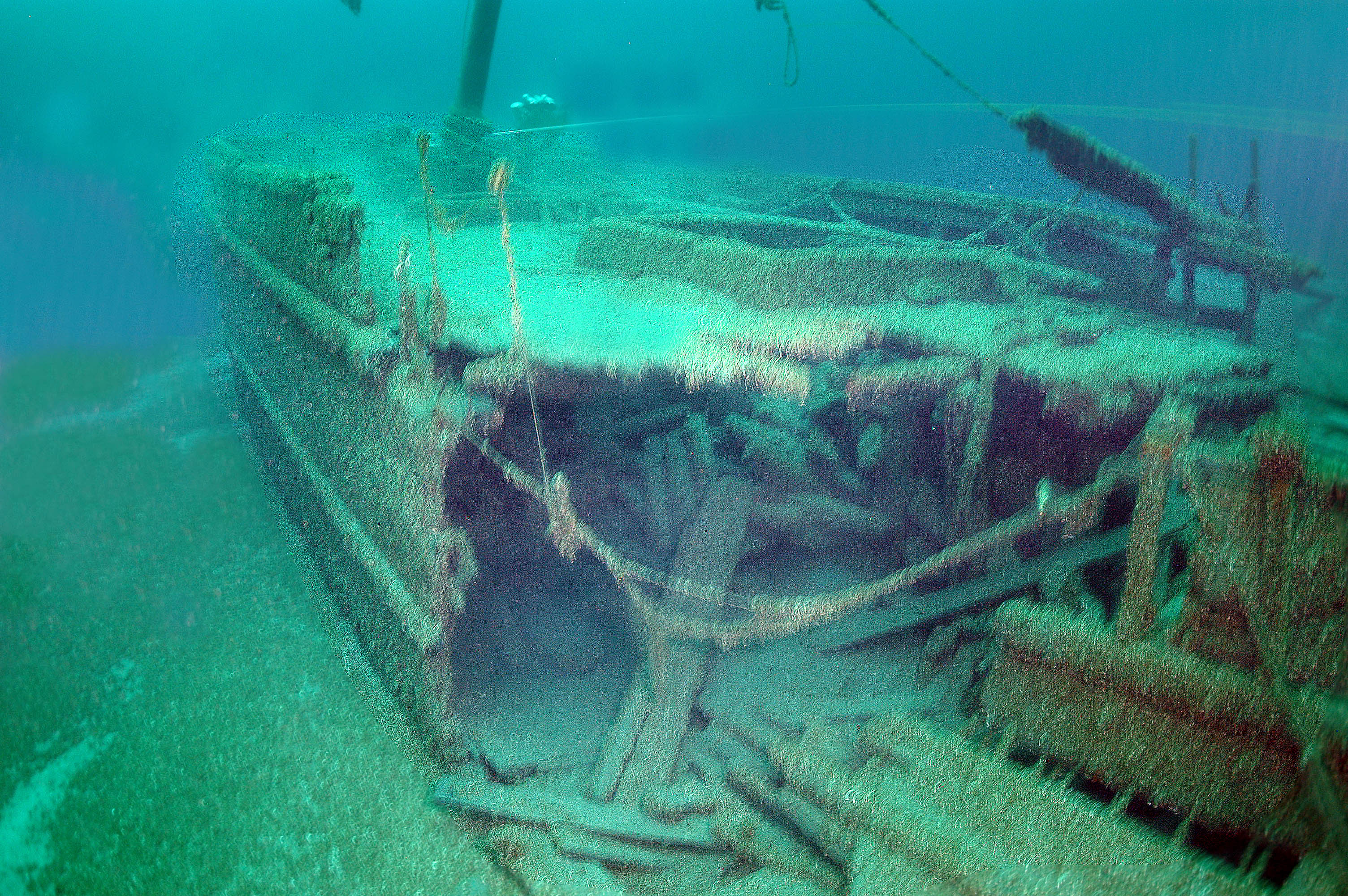
Bow of the Silver Lake
img
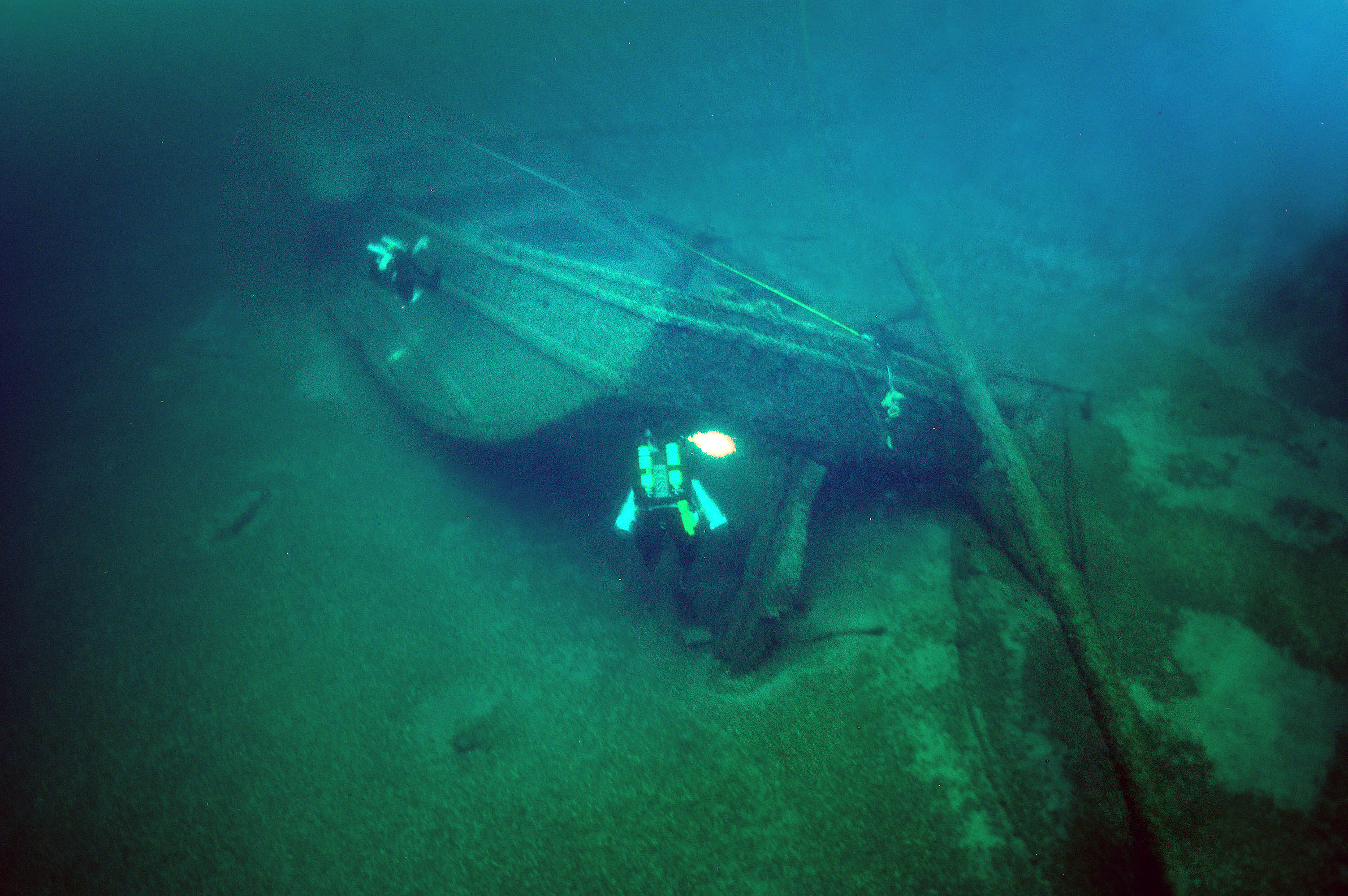
Archaeologists Investigate the Stern of the Silver Lake
img
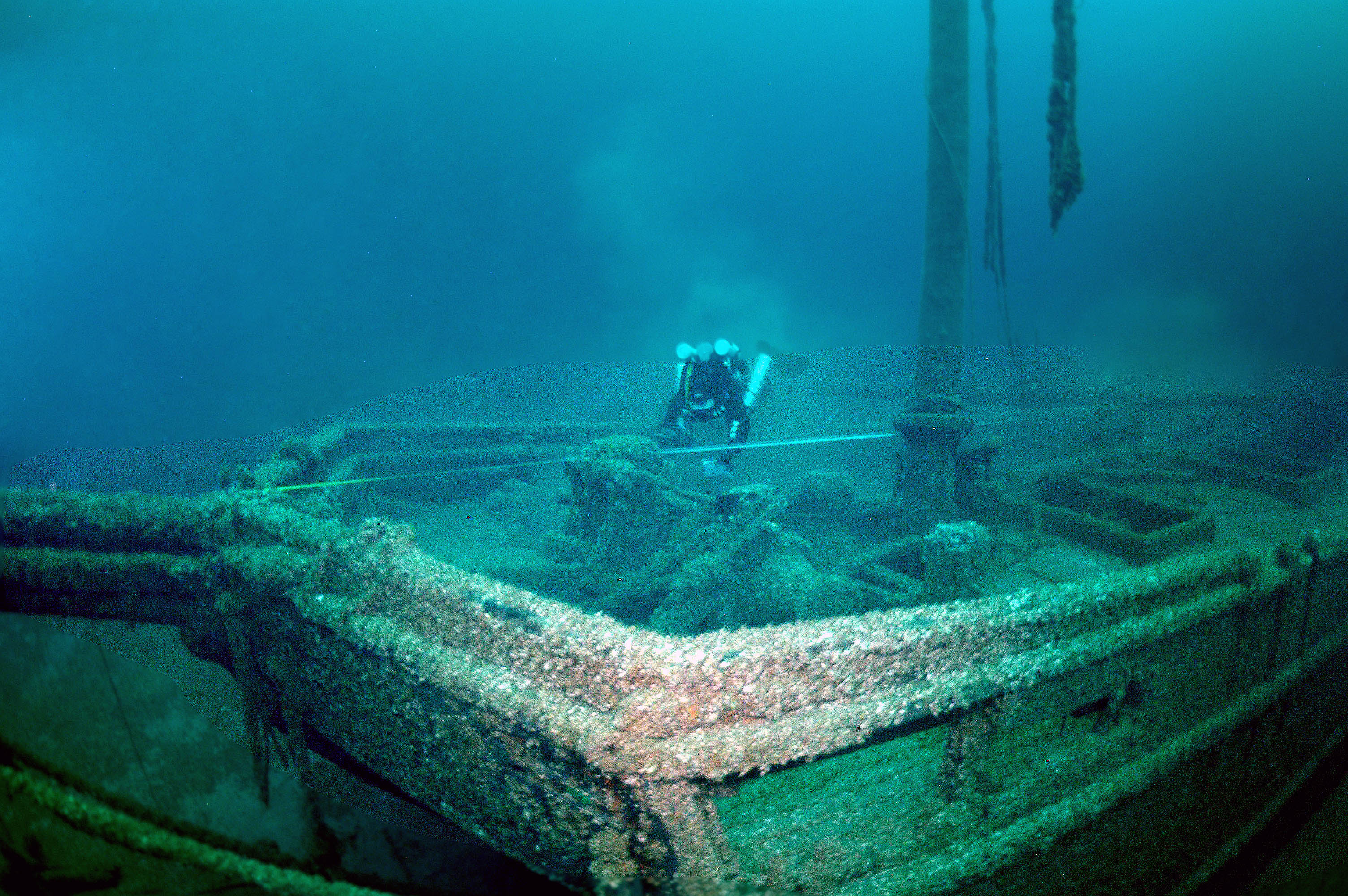
An Archaeologist Investigates the Bow of the Silver Lake
img
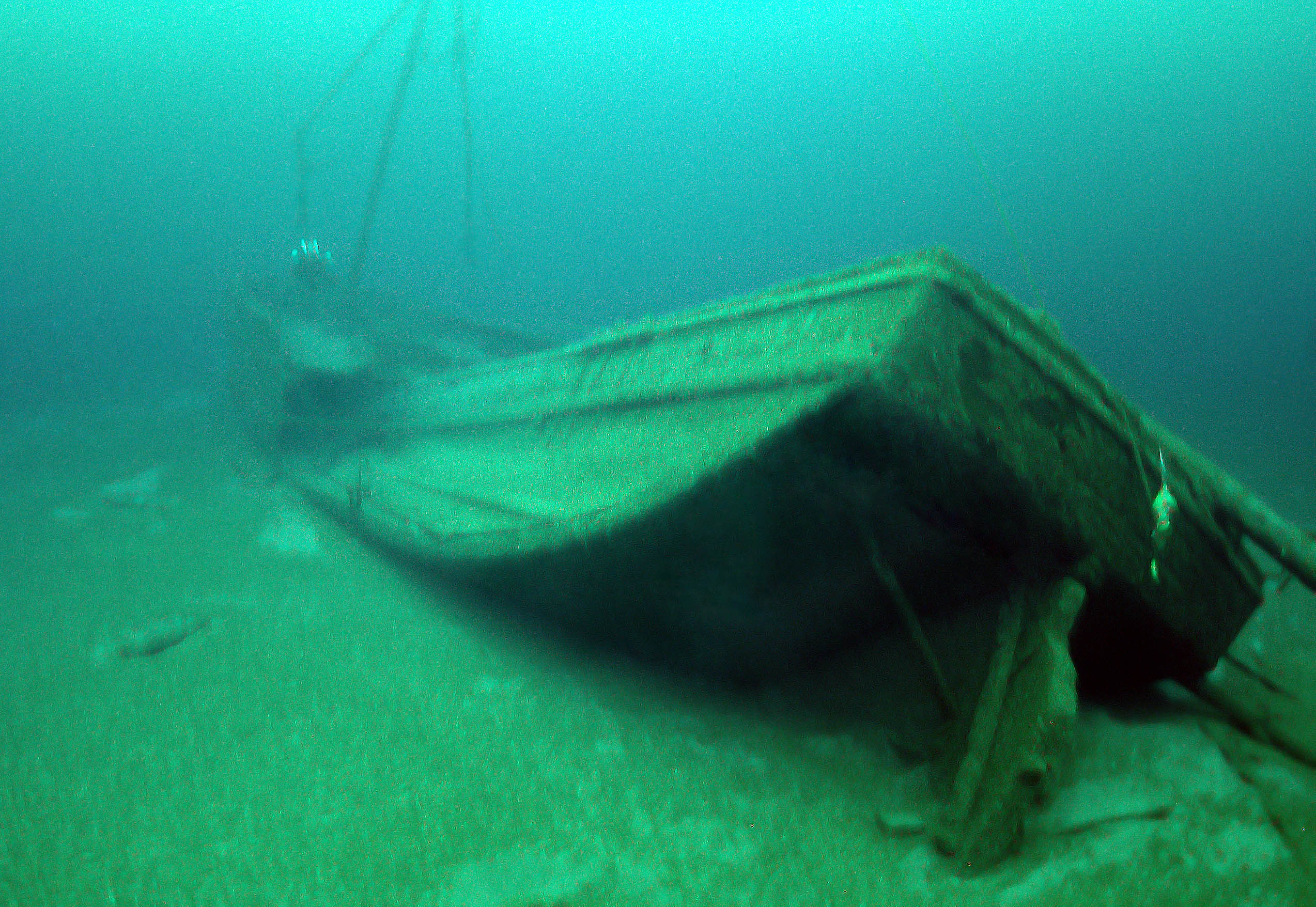
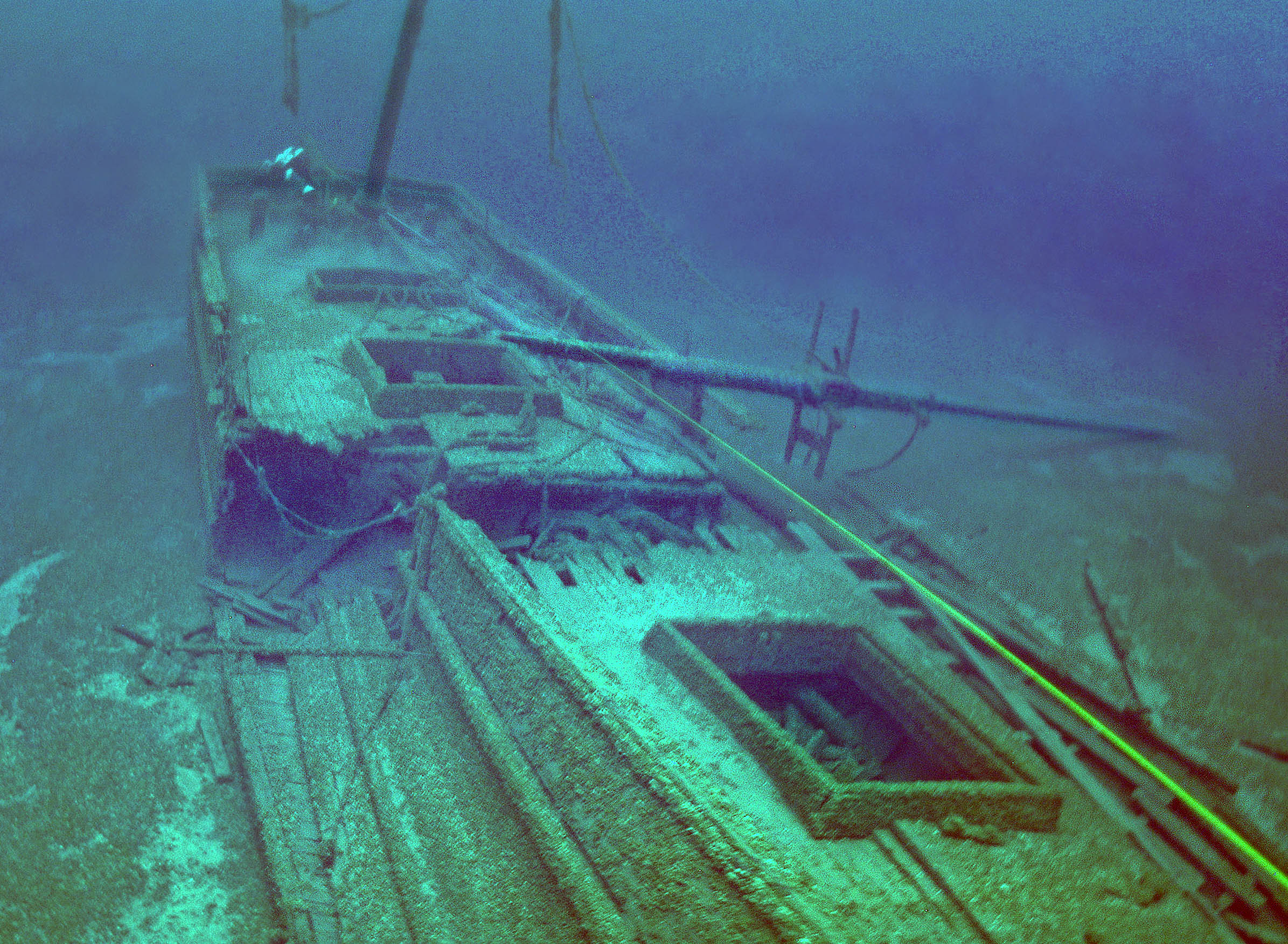
The hull of the Silver Lake
img
View of the Stern of the Silver Lake
img
View of the Break in the Hull of the Silver Lake
img
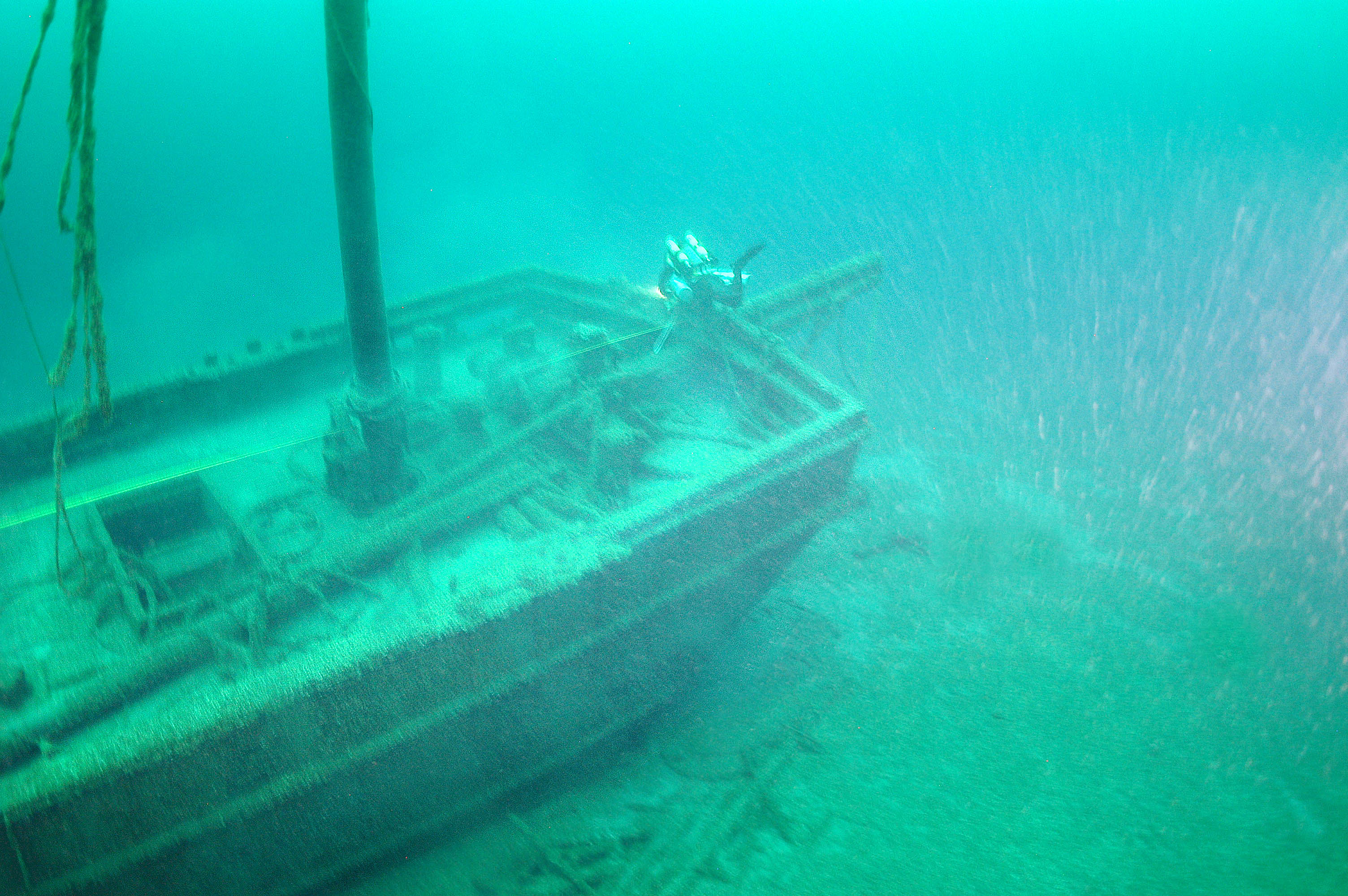
An Archaeologist Works at the Bow of the Silver Lake
img
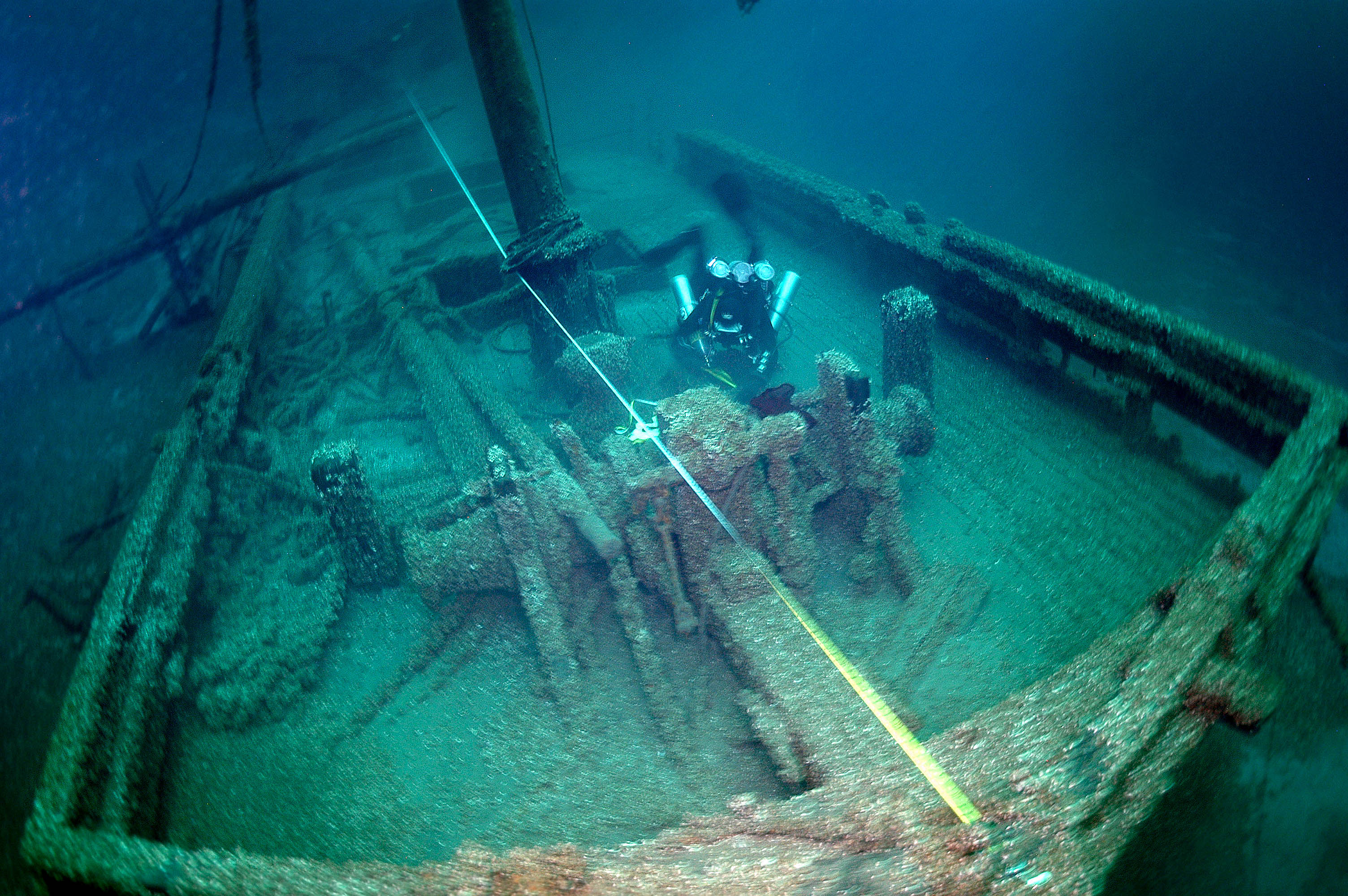
An Archaeologist Works at the Windlass of the Silver Lake
img
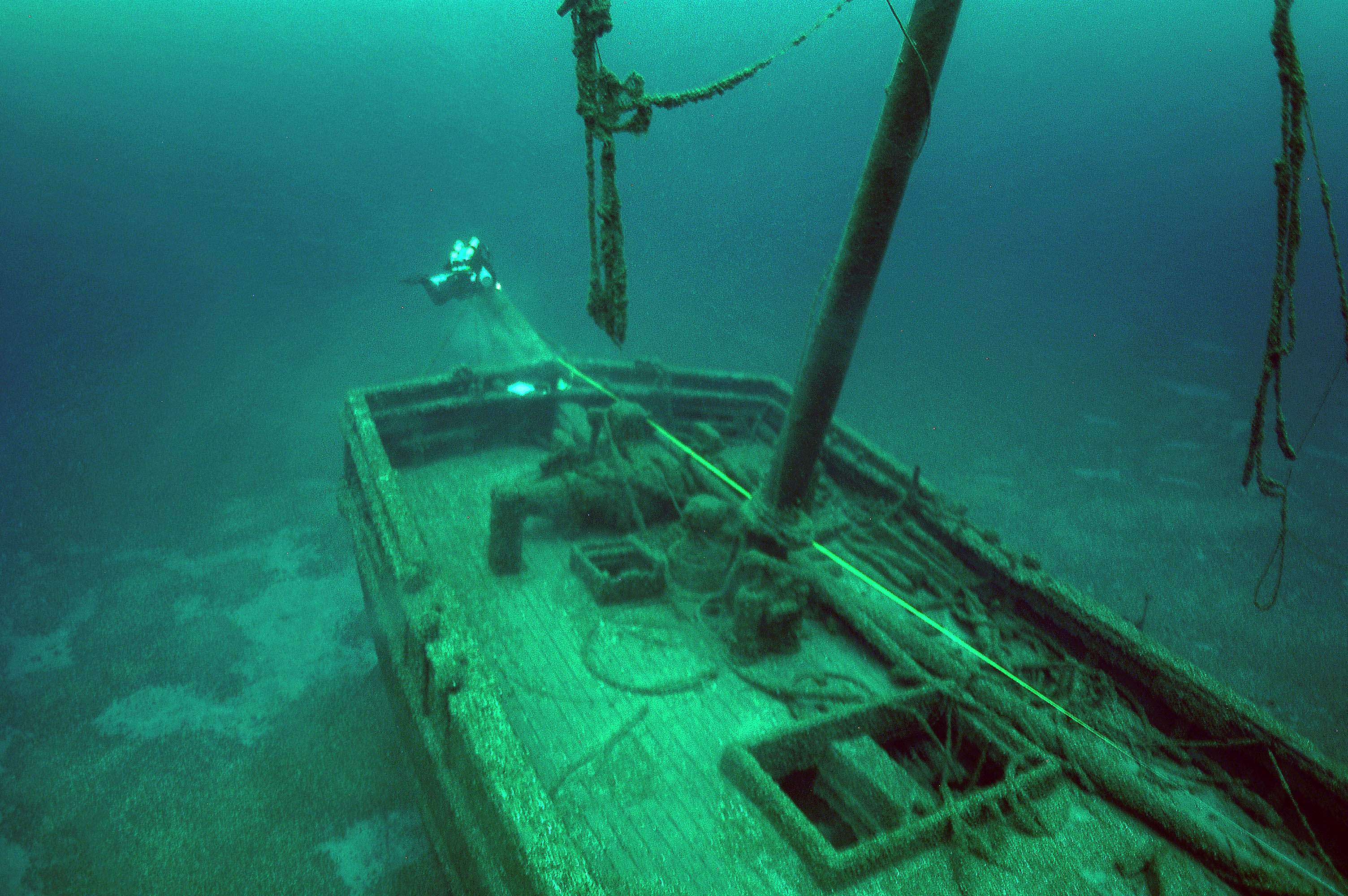
Lines Still Attached to the Silver Lake's Masts.
img
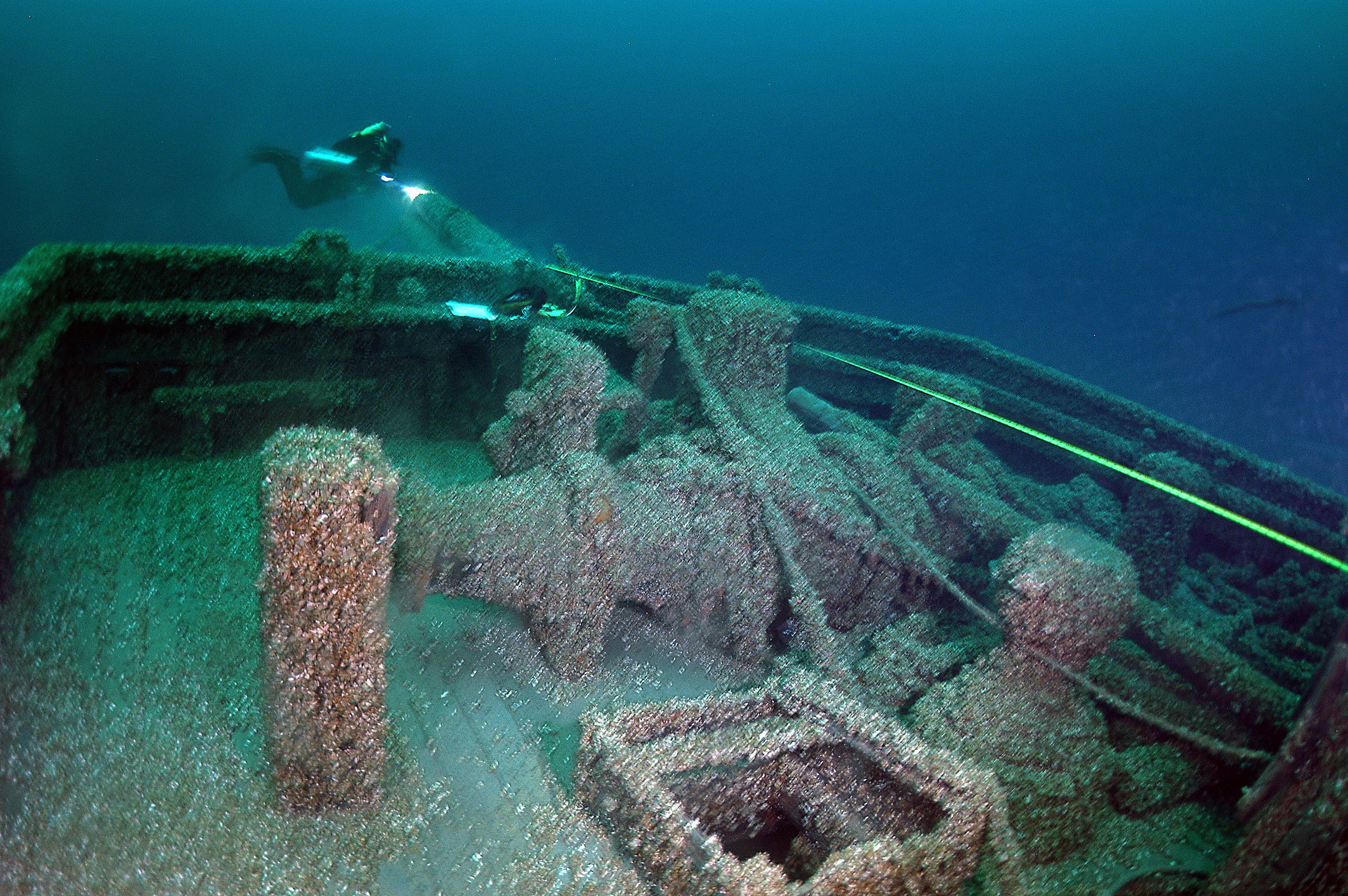
Silver Lake's Windlass
img
Silver Lake Laying on its Side
By The Numbers
0
Built
0
Sank
0
Lives Lost
0
Depth (ft)
 
 
Service History

The scow schooner Silver Lake is the only example of a double centerboard scow-schooner in Wisconsin waters and possibly all of the Great Lakes. Silver Lake was built by M.L. Johnson at Little Point Sable, Michigan, in 1889 for George A. Wagen of Mears, Michigan. Wagen sold the scow-schooner after a single season to John Joys and John Fitzgerald of Milwaukee, Wisconsin, who sold the ship after three weeks to Nels Johnson and Jacob Schenkeberger of Racine, Wisconsin. The Silver Lake did not have a notable career, although it could be considered humbly noble due to the scow-schooner's importance in accessing smaller communities for trade due to the ships' smaller size. The Silver Lake lost the entire crew in 1891 when they were refused a raise by the captain owed to them for sailing in dangerous late-season conditions. The crew walked out to seek better wages. Nels Johnson became the sole owner of the ship in 1894.
Final Voyage

The Silver Lake departed Manitowoc with 80 cords of maple wood for Racine on May 27, 1900. The first steel car ferry in service on Lake Michigan, the Pere Marquette, also set onto Lake Michigan that day. Early morning next day, First Mate Eastman was regularly blowing the fog horn amidst dense fog. He could hear the sound of the steamer's fog signal as the rest of the crew slept below deck. He grew increasing alarmed as the sound grew closer and closer. A little time after the crew was roused onto the deck the Pere Marquette's massive steel bow emerged from the fog and smashed the port side of the Silver Lake cutting the ship nearly in two pieces. Eastman was launched overboard by the impact while the rest of the crew attempted to escape. Eastman's body was never found. The crew was rescued by the Pere Marquette. The Silver Lake's tangled rigging was cut free. The ship did not sink immediately, but drifted upside down until finally sinking off Cleveland, Wisconsin. The loss of the Silver Lake did not prevent steamers from continuing running at full speed in the fog.
Today

The Silver Lake's construction as a scow-schooner is of intense interest to modern-day historians, as they were never built to any plans and had amazing variation. Its well-preserved status under 200 feet of water yields great opportunity for learning. The vessel sits upright seven miles northeast of Sheboygan, Wisconsin, in Lake Michigan.
 
Map
Confirmed Location     Unconfirmed location
© 2026 - Wisconsin Sea Grant, Wisconsin Historical Society