Service History
The
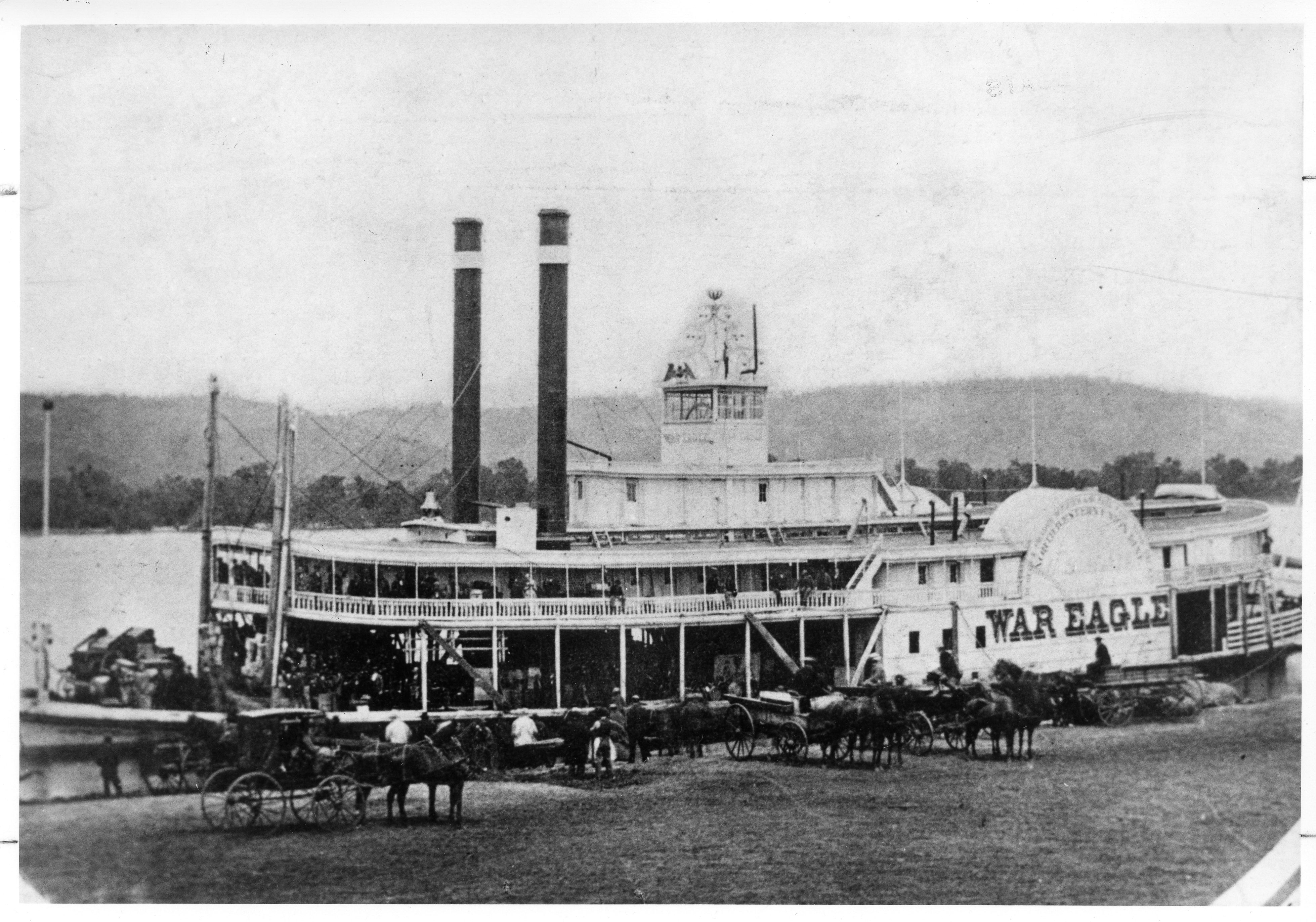
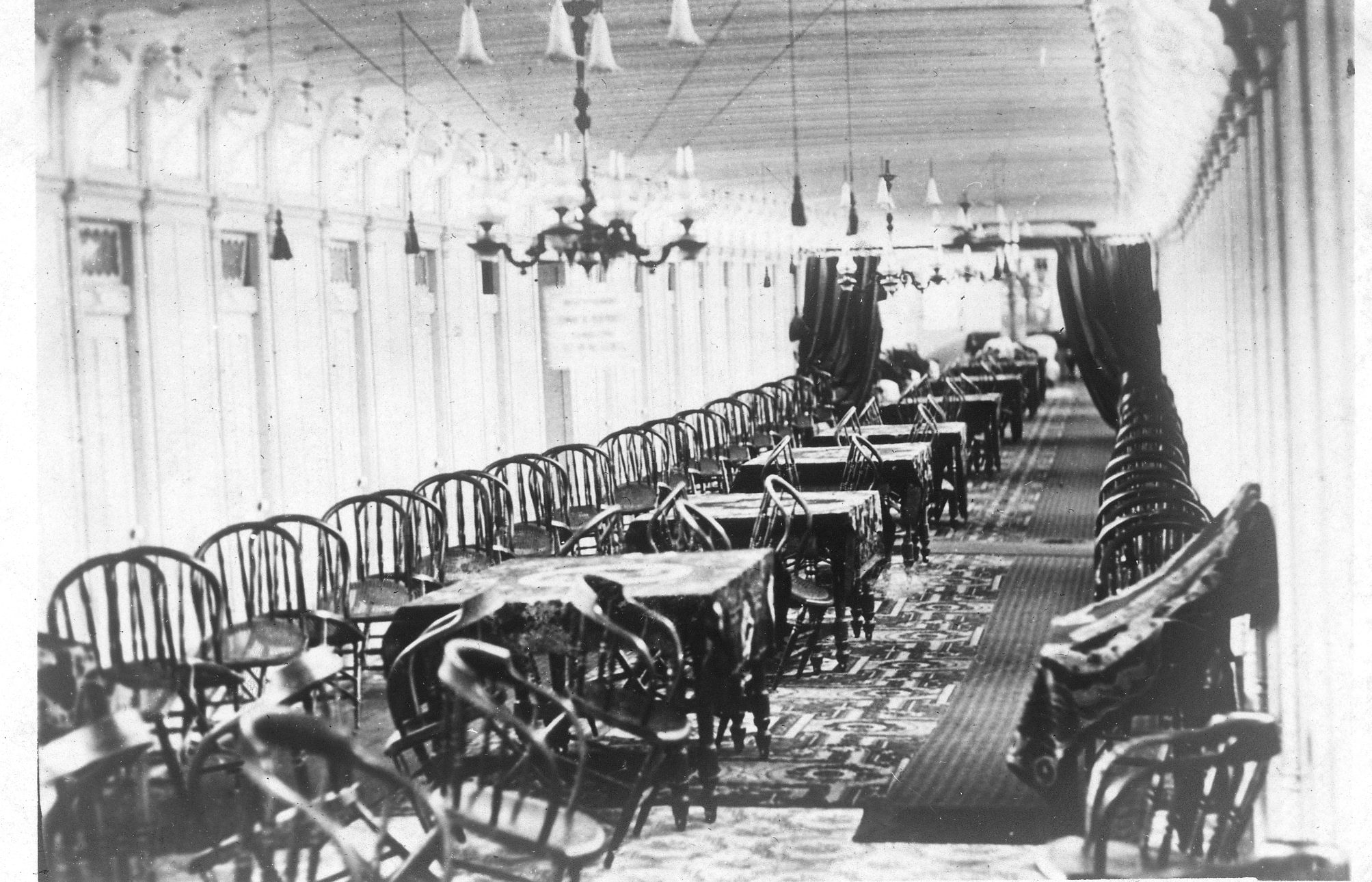
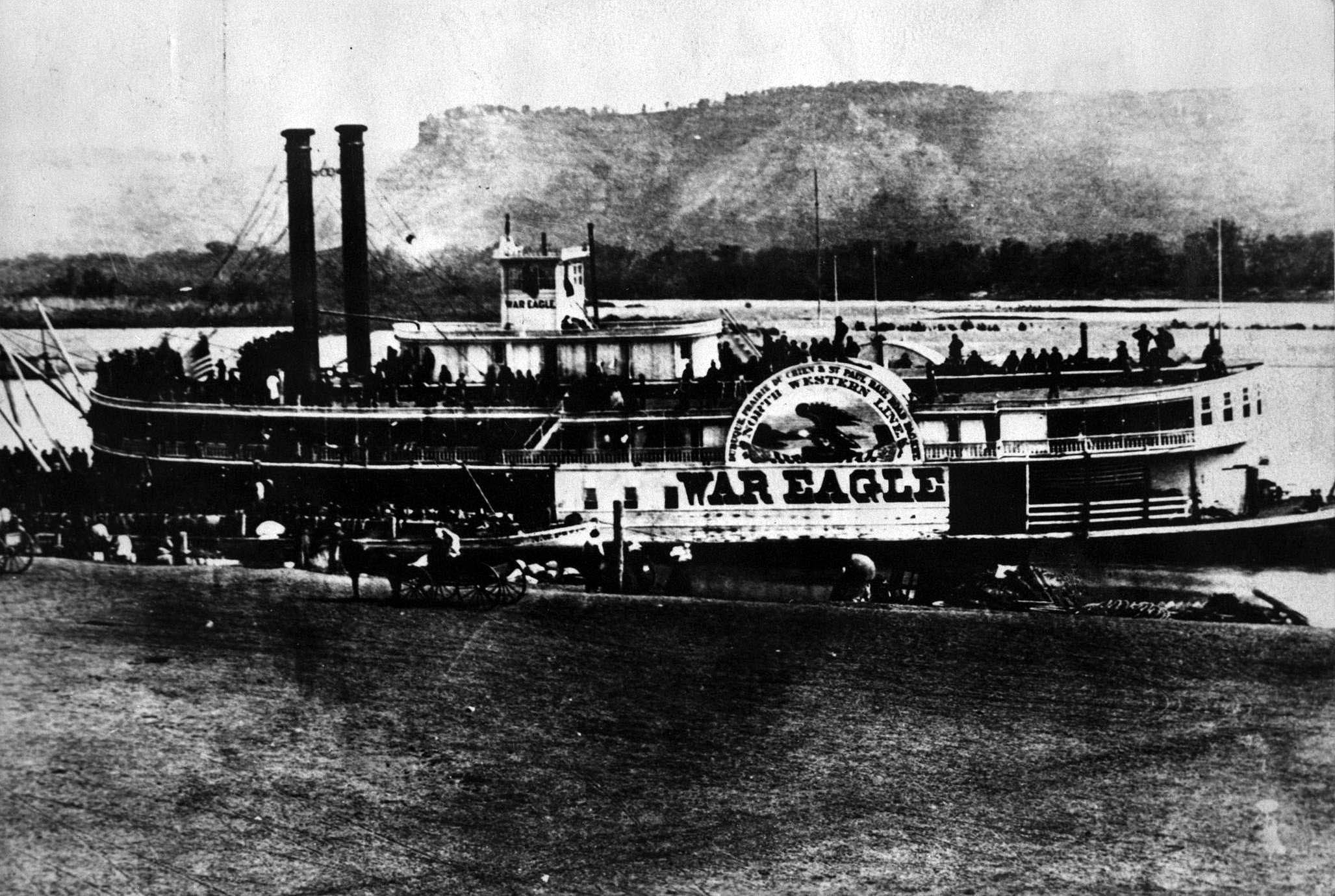
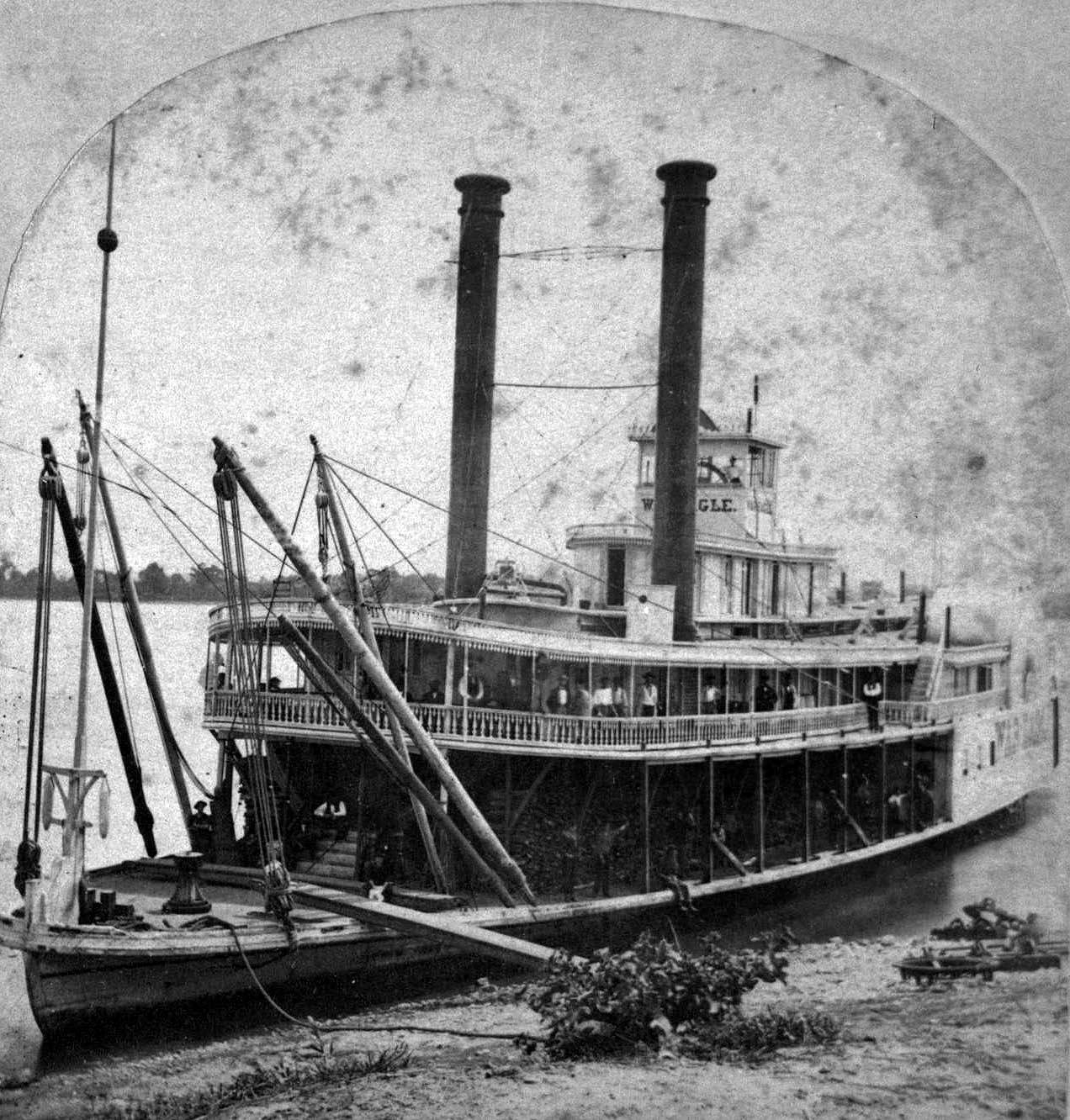
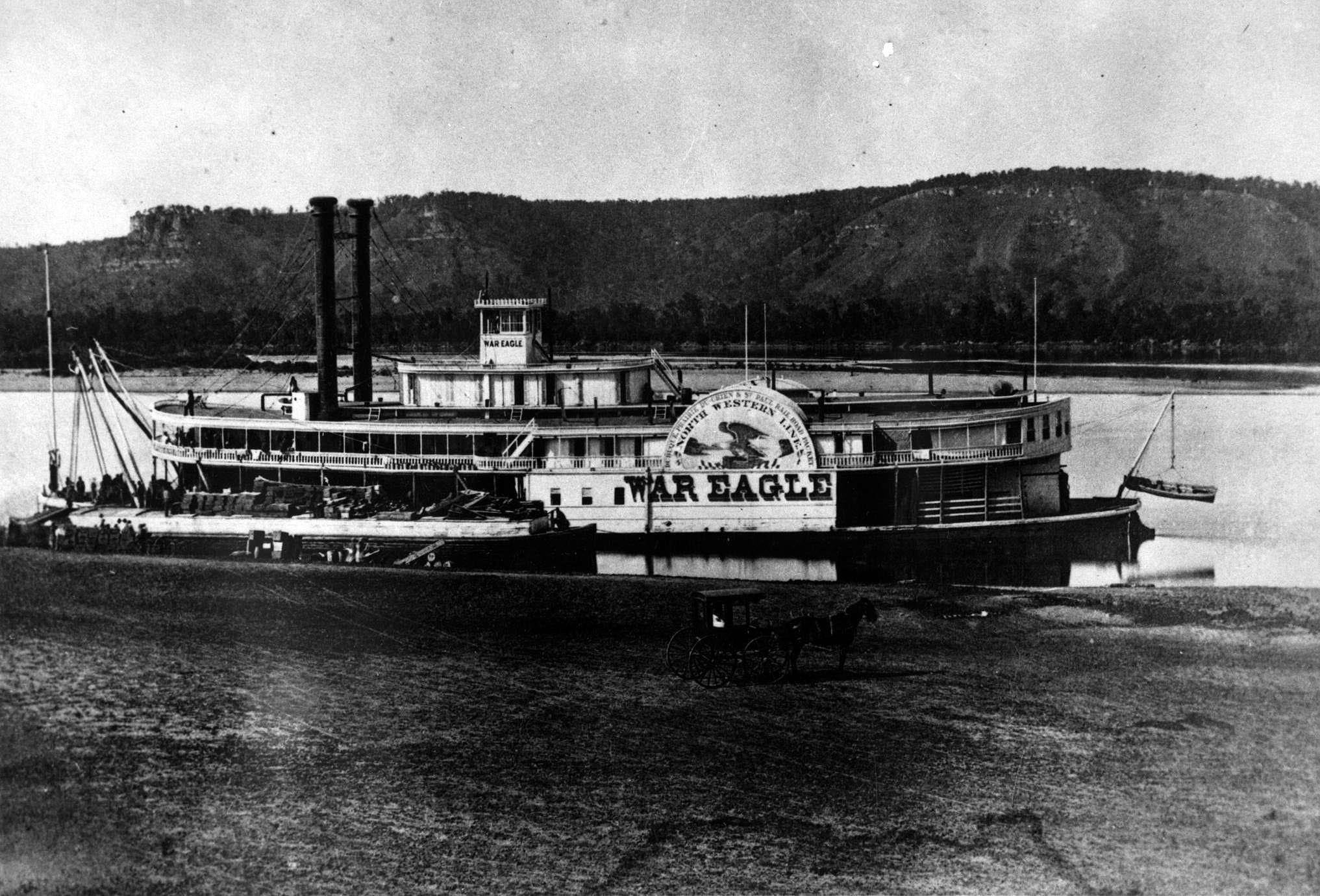
War Eagle was a sidewheel steamship built in 1854 in Fulton, Ohio, for the Galena & Minnesota Packet Company (which underwent many re-brandings throughout the use of the
War Eagle) of Galena, IL.
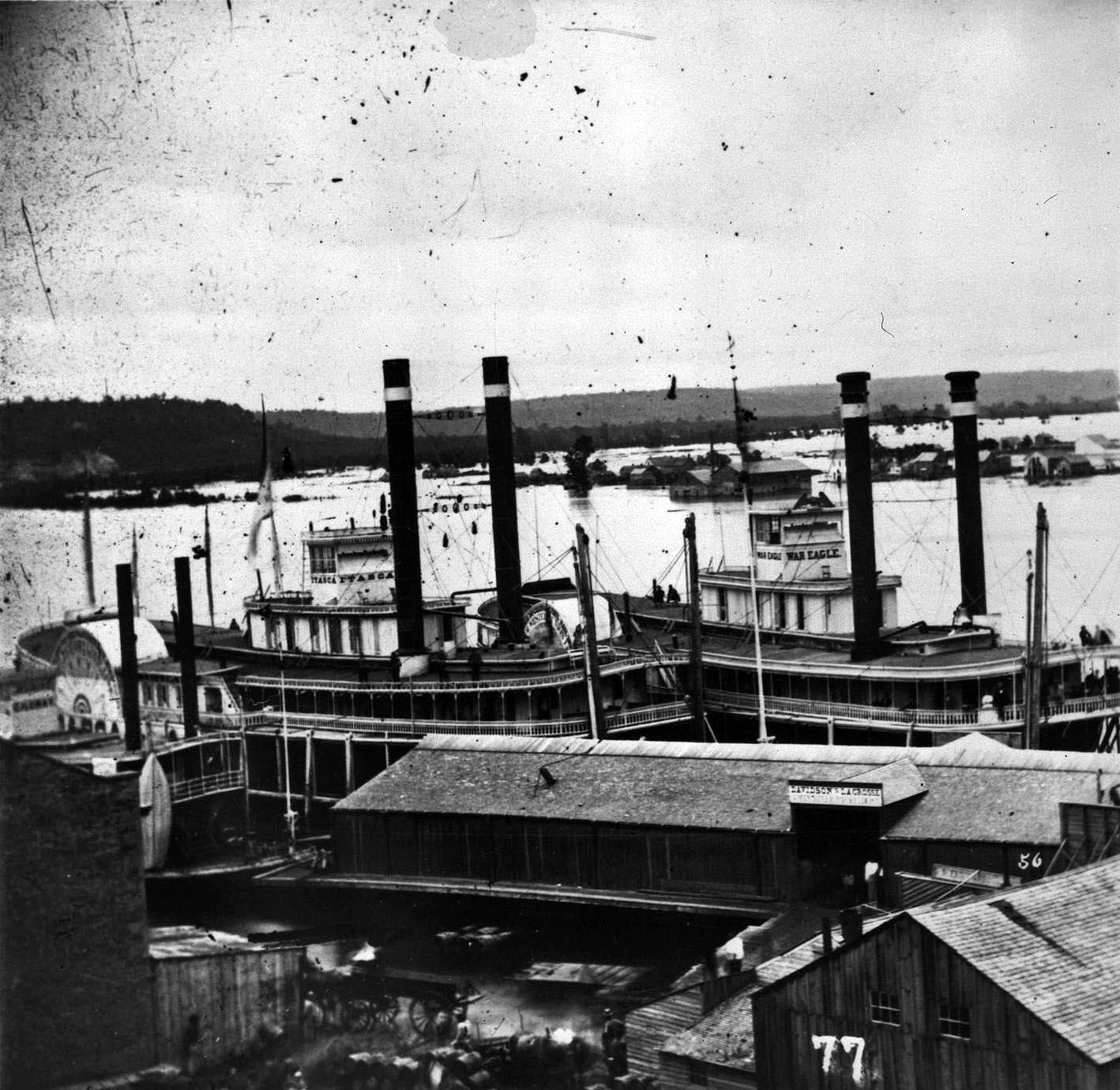
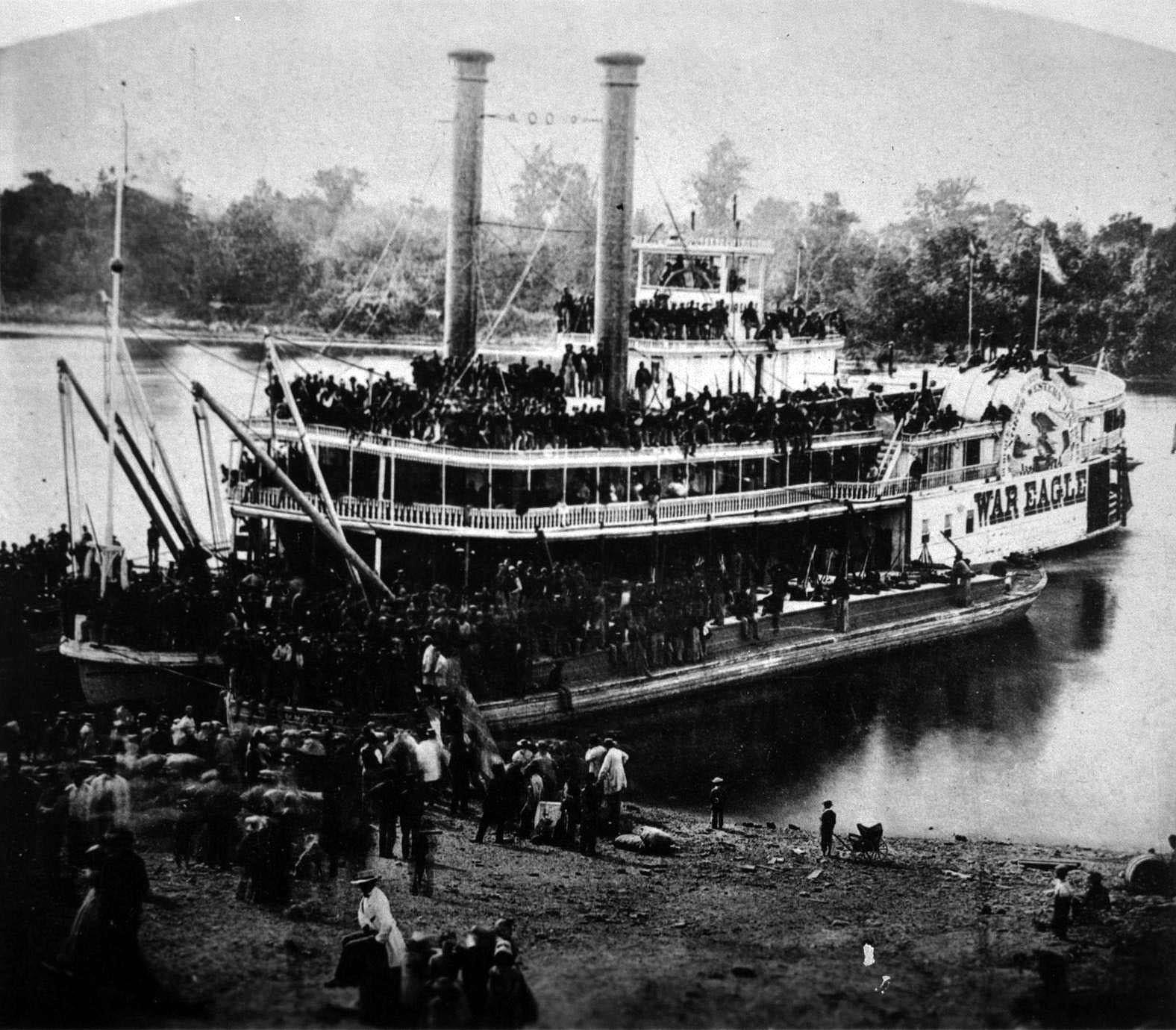
War Eagle primarily steamed on the upper Mississippi River; transporting passengers and freight from Galena, IL to points upriver.
War Eagle was quite popular in its time, oftentimes transporting famous and important people on excursions on the Mississippi River. During the 1859 season,
War Eagle collided with steamboat
Henry Clay on April 9, and on May 26 was stranded on a sand bar at Davenport, IA. On the same day a body was found in the river with a passenger ticket for the
War Eagle. Despite all of these incidents, the steamship remained in high-regard.
War Eagle was part of the steamboat competition on the Mississippi River, where passengers were able to haggle ticket prices to the point that companies lost money; the problem was so exasperated that the Minnesota Packet Company and its competitor came to an agreement to allow equal representation and equal splitting of profits and business.
War Eagle was struck by a tornado in the June of 1860, causing significant damage to the insured vessel.
During the Civil War era,
War Eagle transported the 1st Minnesota Volunteer Regiment from St. Paul, MN to La Crosse and Prairie du Chien in 1861. The history of the
War Eagle becomes vague during this time, and although its name appears serving alongside other Union ships, this is a different
War Eagle built in 1858. The 1854
War Eagle remained in service on the upper Mississippi river during this period and after the war. The steamship sank three times in 1868 but was raised each time and repaired.
Final Voyage
On Sunday, May 15, 1870,
War Eagle arrived at La Crosse to offload passengers. The steamship continued to travel north and was loaded with barrels of kerosene lamp oil. One barrel was discovered to be leaking and caught fire as it was being repaired. The cause of the fire is unknown and subject to conflicting accounts. The flaming barrel was tossed overboard but instead of dropping into the river, it smashed into the deck of the barge
Webb, causing the barge to also catch fire. Passengers escaped by any means for fear of the fire reaching a store of gunpowder. Fortunately, the vessel sank before this occurred. The flames spread to the nearby railway depot, destroying a large portion of it.
Since the passenger list was lost in the fire, it is difficult to exactly pinpoint lives lost. Numerous court cases were subsequently filed against the Northwestern Union Packet Company for losses by the destruction of the
War Eagle. The wreck was stripped of its machinery in July 1870; it was likely dynamited, with its remains dragged into deeper water.
Today
Numerous disturbances occurred on the site of the
War Eagle shipwreck. Dredging operations occurred in 1897 and the 1930s; some of the artifacts thought to be from the
War Eagle were pumped out. Extremely low water levels in the 1930s allowed visitors to loot artifacts. In 1962 and 1963 the Winona County Historical Society conducted dives to collect artifacts, and rumors of treasure troves lost within the steamboat incentivized scavenging.
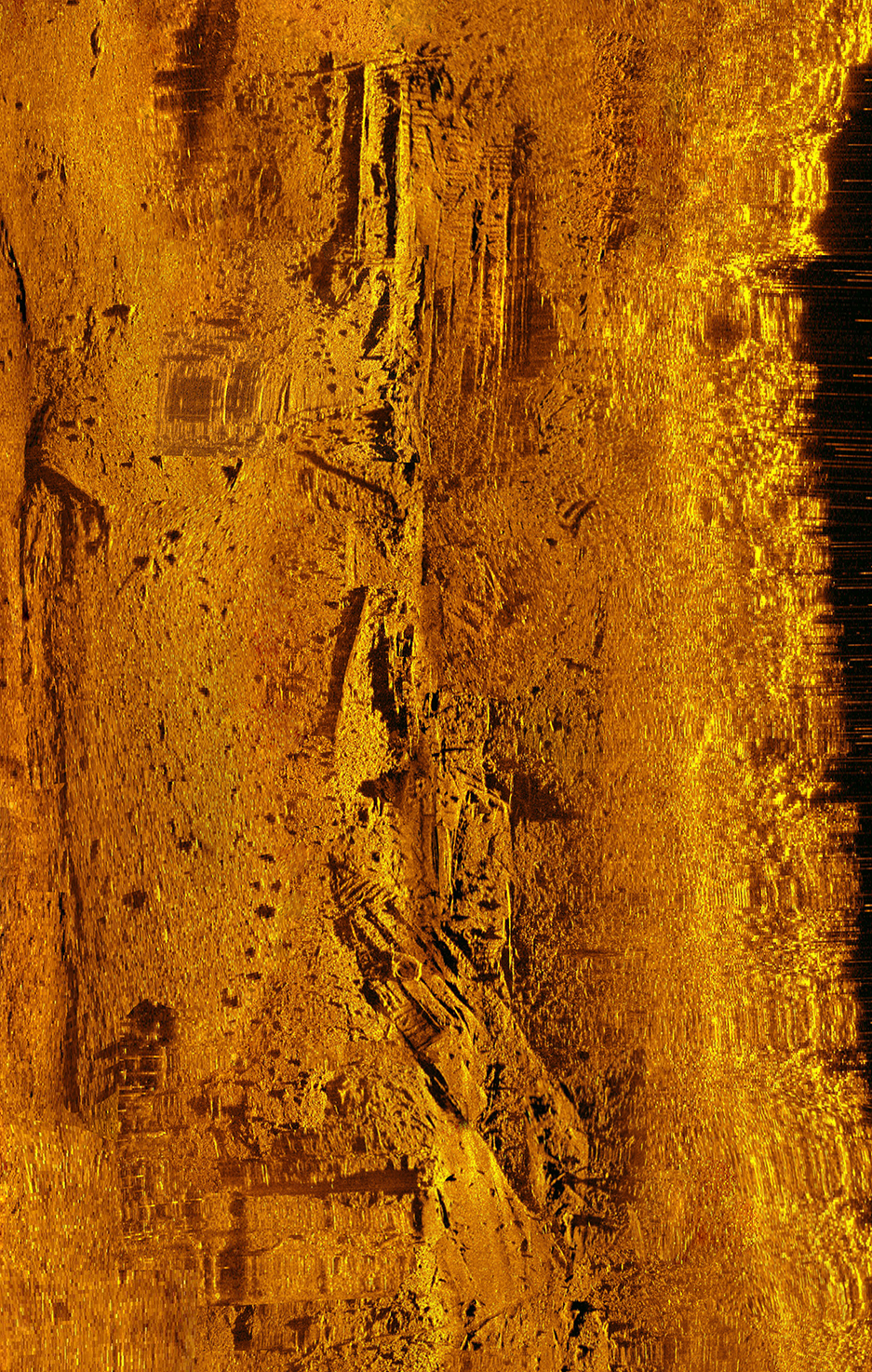
Preservation efforts were taken up in the 1980s, with the shipwreck designated by the state as a burial site. It was first surveyed in 1985 and 1986, but harsh conditions made work unfavorable; further work was postponed in hopes of better technology being able to produce new data. On May 28, 2018, Wisconsin Historical Society maritime archaeologists and Crossmon Consulting LLC partnered to collect side scan sonar data of the shipwreck. This was done to determine the feasibility of using side scan sonar technology in poor quality and hazardous environments. The shipwreck was a prime candidate for a variety of reasons: the location of the site is known and has been the source of curiosity and the desire to understand this site’s history; secondly, the site’s location at the confluence of the La Crosse, Black, and Mississippi Rivers provides the perfect conditions to test the usefulness of modern technology in black water with low to no visibility, strong and potentially dangerous currents, and cross current conditions, and high occurrence of other debris at the bottom of the river that could prove to be a safety threat to divers. The wreck lies in pieces, mostly buried in the mud.

 Confirmed Location
 Unconfirmed location