Service History
The scow schooner
Sunshine was built in 1856 at the yard of Captain Jerry Dupree in Detroit, Michigan. The vessel was a scow schooner built with a flat bottom and vertical sides that allowed it access to shallower waters and smaller harbors. During its first season the vessel hauled barrel staves on Lake Erie between Detroit and Buffalo. The scow schooner continued to ship barrel staves, coal, and plaster on Lake Erie. On June 5, 1861, after loading gypsum at Sandusky, the
Sunshine struck a bridge while leaving port. The crew later noticed that the ship was filling with water and reported it to Captain Thomas Dyer, who seemed to pay the report no mind. Shortly after, Dyer went into the cabin and locked the hatch. The crew fruitlessly attempted to break into the cabin;
Sunshine sank in twelve feet of water and Captain Dyer drowned inside the ship. Due to the ship's years of service during the years leading up to the American Civil War, it should be considered that the
Sunshine could have participated in the Underground Railroad. Its frequent the port of Sandusky which was mentioned in Harriet Beecher Stowe's
Uncle Tom's Cabin, where runaway slaves would flee to Canada via lake boats. Several individuals associated with the
Sunshine were strong abolitionists, and access to both sides of the international border would be a boon. However, since most of the ships known to participate in the Underground Railroad were the ones that were caught, it can only be considered likely that
Sunshine participated as an "abolition boat." After being raised and repaired, the ship continued to run between Lake Erie ports with cargoes of plaster, lumber, barrel staves, cattle, flour, hay, lumber, salt, and wheat. On November 22, 1865, the scow was driven against the pier while loading lumber at Lexington, Michigan on Lake Huron and sank. The tug
John Prindiville was dispatched from Detroit with a steam pump and succeeded in raising the
Sunshine. After its sale on April 8, 1868, the
Sunshine was used to haul lumber between Manistee, Milwaukee and Chicago; it carried as much as 115,000 board feet of lumber per trip. The
Sunshine continued to ship lumber, lath, and ties on Lake Michigan
Final Voyage
On the evening of September 29, 1869,
Sunshine found itself stranded at North Bay on a trip bound to Chicago with a cargo of lumber. The ship started to take on water and the captain steered for shore. Since the scow was sitting low in the water, the crew were ordered to jettison the deck load of lumber to get the ship higher.
Sunshine was beached on the north point of North Bay and left behind by the crew, sitting on a rock ledge. The scow was battered by surf, with the heavy sea relentlessly crashing against it. The tug
O.B. Green was sent to aid the
Sunshine a few days later, but the scow schooner was deemed a total loss. The vessel's outfit was removed and shipped to Milwaukee. Months later, in November and December 1869, the ship was reportedly uprooted by strong gales and high water. A small effort was made to retrieve and possibly repairable ship, but to little effect.
Today
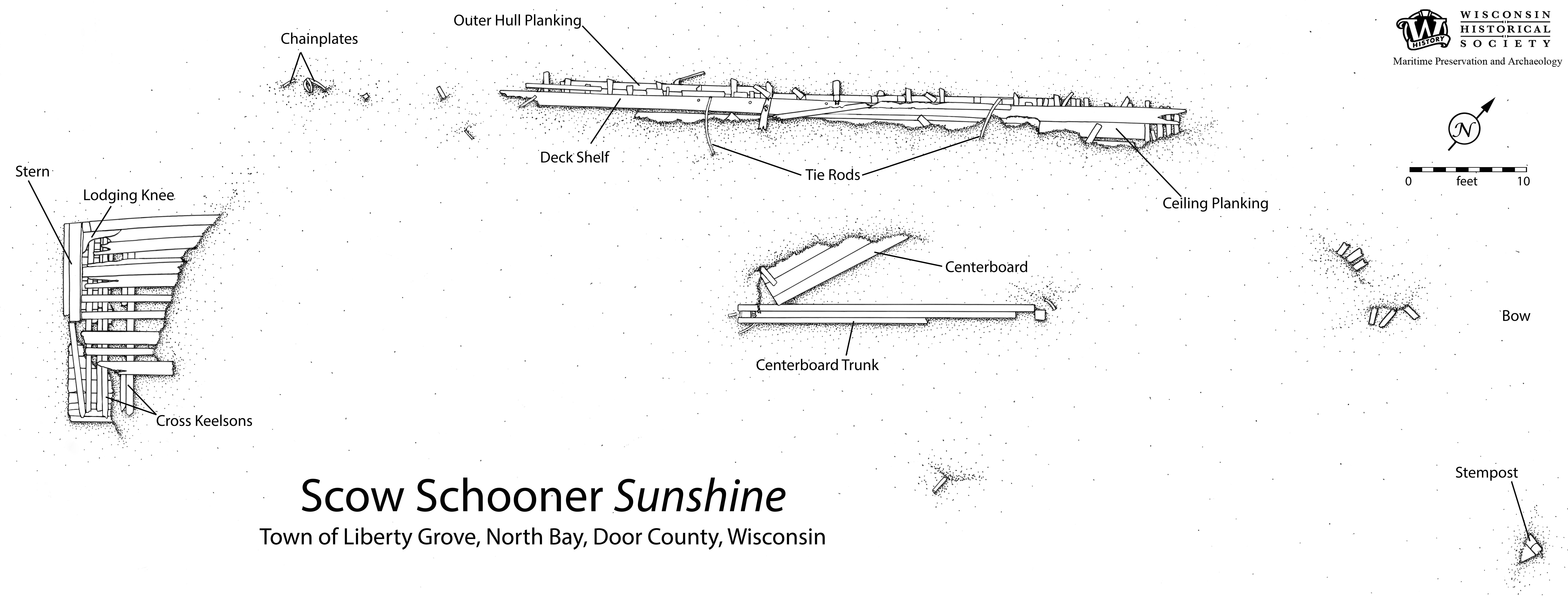
The wreck of the scow schooner
Sunshine lies under six feet of water at the bottom of North Bay, 1.1 miles southeast of the entrance. It is shallow water and easily accessible. The wreck of the
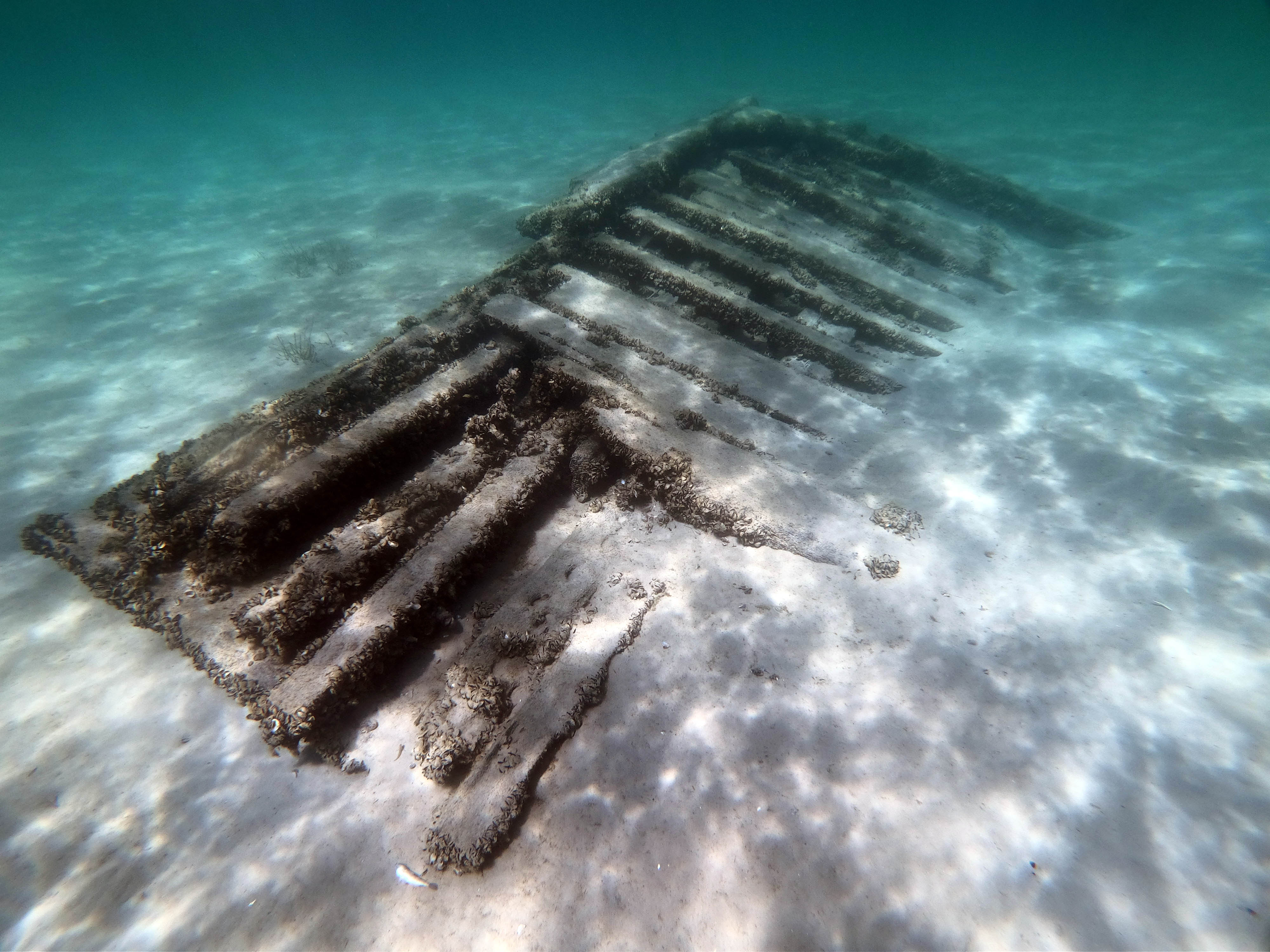
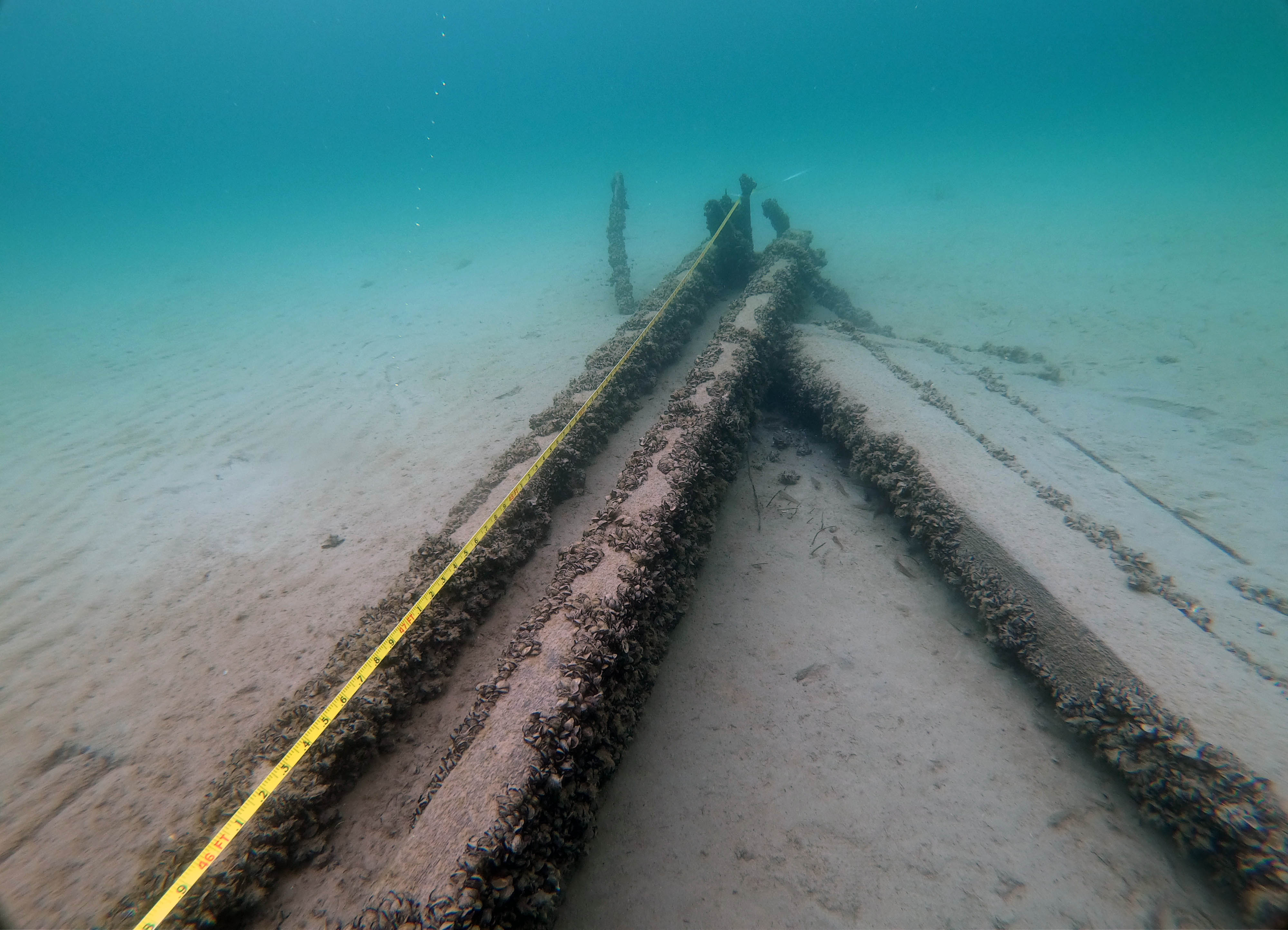
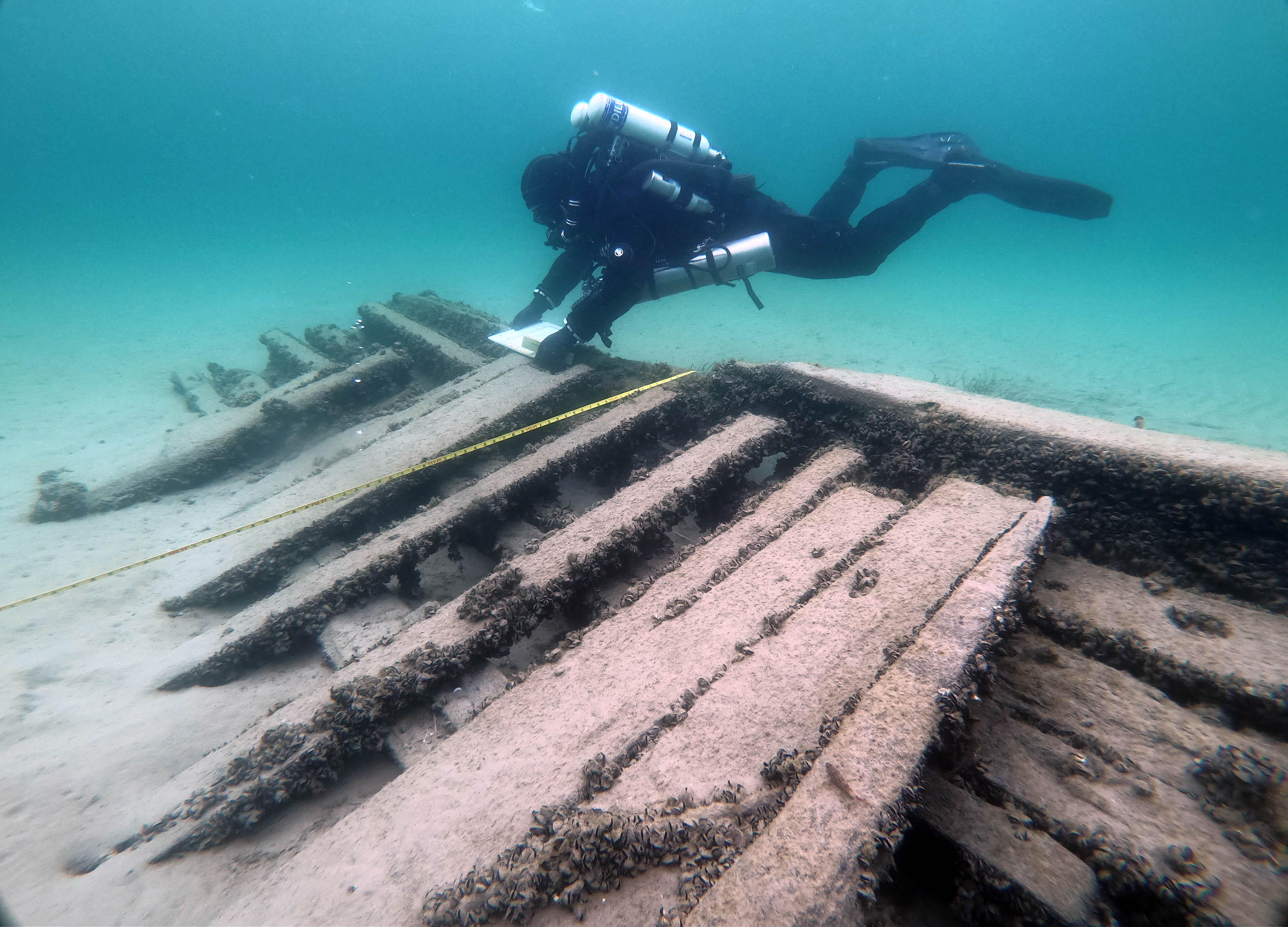
Sunshine was located by Matt Olson, owner of Door County Adventure Rafting in 2021 and investigated archaeologically in May 2022. What's left of the wreck is excellently preserved under shifting sands, which cover and uncover portions of the wreck from year-to-year, and also prevented extreme quagga mussel colonization.

_0001 - Copy.JPG)
_0002.JPG)
_0003 - Copy.JPG)
_0004.JPG)
_0005.JPG)
_0006.JPG)
 Confirmed Location
 Unconfirmed location