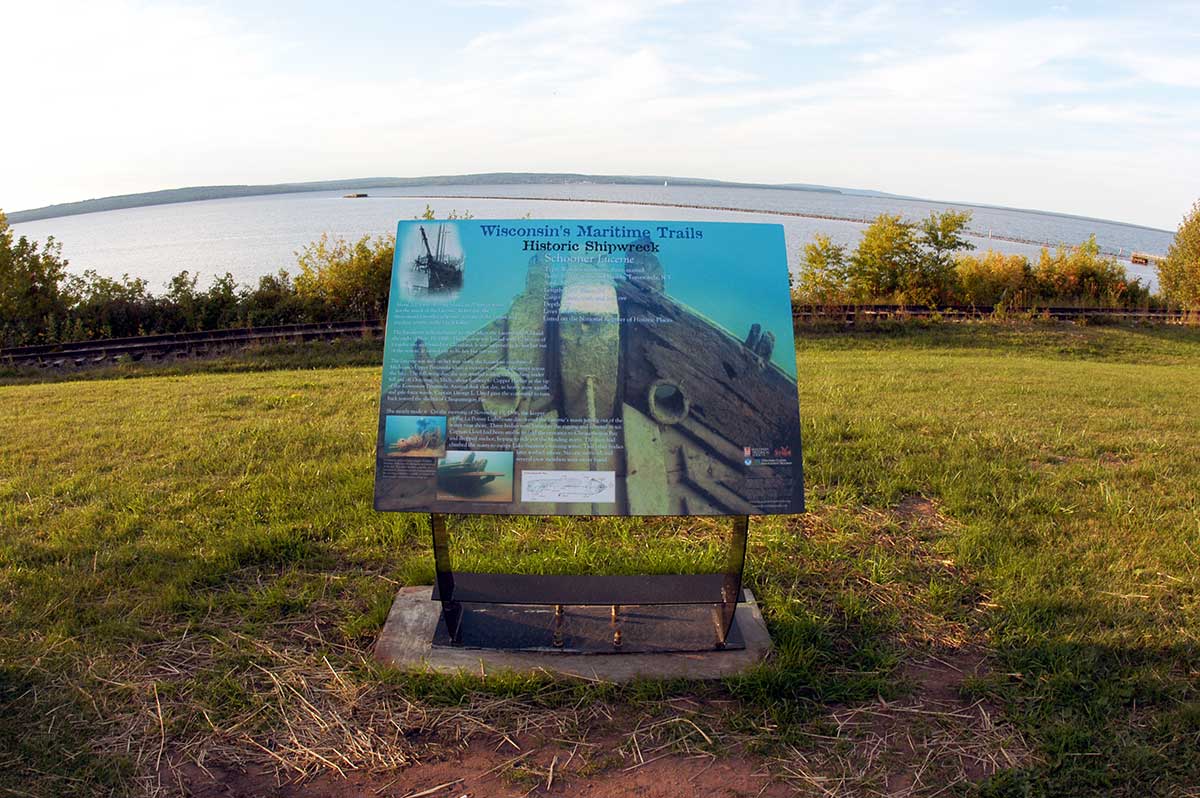
Lucerne Maritime Trails Marker
Gallery
img
Lucerne Maritime Trails Marker
img
Lucerne Maritime Trails Marker
 
Attraction
Description
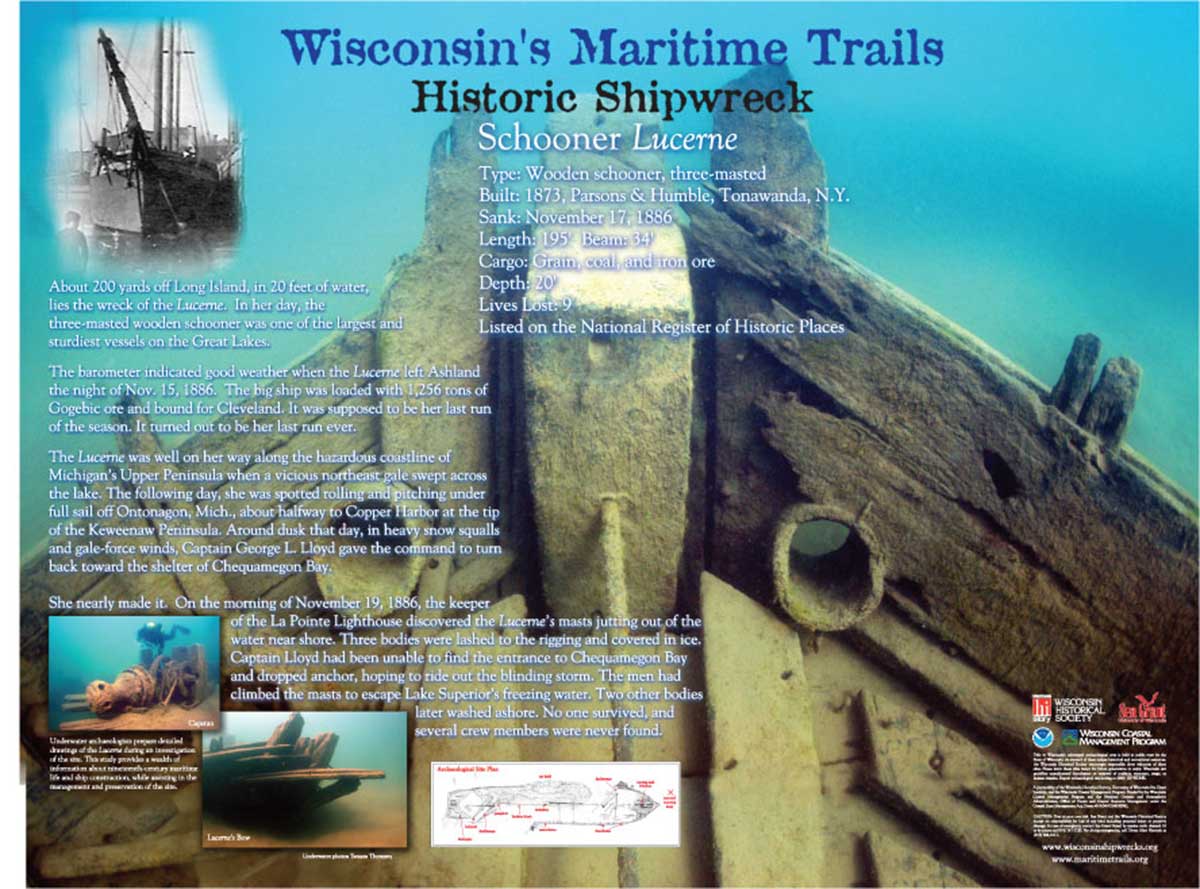
About 200 yards off Long Island, in 20 feet of water, lies the wreck of the Lucerne. In her day, the three-masted wooden schooner was one of the largest and sturdiest vessels on the Great Lakes. The barometer indicated good weather when the Lucerne left Ashland the night of Nov. 15, 1886. The big ship was loaded with 1,256 tons of Gogebic ore and bound for Cleveland. It was to be her last run of the season. It turned out to be her last run ever. The Lucerne was well on her way along the hazardous coastline of Michigan's Upper Peninsula when a vicious northeast gale swept across the lake. The following day, she was spotted rolling and pitching under full sail off Ontonagon, Mich., about halfway to Copper Harbor at the tip of the Keweenaw Peninsula. Around dusk that day, in heavy snow squalls and gale-force winds, Capt. Lloyd gave the command to turn back toward the shelter of Chequamegon Bay. She nearly made it. On the morning of November 19, 1886, the keeper of the La Pointe Lighthouse discovered the Lucerne's masts jutting out of the water near shore. Apparently, Capt. Lloyd had been unable to find the entrance to Chequamegon Bay and dropped anchor, hoping to ride out the blinding storm. The lighthouse keeper found three bodies lashed to the rigging and covered in ice. The men had climbed the masts to escape Lake Superior's freezing water. Two other bodies later washed ashore. No one survived, and several crewmembers were never found. Today, the Lucerne can usually be seen from the surface, facing into the gale that claimed her.
 
Map
 
Nearby
© 2026 - Wisconsin Sea Grant, Wisconsin Historical Society