DePere Lock Maritime Trails Marker
Gallery
img
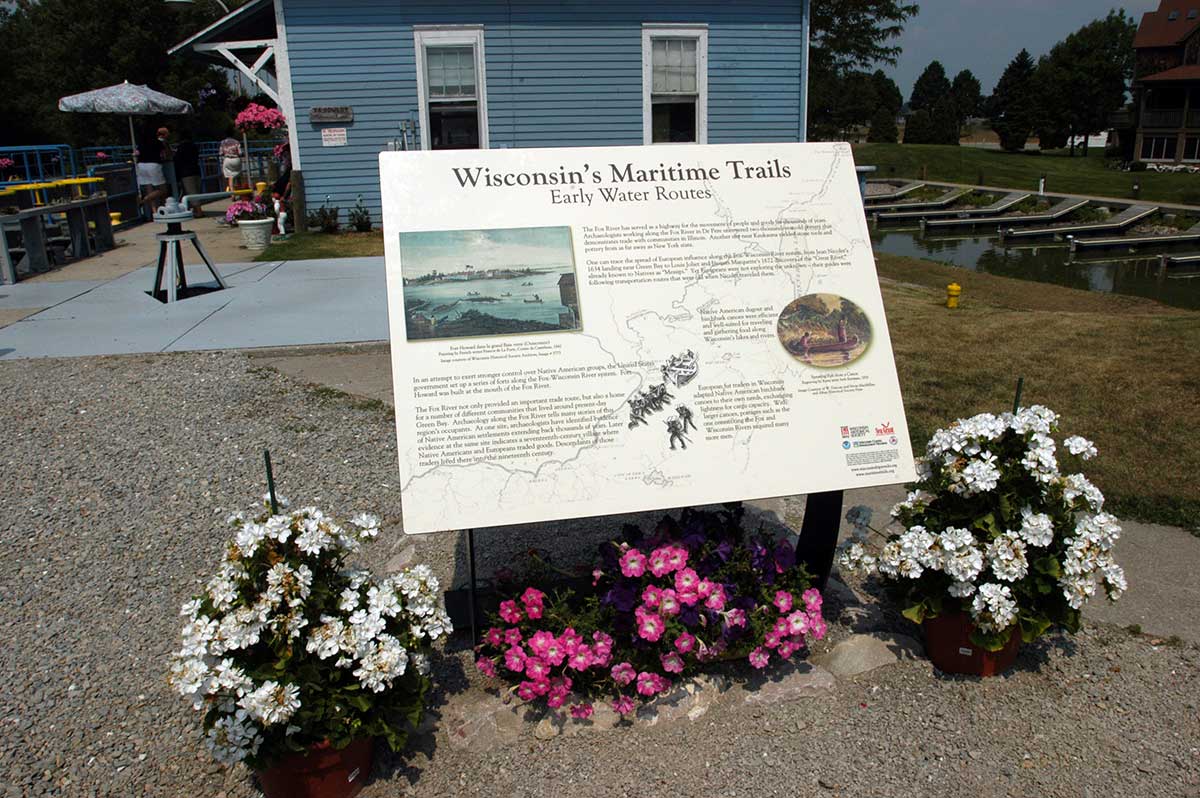
Maritime Trails Marker at DePere Lock
img
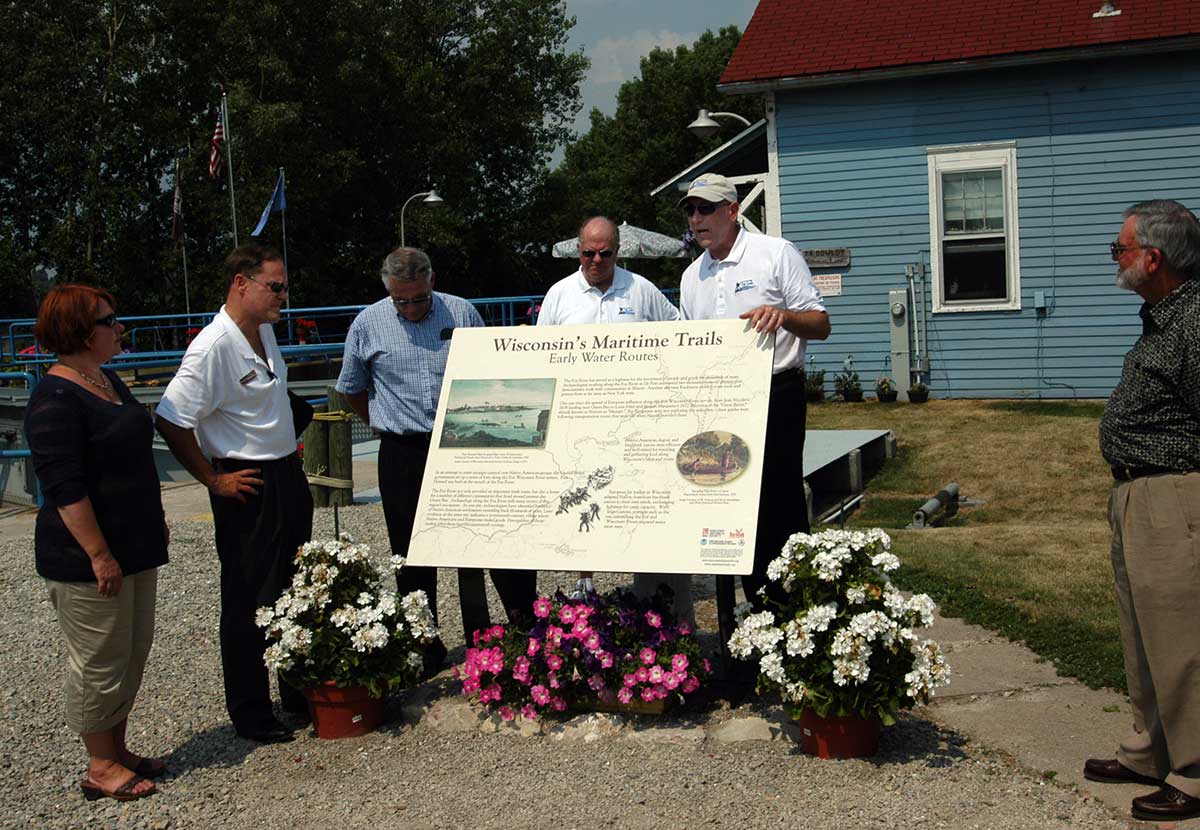
Marker Dedication July 2007
img
Maritime Trails Marker at DePere Lock
 
Attraction
Description
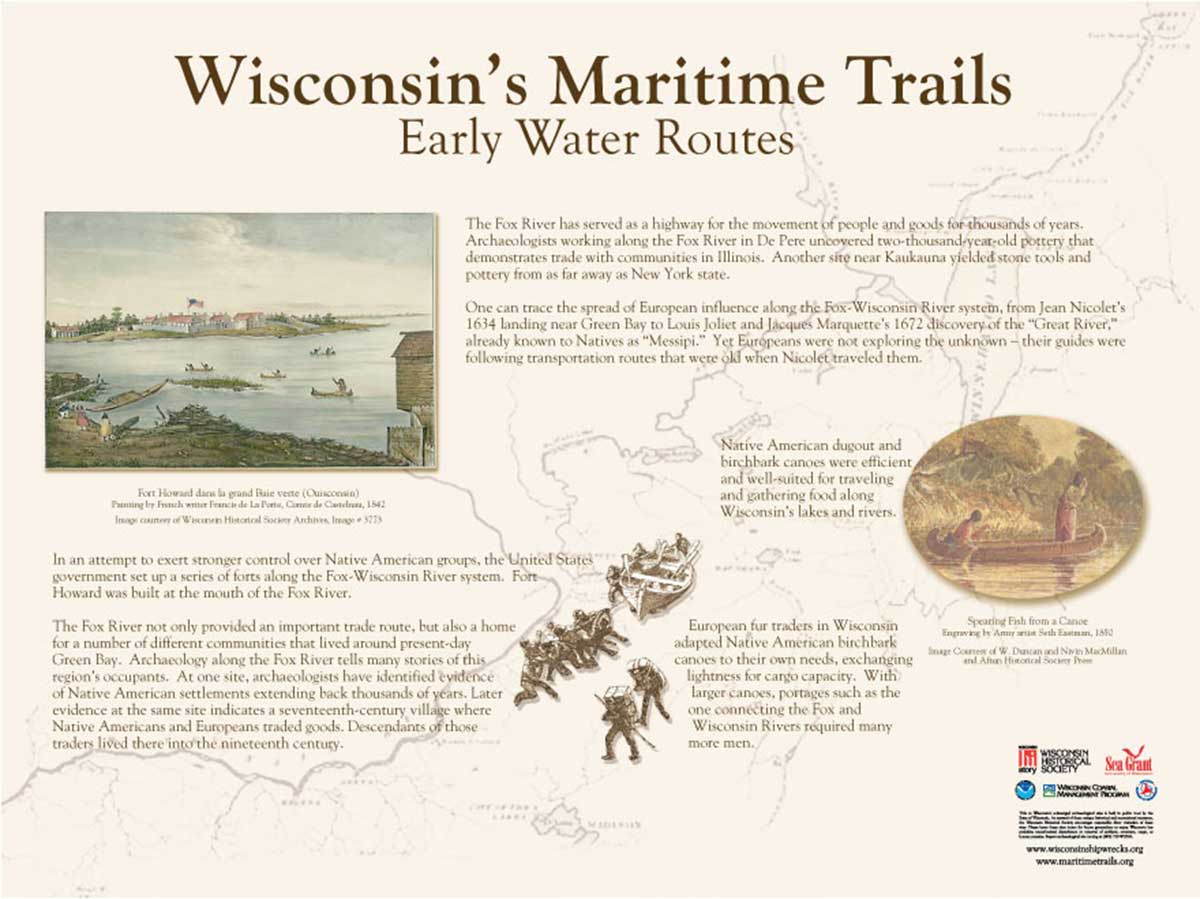
Wisconsin's Maritime Trails-Early Routes. In an attempt to exert stronger control over Native American groups, the United States government set up a series of forts along the Fox-Wisconsin River system. Fort Howard was built at the mouth of the Fox River. Under the watchful presence of the fort, Native dugouts and birch bark canoes continued to paddle the waters of Green Bay. The Fox River not only provided an important trade route, but also a home for a number of different communities that lived around present-day Green Bay. Archaeology along the Fox River tells a story of this region's occupants. At one site, Native American settlements extending back over thousands of years lie beneath a seventeenth-century village where Native and European trade goods are mingled. Nineteenth-century communities in the same location were the descendants of European traders and their Native American trading partners. The Fox River has served as a highway for the movement of people and goods for thousands of years. Archaeologists working along the Fox River in De Pere uncovered two-thousand year old pottery that demonstrates trade with communities in Illinois. Another site near Kaukauna yielded stone tools and pottery from as far away as New York state. One can trace the spread of European influence along the Fox-Wisconsin River system, from Nicolet's 1634 landing near Green Bay to Joliet and Marquette's 1672 discovery of the Great River, already known to Natives as 'Messipi'. Yet Europeans were not exploring the unknown -- their guides were following transportation routes that were old when Nicolet traveled them.
 
Map
 
Nearby
© 2026 - Wisconsin Sea Grant, Wisconsin Historical Society