
Ronk’s Pier / Ronksville
Gallery
img
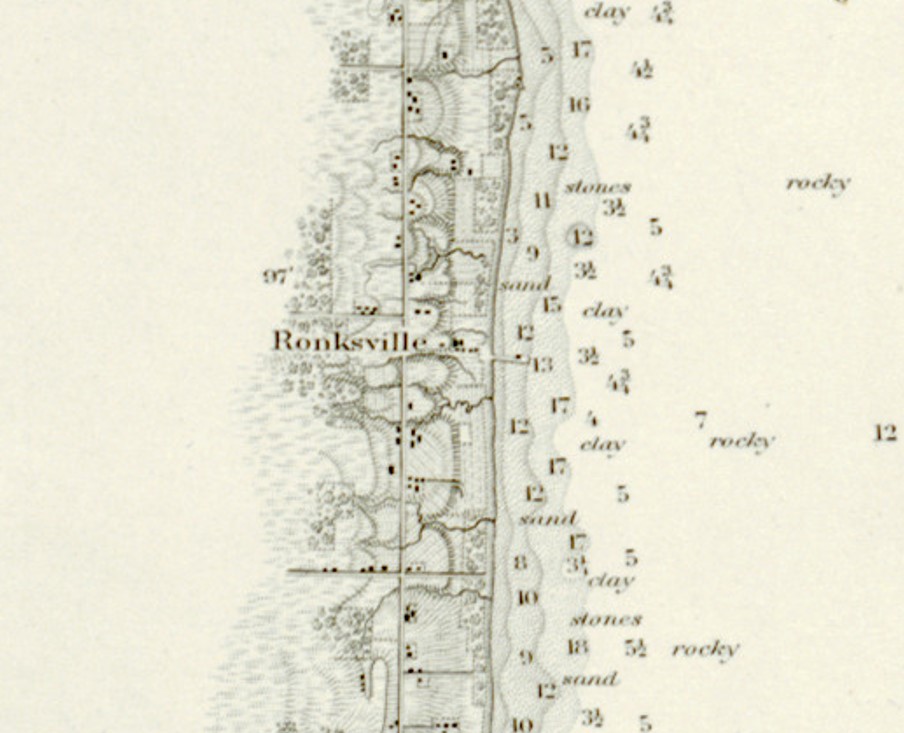
1877 chart showing Ronk’s Pier, Belgium Township, by the U.S. Army Corps of Engineers.
img
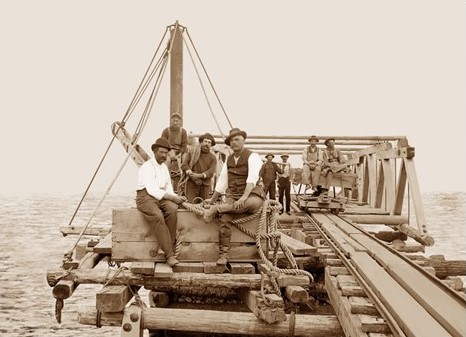
Ronk’s Pier with Nicholas (foreground, left) and Paul Ronk (foreground, right) and company workers, 1860s to 1870s.
img
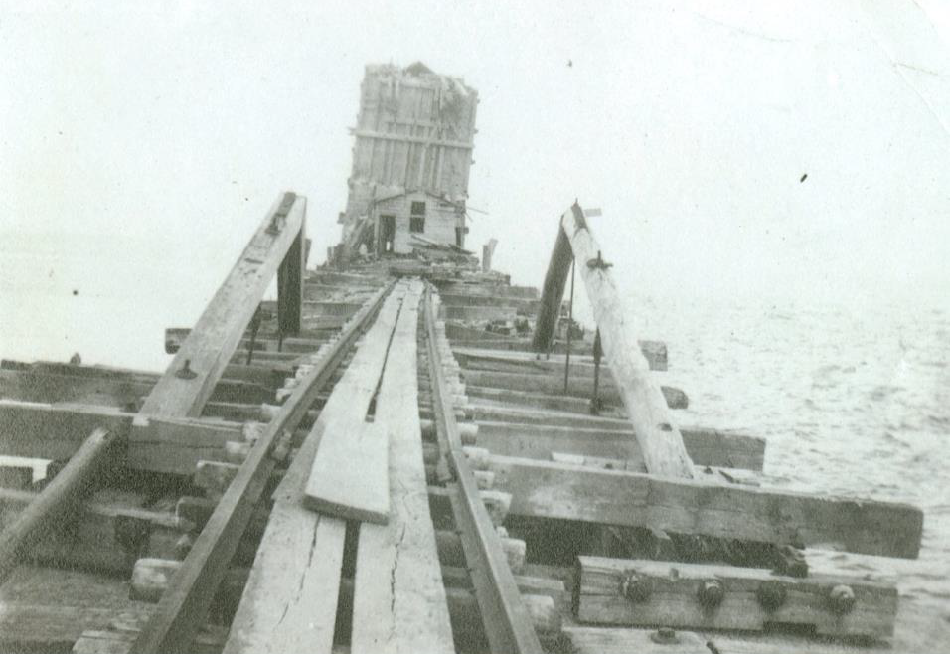
Ronk’s Pier with rail system and building, 1860s to 1870s
img
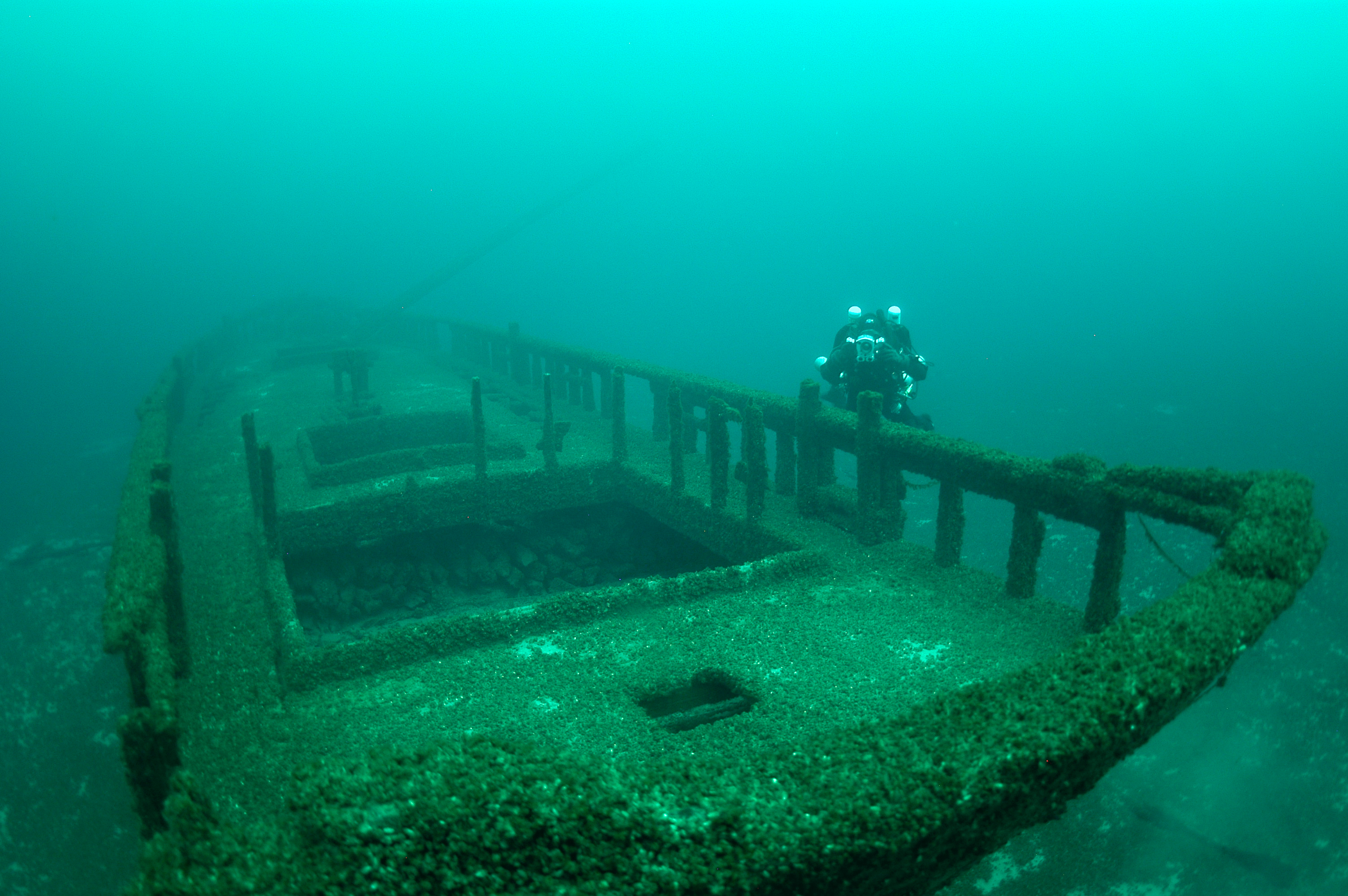
Northerner shipwreck with cordwood visible in the hold, 2009
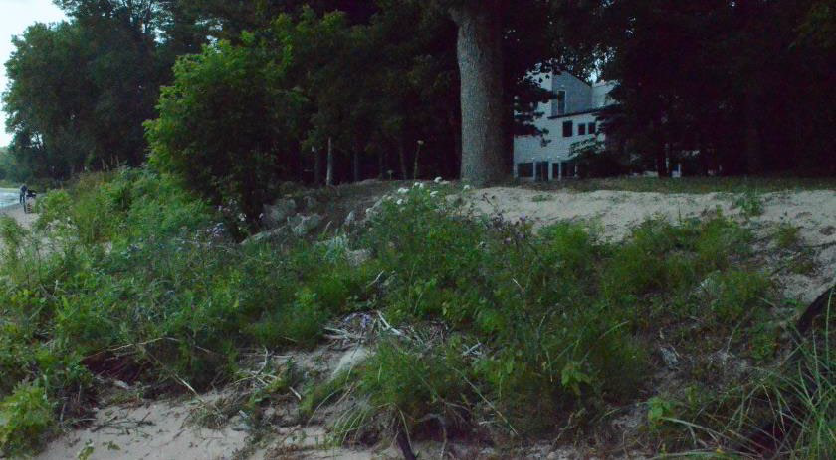
img
Shoreline at Ronk’s Pier, July 2019
 
Attraction
Description
Ronk’s Pier, or Ronksville, is located about 11 miles north of Port Washington in Ozaukee County. The founding of Ronk’s Pier is the story of two brothers – Nicholas and Paul Ronk. In July 1849, the Ronk brothers arrived in New York from their native country of Luxembourg. They quickly set out for Wisconsin, living briefly in Port Washington before moving to Belgium Township. In 1856, the brothers bought lakeshore real estate from Barnum Blake, a Port Washington businessman and land speculator. In 1858, the Ronks established the Luxemburger Pier Company and built a substantial 1000-foot pier into the lake approximately 150 yards south of Jay Road. The two brothers used the pier to bring much-needed goods to the area and played a key role in settling the Luxembourg-American community in northern Ozaukee County.

Piers like Ronk’s Pier allowed passengers and freight to be shipped from areas of the coastline that lacked natural harbors. Cordwood was loaded onto steamers to fuel their boilers and loaded onto schooners to be shipped to Milwaukee and elsewhere. Paul Ronk operated a general store, saloon, and hotel in Lake Church, three miles southwest of Ronk’s Pier. Goods destined for Paul’s businesses were unloaded at Ronk’s Pier and sent inland. A small complex of service buildings and warehouses existed at Ronk’s Pier in the 1860s and 1870s, during the period when cut wood, manufactured goods, and other products were shipped to and from the pier.

In September 1865, Nicholas Ronk and his neighbor Nicolaus Kanton purchased the lumber schooner Northerner from W. A. Parker and D. G. Parker of Chicago. But owning a lake vessel was a risky endeavor and Nicholas Ronk learned this lesson at the end of the 1868 season. On 28 November 1868, while loading a cargo of wood at Amsterdam, another Wisconsin ghost port, Northerner pounded heavily on the bottom. After setting sail, Captain Andreas Ryerson and his crew discovered that the vessel was taking on water. Ryerson came aside one of the piers in Port Washington and had the vessel’s deck load of wood removed. Thus lightened, Ryerson engaged the propellor Cuyahoga to tow the damaged vessel to Milwaukee to deposit the remainder of its cargo and come in for repairs. Despite Ryerson’s efforts, Northerner again began to fill with water while in tow and capsized off Port Ulao, yet another Wisconsin ghost port, about four and a half miles southwest of Port Washington. Northerner’s crew made it safely onboard Cuyahoga, which immediately returned to Port Washington. Plans were quickly made to look for the abandoned vessel, but foul weather prevented any searches until early December. No traces of Northerner were located, and the vessel was registered as a total loss, sinking Ronk’s entire investment beneath the waves. For more information on the Northerner shipwreck, click here.

Ronk’s Pier continued to ship out goods via other lake vessels, but cargoes started to decrease as the 1860s came to a close. In 1869, Paul Ronk began selling his properties in Lake Church and the Town of Belgium, most of which his brother purchased. Marine news from larger cities like Milwaukee, Chicago, Kenosha, and Racine suggest that timber exports from Ronk’s Pier continued to gradually decline through the 1870s. By 1879, Paul Ronk had sold all his Lake Church and Belgium Township properties and moved to South Creek in Dixon County, Nebraska. He died there on 29 December 1880. At the time, Nicholas and Mary Ronk were still farming and living near Ronk’s Pier with their six children and Nicholas’s 80-year-old mother-in-law. On 14 February 1884, Nicholas Ronk died at the age of 68.

Nicholas Ronk’s son – also Nicholas Ronk – and his wife, Mary Hubing Ronk, inherited the roughly 80 acres of lakefront property adjacent to Ronk’s Pier. The younger Nicholas Ronk died in October 1891. Whether he operated Ronk’s Pier from 1884 to 1891, or whether there was even a pier to operate at that time, is unknown. Extensive research in historic newspapers revealed no references to nor any record of shipping to or from the pier in the 1880s or 1890s. Like many of the ghost ports and pier communities along Lake Michigan’s shoreline, Ronk’s Pier likely met its end at the hands of the railroad. Cheaper shipping from the inland community of Belgium, unaffected by lake ice and weather, probably made the pier and its surrounding complex obsolete by the late 1870s or 1880s.
 
Map
 
Nearby
© 2026 - Wisconsin Sea Grant, Wisconsin Historical Society