Amsterdam Maritime Trails Marker
Gallery
img
Amsterdam Maritime Trails Marker
img
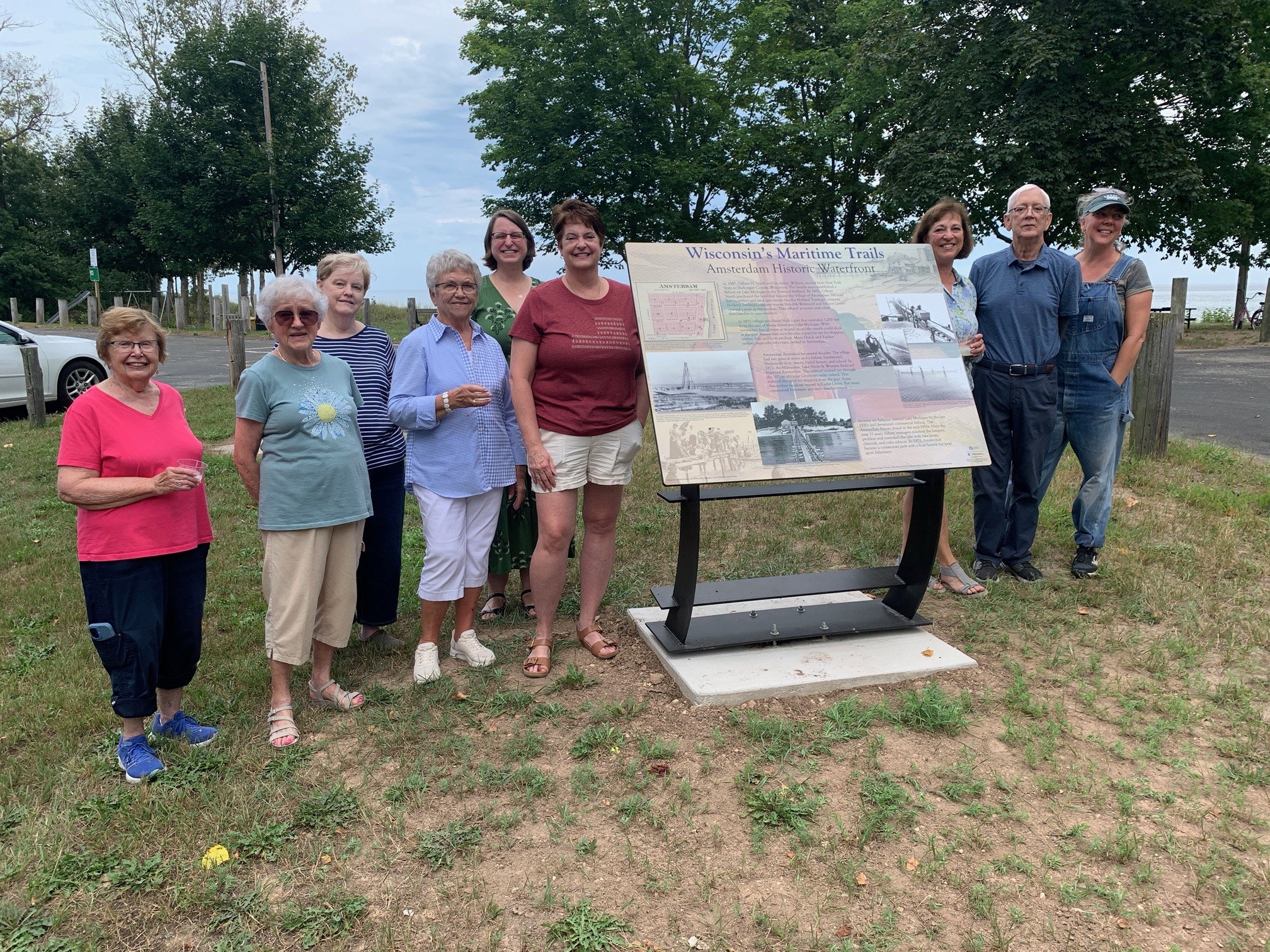
Amsterdam Maritime Trails Marker at its unveiling on September 2, 2026, with members of the Cedar Grove Historical Society, local historian Richard Dykstra, and WHS maritime archaeologist Kendra Kennedy.
img
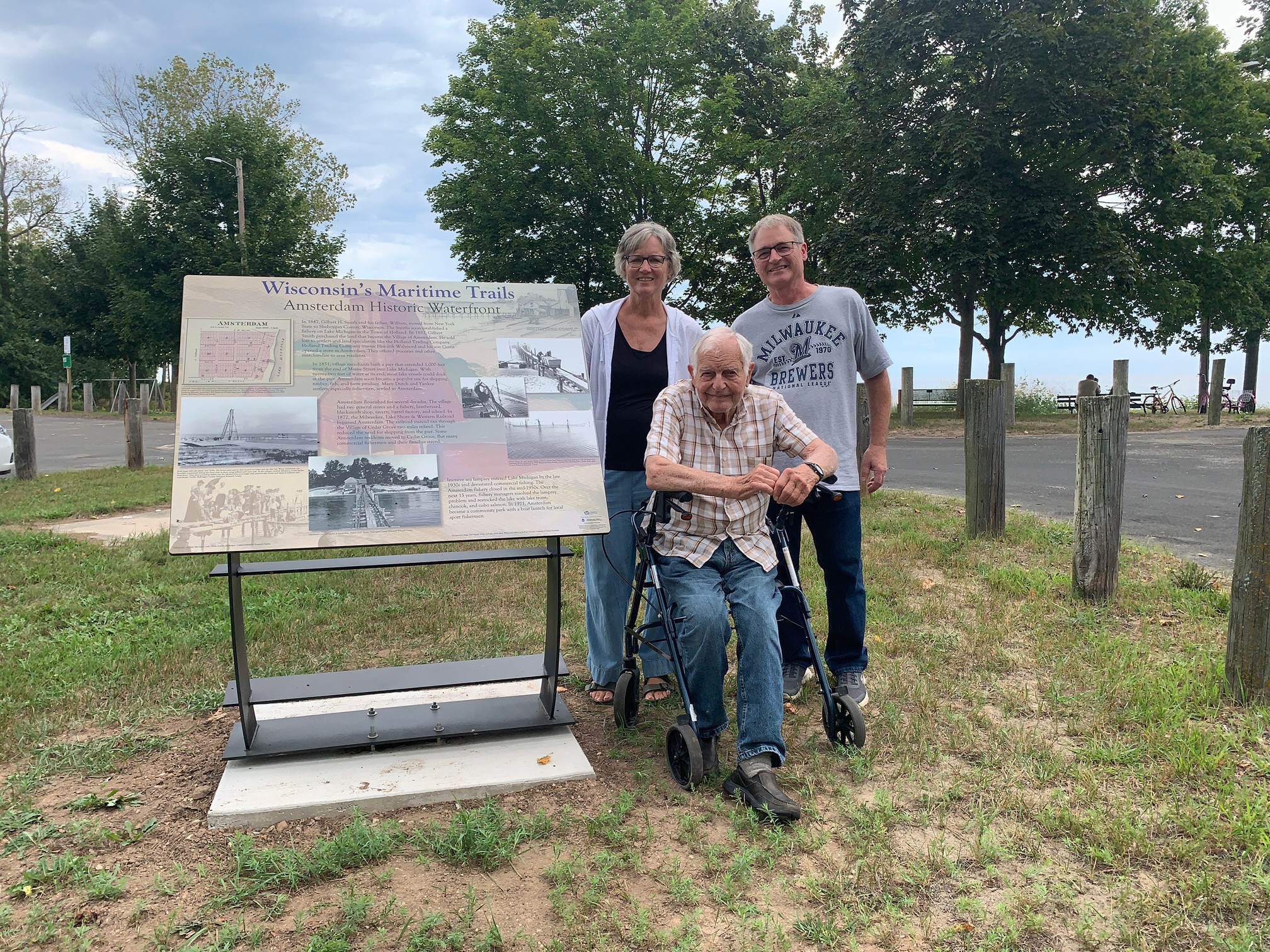
Amsterdam Maritime Trails Marker at its unveiling on September 2, 2026, with retired pound net fisherman Abram Smies, Jr., his daughter, Sally Obbink Smies, and his son, Scot Smies. Abram Smies, Sr., father of Abram Smies, Sr., is pictured pound net fishing off Amsterdam in 1956 on the Amsterdam Maritime Trails Marker.
img
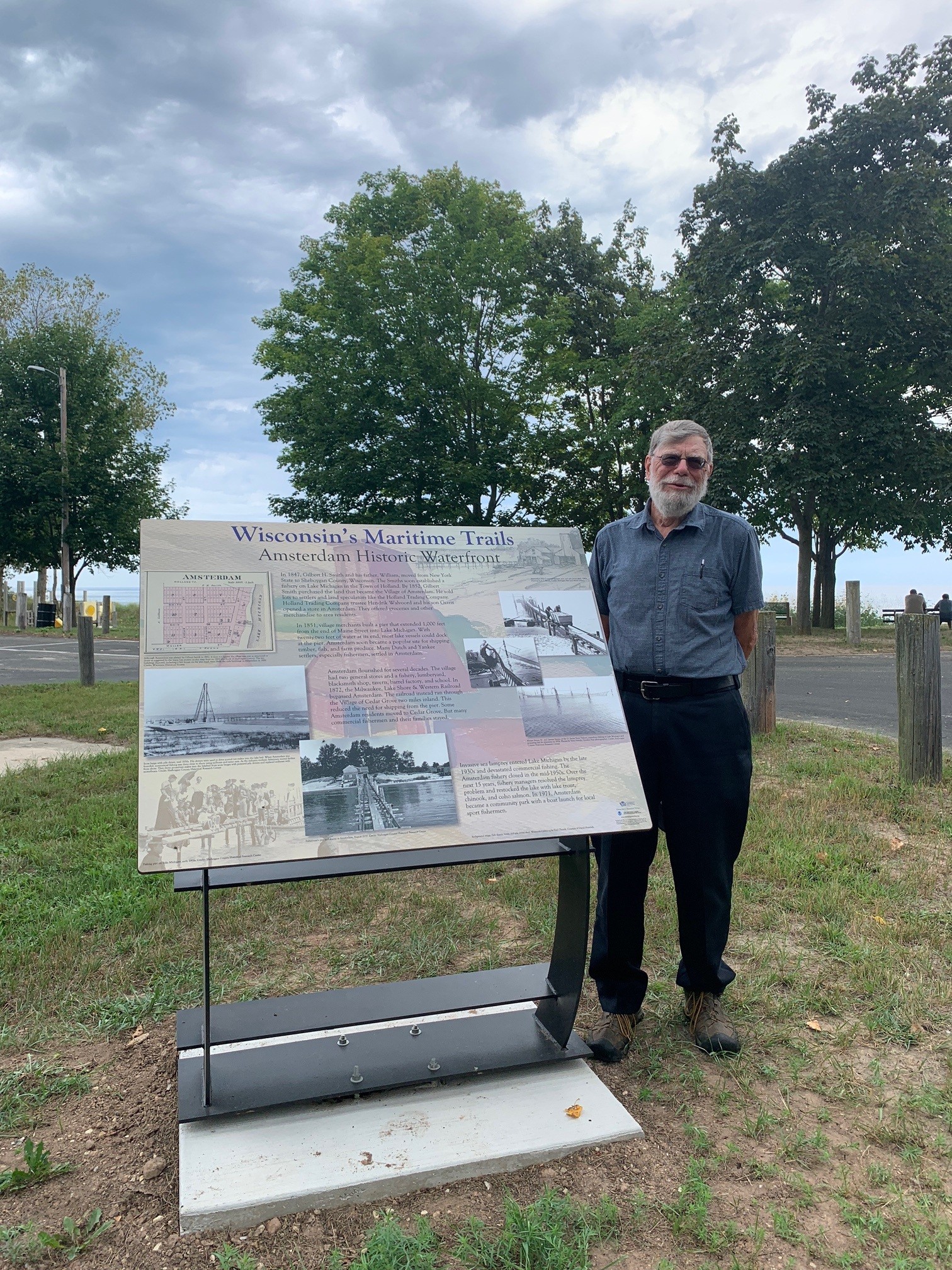
Amsterdam Maritime Trails Marker at its unveiling on September 2, 2026, with Jack Stokdyk, descendant of the local Stokdyk fishing family.
img
Amsterdam Maritime Trails Marker
 
Attraction
Description
Marker is located in Amsterdam Park on Amsterdam Road southeast of Cedar Grove.
----------
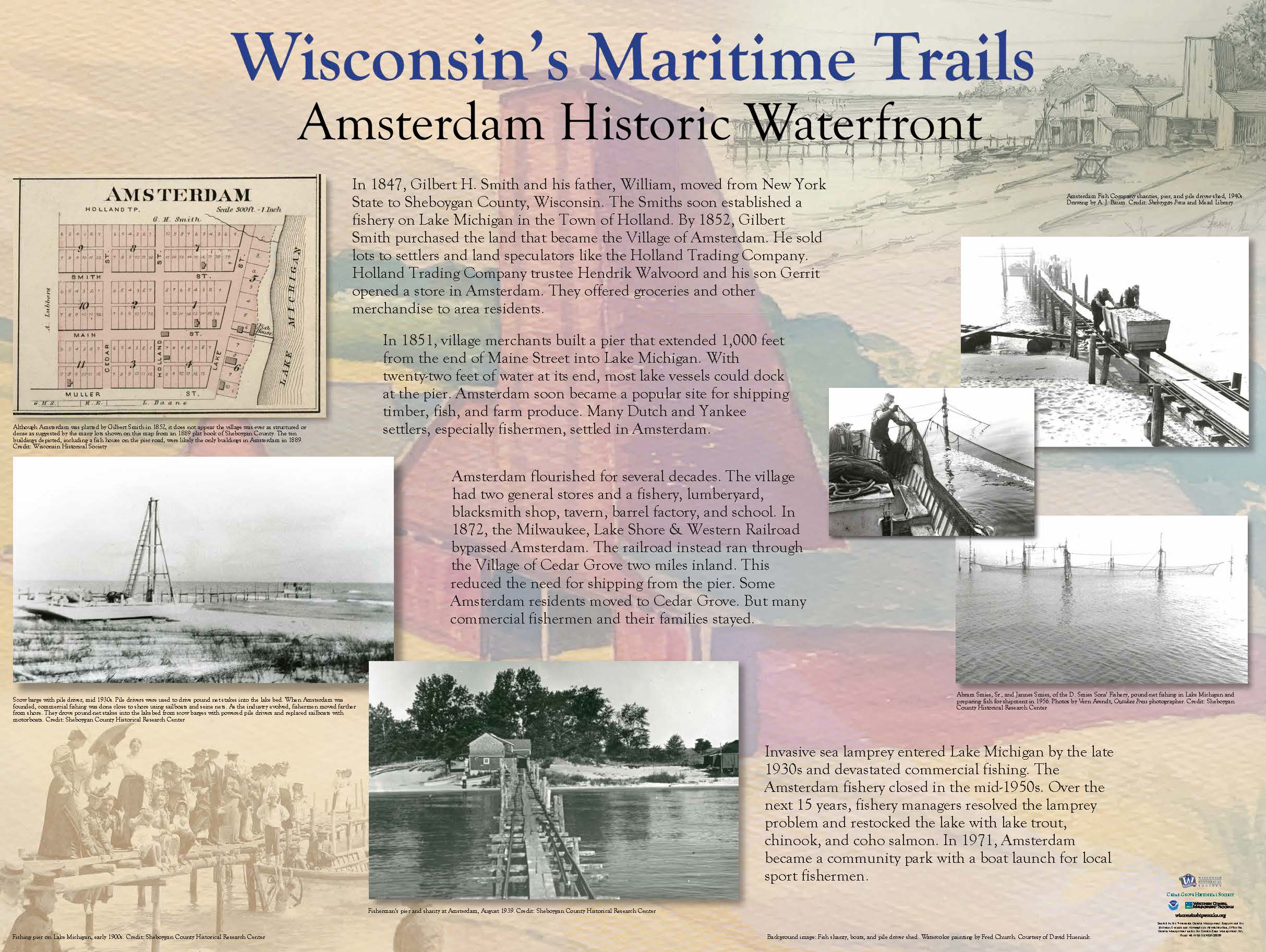
Marker Narrative Text:
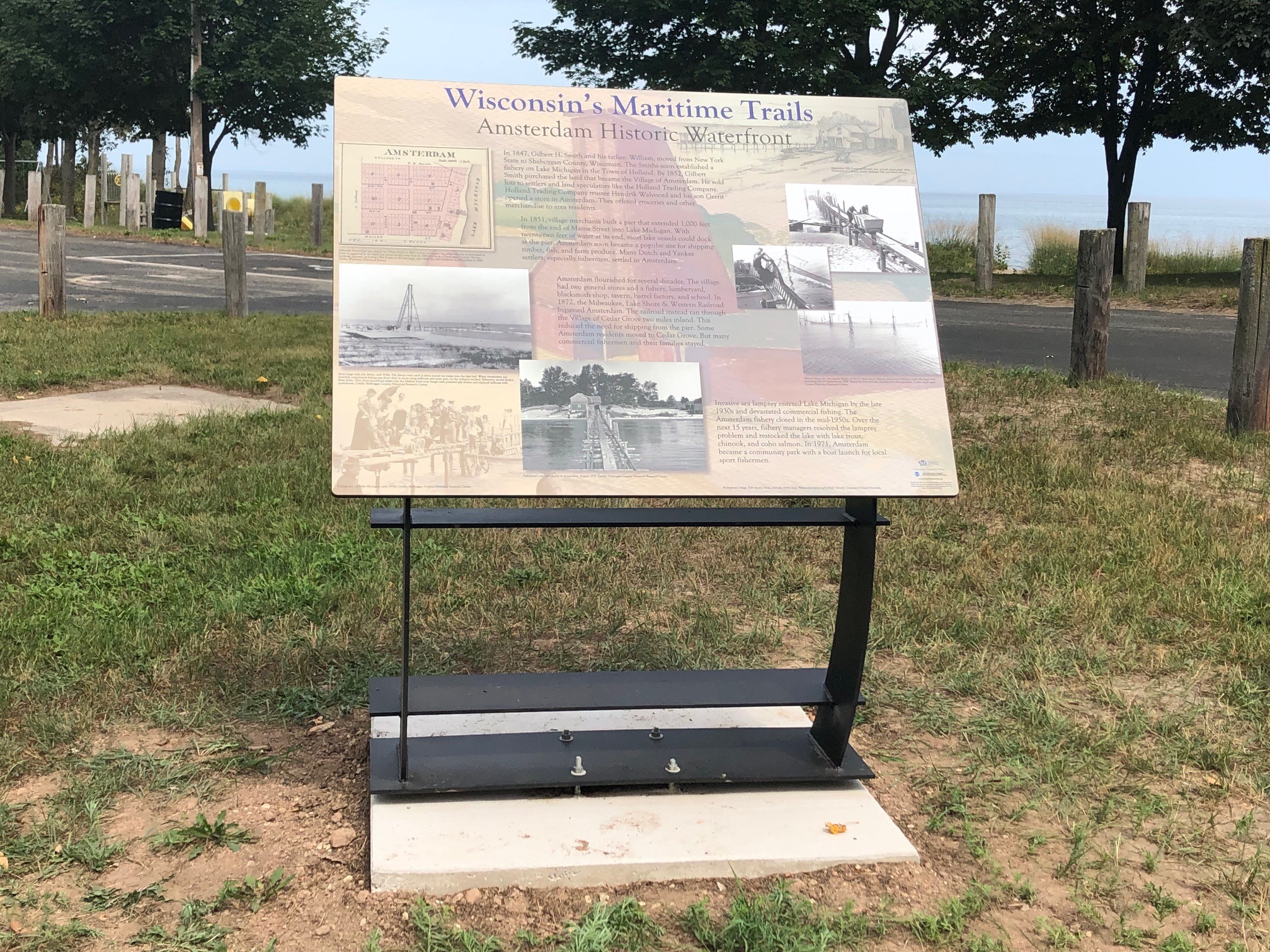
Wisconsin's Maritime Trails
Amsterdam Historic Waterfront


In 1847, Gilbert H. Smith and his father, William, moved from New York State to Sheboygan County, Wisconsin. The Smiths soon established a fishery on Lake Michigan in the Town of Holland. By 1852, Gilbert Smith purchased the land that became the Village of Amsterdam. He sold lots to settlers and land speculators like the Holland Trading Company. Holland Trading Company trustee Hendrik Walvoord and his son Gerrit opened a store in Amsterdam. They offered groceries and other merchandise to area residents.

In 1851, village merchants built a pier that extended 1,000 feet from the end of Maine Street into Lake Michigan. With twenty-two feet of water at its end, most lake vessels could dock at the pier. Amsterdam soon became a popular site for shipping timber, fish, and farm produce. Many Dutch and Yankee settlers, especially fishermen, settled in Amsterdam.

Amsterdam flourished for several decades. The village had two general stores and a fishery, lumberyard, blacksmith shop, tavern, barrel factory, and school. In 1872, the Milwaukee, Lake Shore & Western Railroad bypassed Amsterdam. The railroad instead ran through the Village of Cedar Grove two miles inland. This reduced the need for shipping from the pier. Some Amsterdam residents moved to Cedar Grove. But many commercial fishermen and their families stayed.

Invasive sea lamprey entered Lake Michigan by the late 1930s and devastated commercial fishing. The Amsterdam fishery closed in the mid-1950s. Over the next 15 years, fishery managers resolved the lamprey problem and restocked the lake with lake trout, chinook, and coho salmon. In 1971, Amsterdam became a community park with a boat launch for local sport fishermen.
 
Map
 
Nearby
© 2026 - Wisconsin Sea Grant, Wisconsin Historical Society