
Sidney O. Neff (1890)
Gallery
img
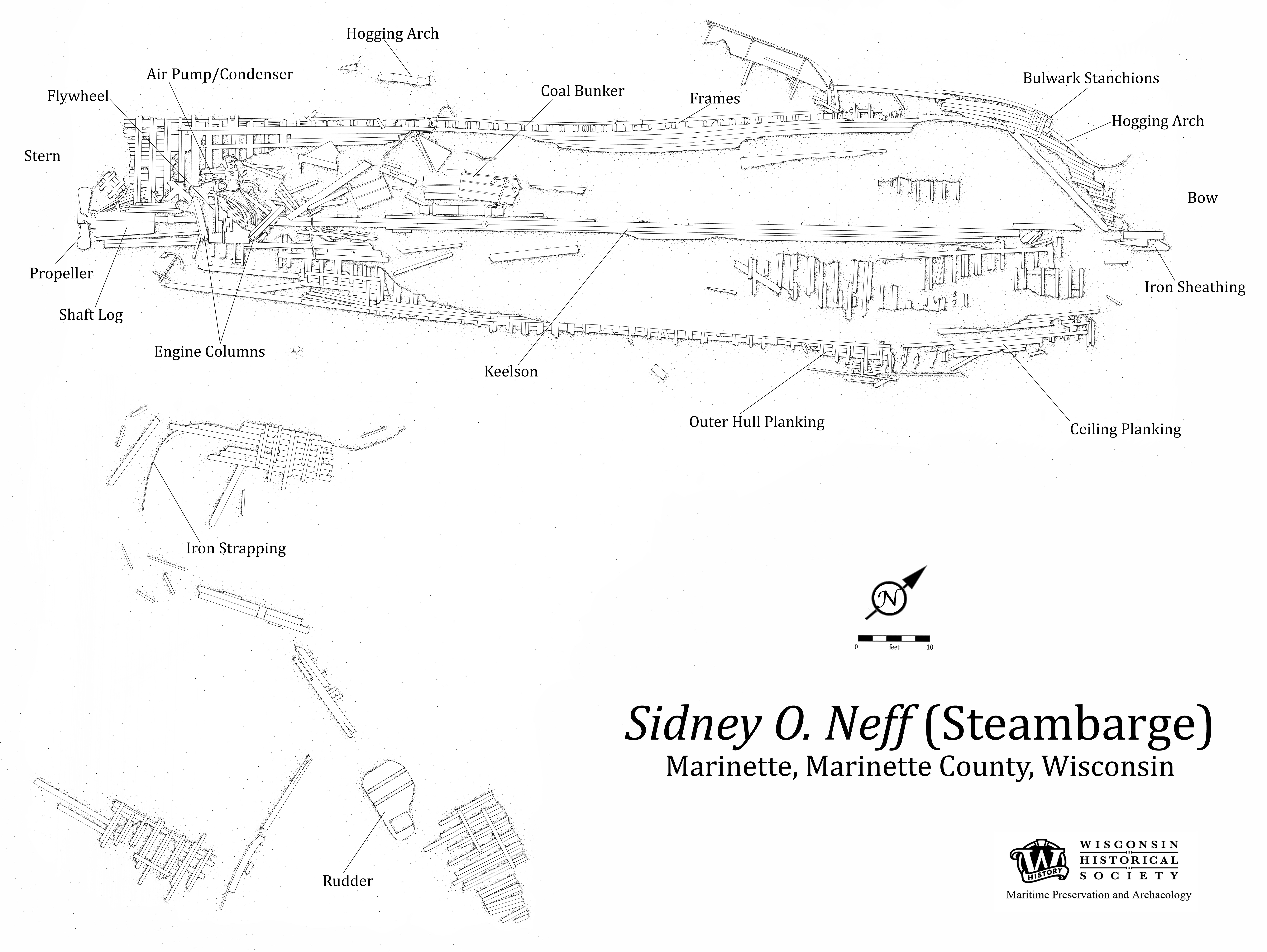
Sidnney O. Neff’s site plan, credited to the Wisconsin Historical Society
img
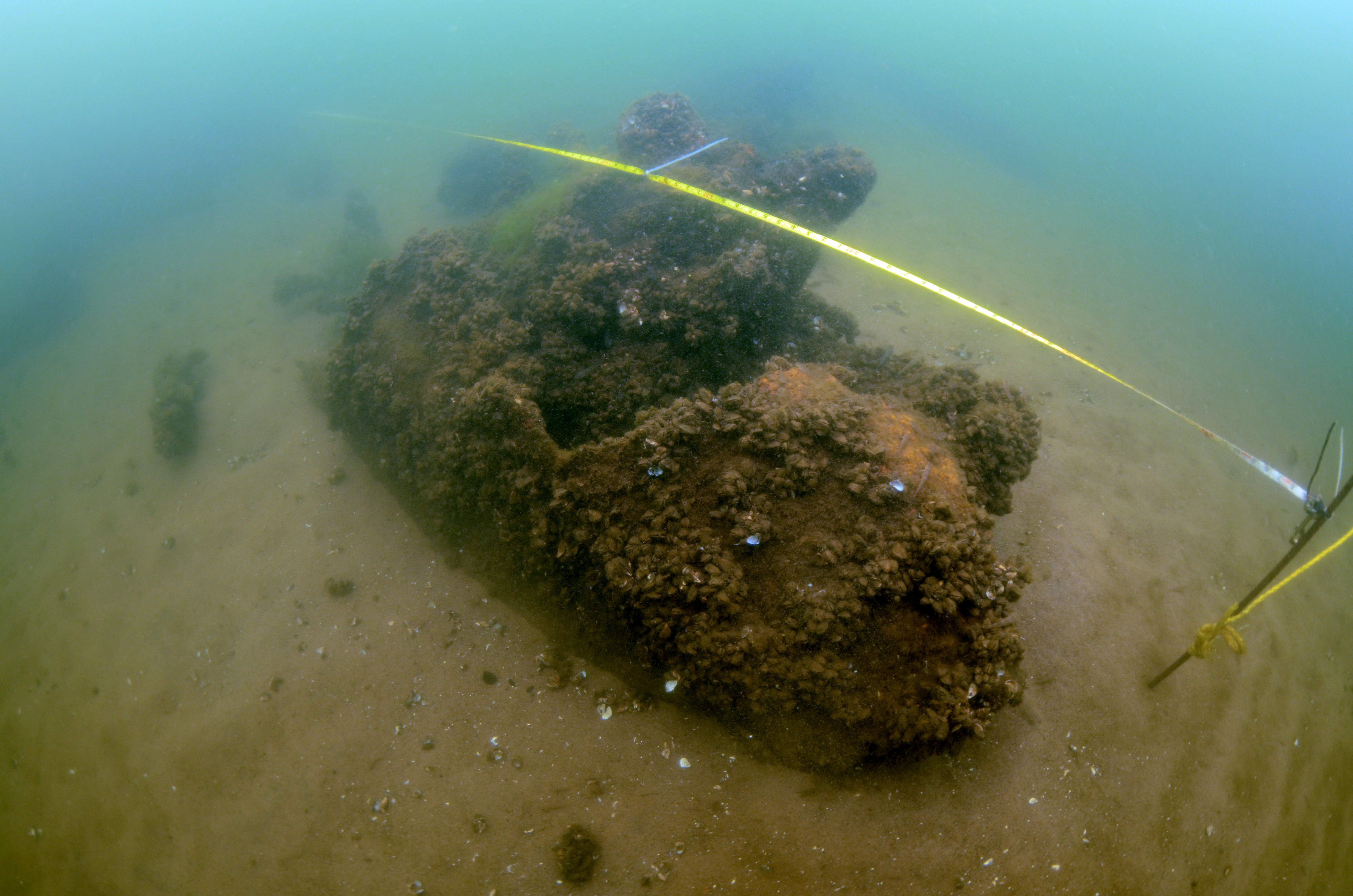
Stem post of the Sidney O. Neff, looking aft
img
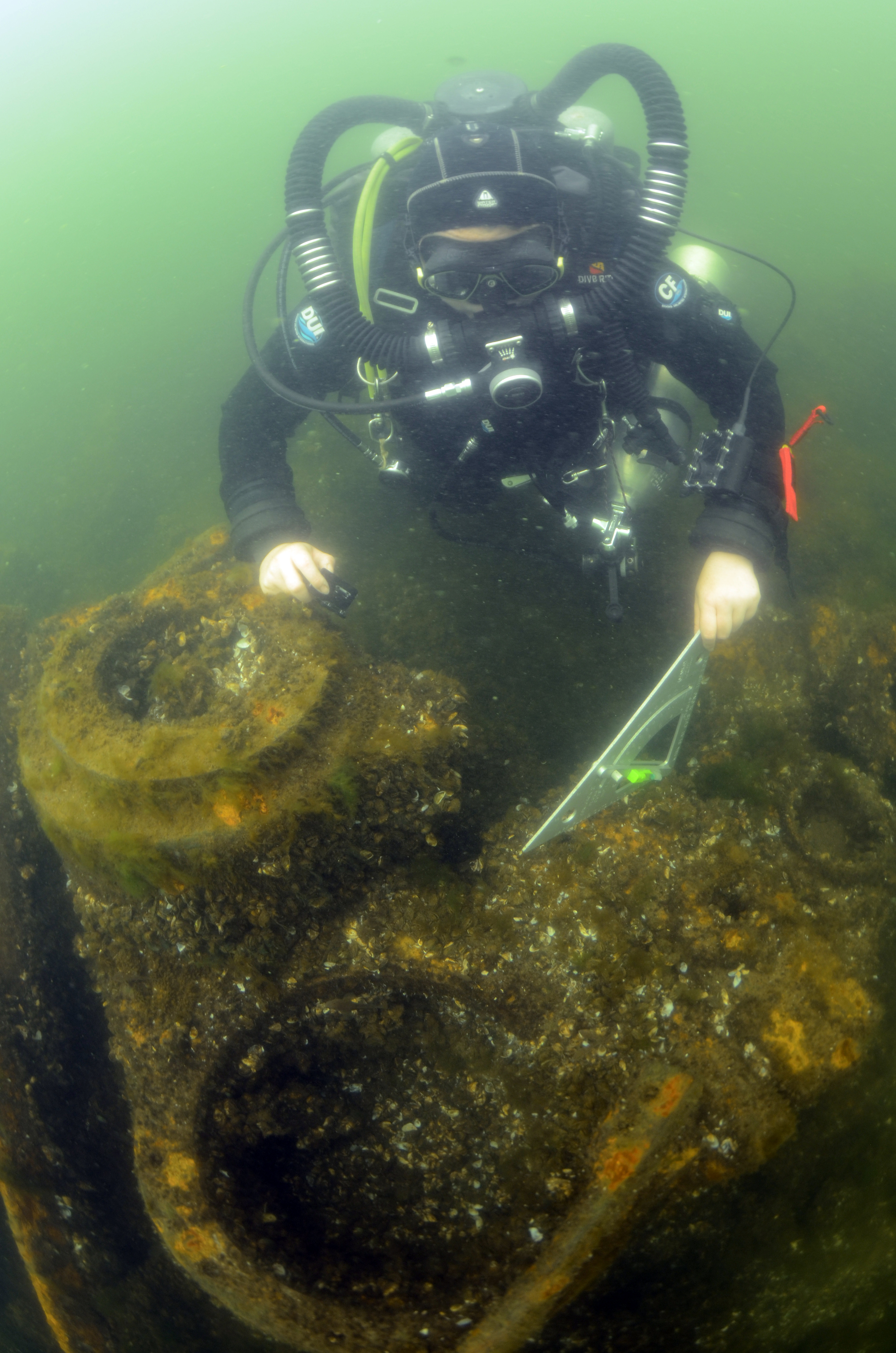
An archaeologist documents the remains of Sidney O. Neff’s engine surface condense
img
Flywheel from Sidney O. Neff’s compound engine, looking forward
img
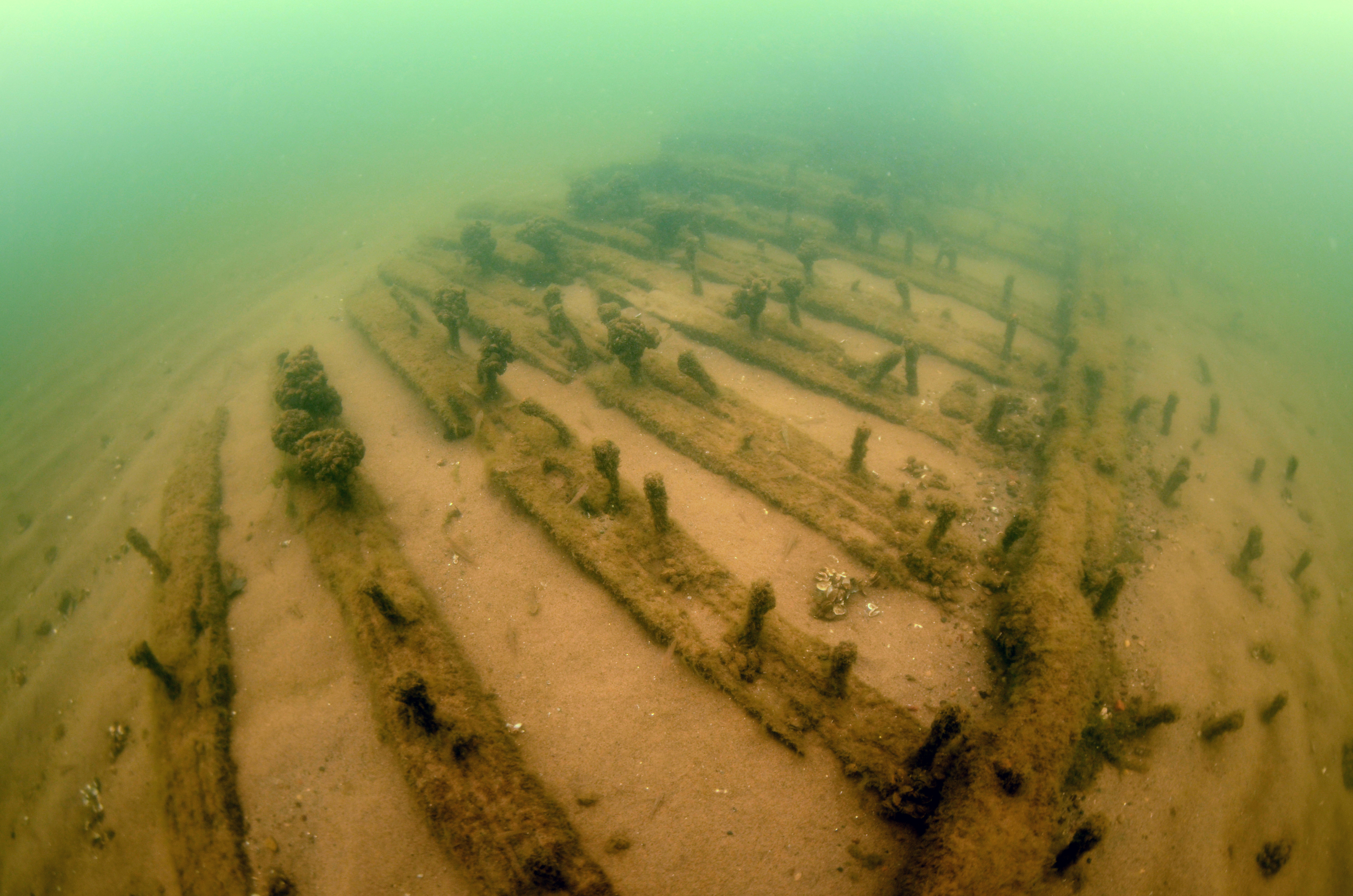
A section of Sidney O. Neff’s upper hull structure, located in the debris field off the starboard side
img
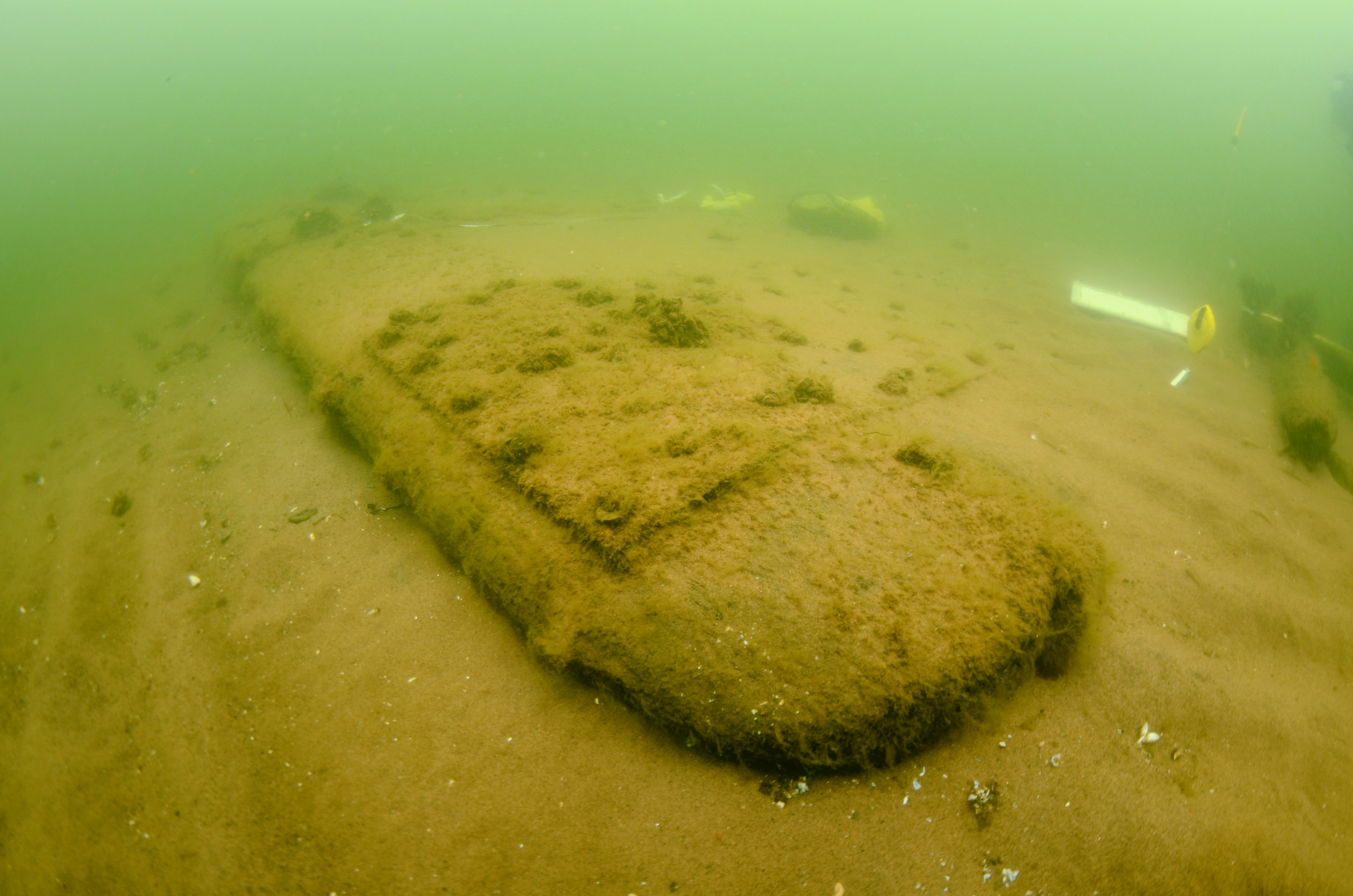
Sidney O. Neff’s disarticulated rudder, located in the debris field off the starboard side
img
Sidney O. Neff, as a schooner-barge, being towed into the port of Manistee, MI
img
Sidney O. Neff as the M.C. & M.C. No. 2 stuck in ice
img
Sidney O. Neff as a steambarge, carrying a cargo of lumber
img
A colorized postcard of Sidney O. Neff traveling under the Jack Knife Bridge in Chicago
img
Plan view schematic of Sidney O. Neff, surveyed as part of the Historic American Merchant Marine Survey after its abandonment in 1937
img
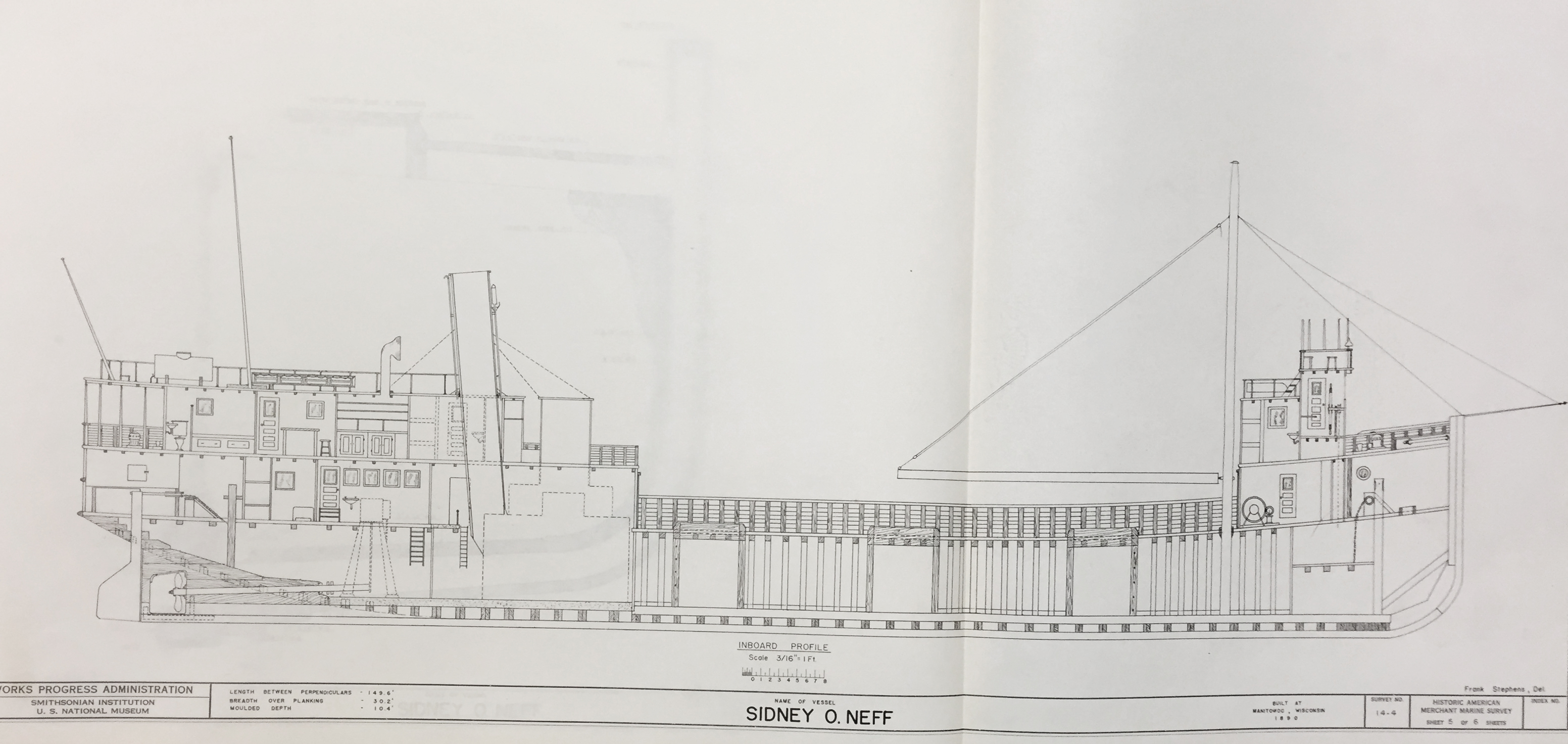
Profile view schematic of Sidney O. Neff, surveyed as part of the Historic American Merchant Marine Survey after its abandonment in 1937
By The Numbers
0
Built
0
Sank
0
Lives Lost
0
Depth (ft)
 
 
Service History

The Sidney O. Neff was built as a two-masted schooner barge at the Burger & Burger shipyard for Captain Samuel Neff of Milwaukee. Although many attribute the name Sidney O. Neff to the captain's son, the ship was actually named for Samuel's uncle Sidney Ellenwood and his father Orrin Neff. Sidney O. Neff was initially used in the lumber trade on Lake Michigan, often operating as a consort to the steamer St. Joseph. In the latter half of the 1890s, the Sidney O. Neff expanded to a more varied cargoes: iron products, salt, and construction materials. On November 6, 1896, the steambarge Edwin S. Tice departed with the Sidney O. Neff and scow A.R. Kellogg in tow. About fifteen miles out into the lake, a sudden storm from the northeast made conditions dangerous, forcing the Edwin S. Tice to drop its line to the Sidney O. Neff so that it could tow the scow back to harbor. Setting canvas, the Sidney O. Neff attempted to stay afloat in the heavy waves, but had to jettison five hundred barrels of salt and sail back to Milwaukee on its own. With its sale to Antony Greilick in 1898, Sidney O. Neff was converted into a single screw steambarge; the newly converted ship returned to shipping lumber cargoes. With its sale in 1908 to the Nessen Transit Company the ship was used to transport ice, but still participated in the lumber trade. The ship renamed the M.C. & M.C. No. 2 and received an overhaul when it was chartered by the Milwaukee, Chicago, and Michigan City Transportation Company for freighting.

On January 19, 1920, the M.C. & M.C. No. 2 was traveling from Milwaukee to Chicago when it became stuck in an ice flow six miles off Chicago. This was the beginning of a nine-day ordeal where crew members walked miles on the ice in order to ask for assistance in freeing the ship which was in danger of being crushed. Without a wireless on the ship, messages were relayed by foot. Seven men, including crewmen of the M.C. & M.C. No. 2 and a photographer, left Chicago to walk over the ice to the boat when the entire ice field was blown into the lake. After hours of searching with planes, the Coast Guard and lighthouse keepers failed to locate the men or the ship. On January 28, the steamer Alabama found the ship and freed it. The seven missing men were aboard the M.C. & M.C. No. 2. The name Sidney O. Neff was returned to the the ship in 1924. Sidney O. Neff entered the pulpwood trade on Lake Superior in 1928, and became the main pulpwood shipper for the Marinette Transit Company in 1933. The ship was seized by U.S. Marshals in 1934 and sold in 1935, coming under the ownership of Orrin W. Angwall (who bid on the ship ten years earlier). Plans were announced to fit the vessel with diesel engines and continue its use in the pulpwood trade. These plans never came to fruition, and the boat was beached in the Menominee River. The ship was surveyed in 1937 as a part of the Works Progress Administration (HAMMS - a nationwide survey of watercraft in the U.S.). A town meeting in April 1938 discussed purchasing the Sidney O. Neff and using it as a community yacht, this too never came to fruition.
Final Voyage

On the morning of October 31, 1939, the Sidney O. Neff was unceremoniously towed out of the Menominee River by the fishing tug Four Brothers and scuttled in fifteen feet of water.
Today

Today the remains of Sidney O. Neff lie flattened on a bottom in 15 feet of water south of the Menominee North Pier Lighthouse. Large portions of the vessel’s upper deck structure have washed away from wave and ice action. The entire lower hull of the ship, including the partial remains of the vessel’s steam engine and its propeller remain on the site. Additional pieces of deck machinery remain on site as well, including sections of Sidney O. Neff’s unique coal bunker, originally housed on its deck. Two anchors and a windlass, not belonging to Sidney O. Neff, have been added to the site over the years. An archaeological survey of the Sidney O. Neff was conducted in June 2021 by maritime archaeologists and volunteers from the Wisconsin Historical Society. During the survey, a previously unknown debris field was located off the vessel’s portside stern quarter. This debris field includes portions of hull planking, iron strapping, and the vessel’s rudder. The wreck site is often frequented by new divers.
 
Map
Confirmed Location     Unconfirmed location
 
Nearby
© 2026 - Wisconsin Sea Grant, Wisconsin Historical Society