Centerville / Hika
Gallery
img
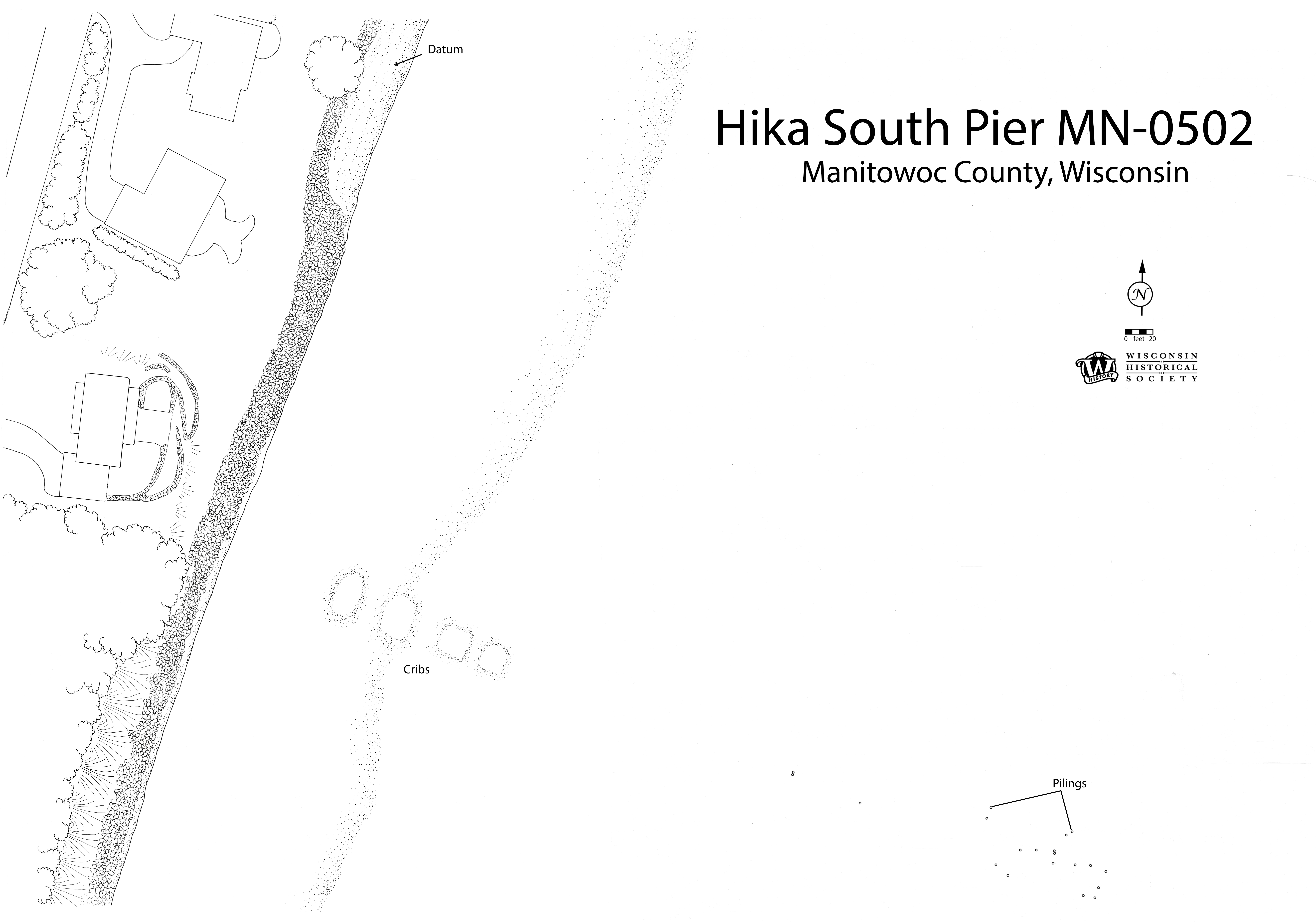
Centerville South Pier Site Plan
img
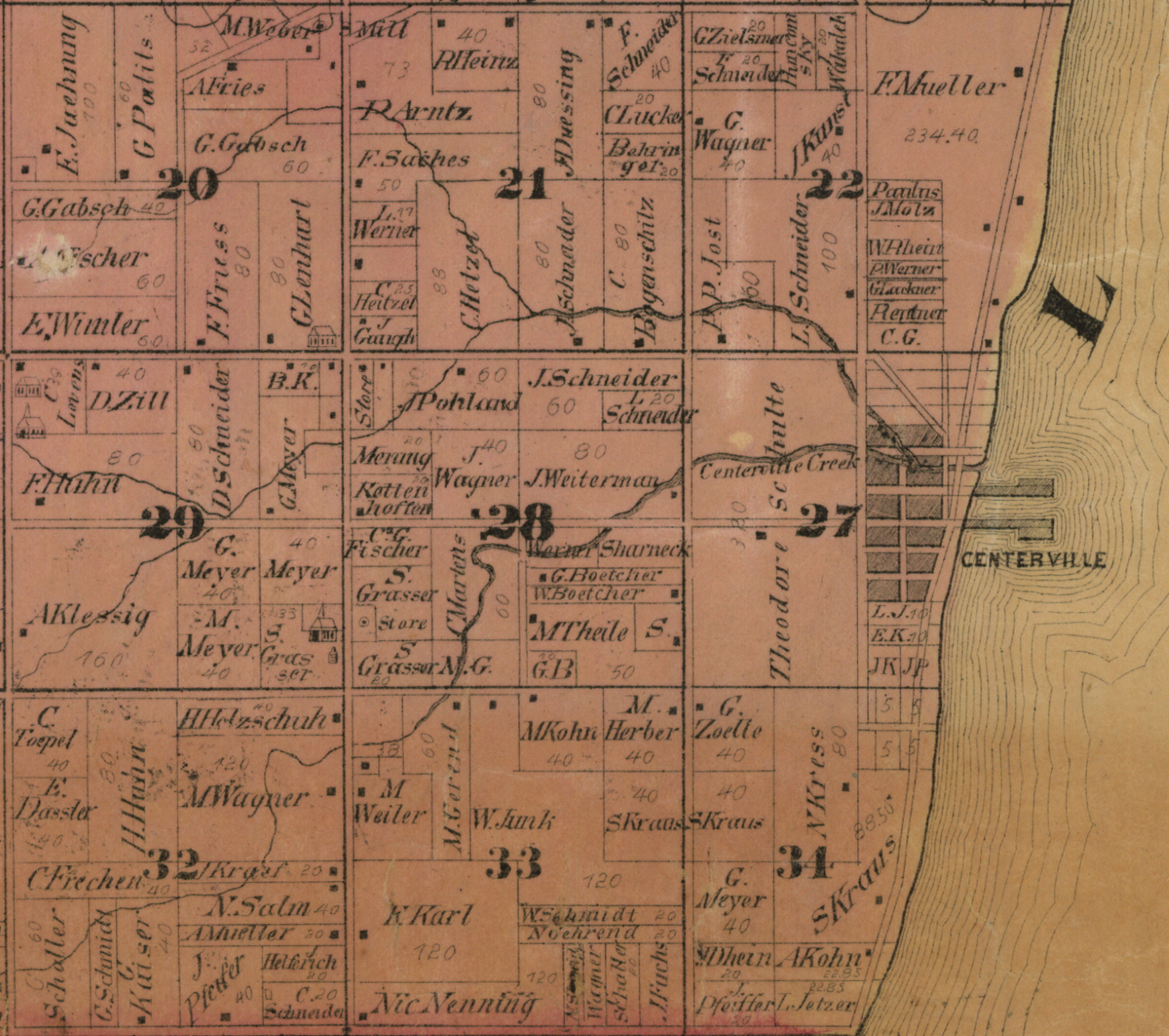
1872 Map of Centerville, Centerville Township, from "Map of Manitowoc County, Wisconsin" by E. M. Harney
img
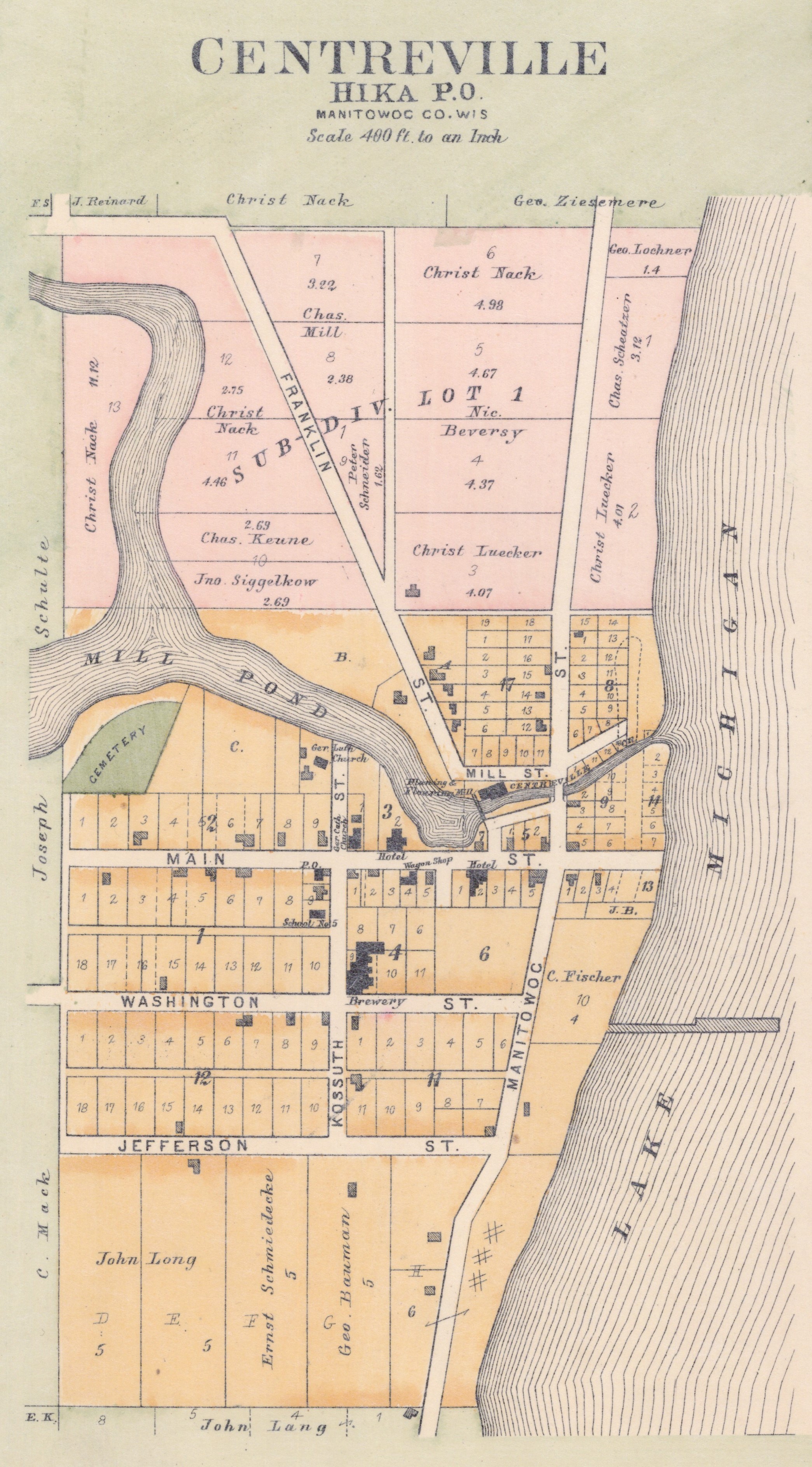
1893 Map of Centerville, Centerville Township, from "Plat book of Manitowoc and Calumet Counties, Wisconsin" by Charles M. Foote
img
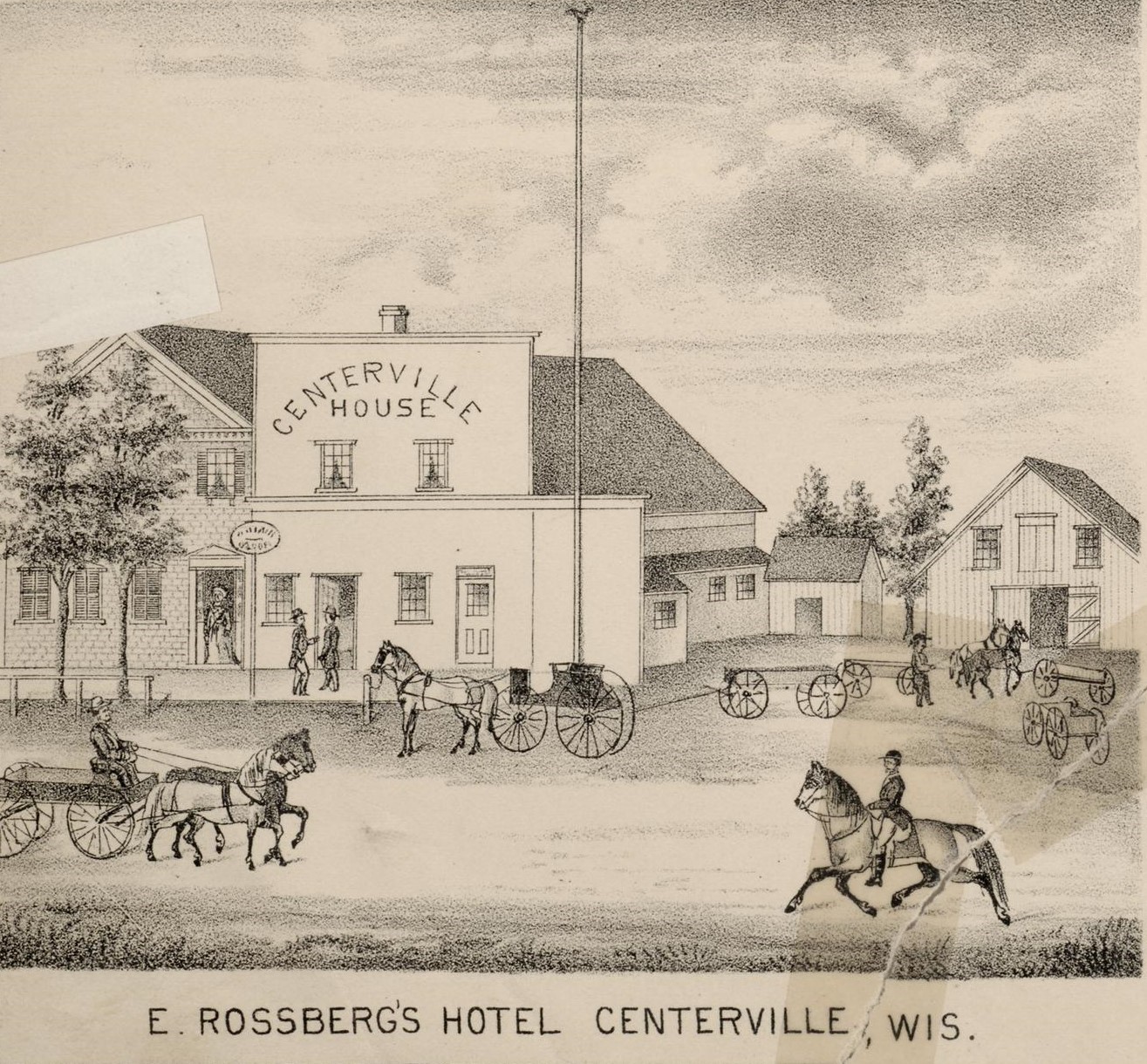
Rossberg’s Centerville House Hotel, 1878, from "An Illustrated Historical Atlas of Manitowoc County, Wisconsin" by G. V. Nash.
img
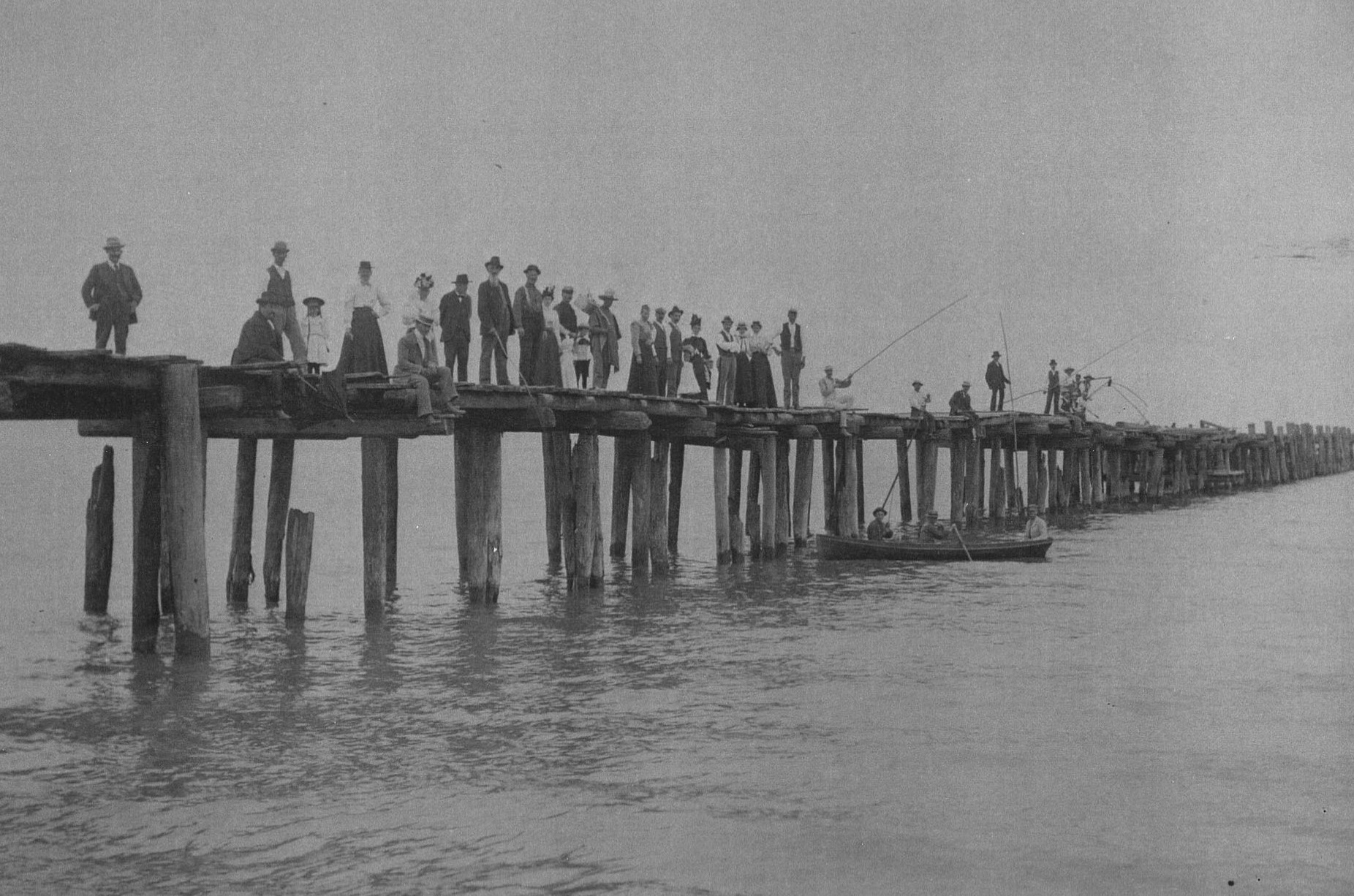
One of Centerville’s piers, about 1900
img
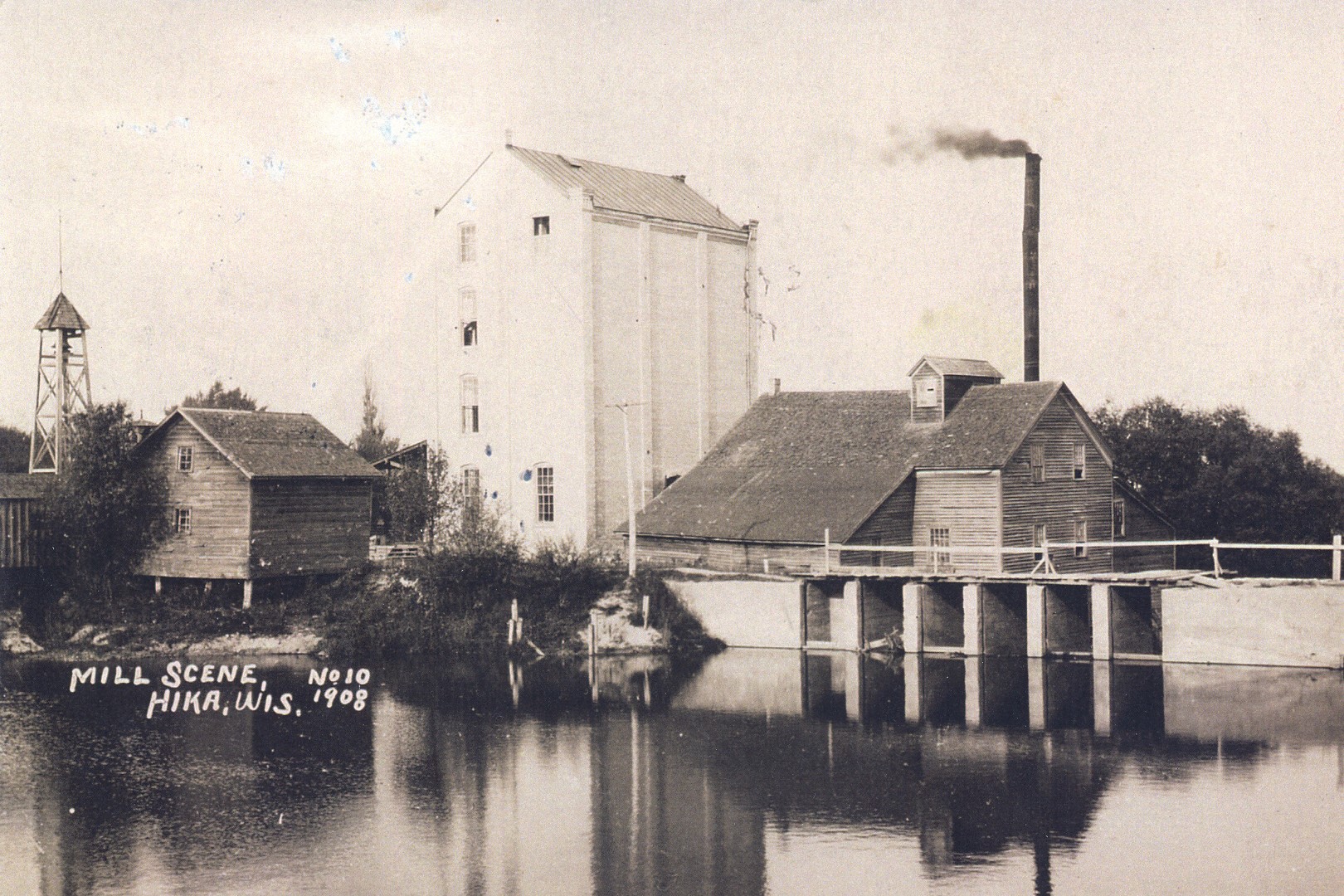
Centerville grist mill, sawmill, dam, and millpond, 1908
img
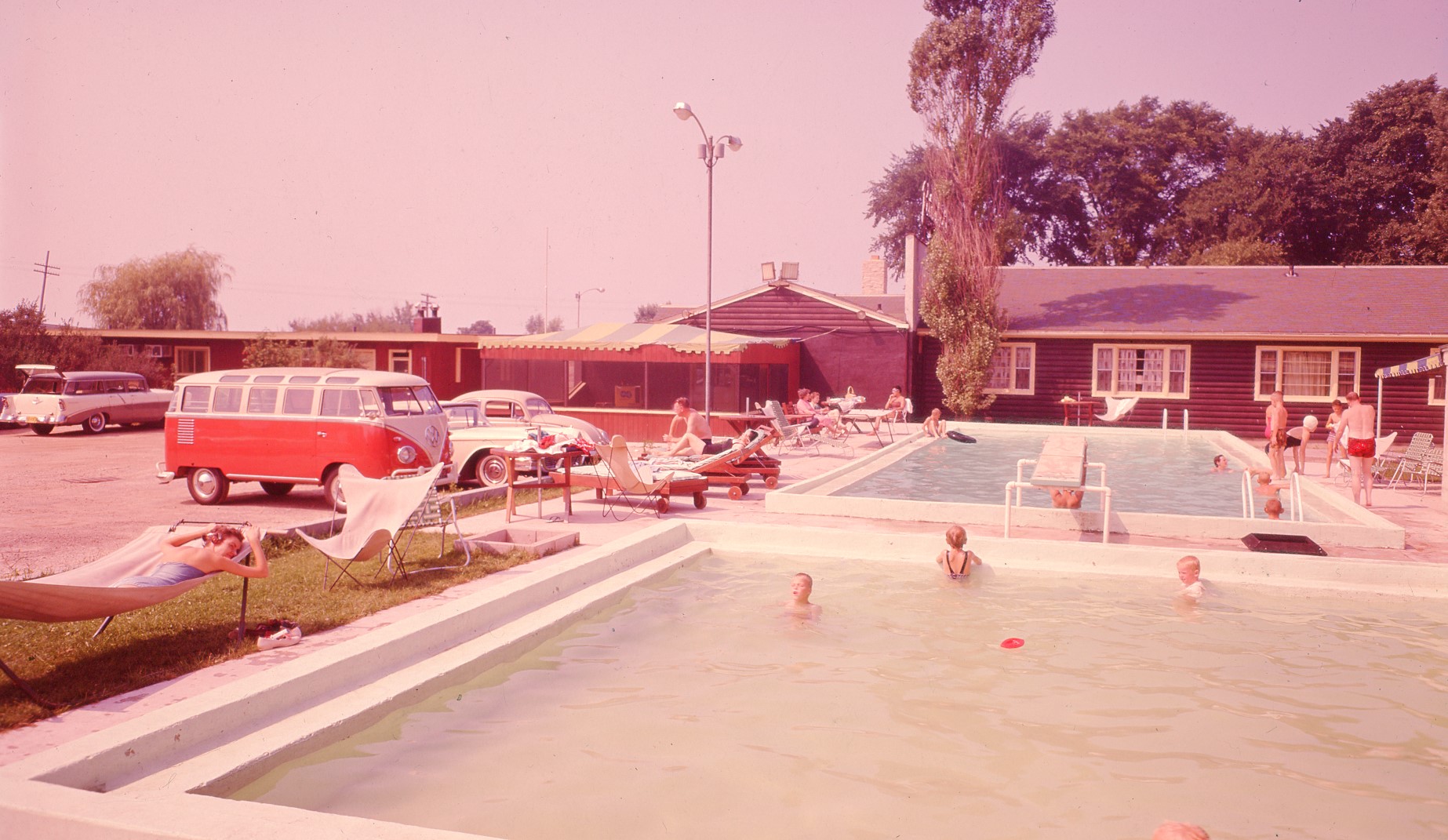
Rutherford’s Surf Motel Pool, 1959 (MCHS # 2015.3.2273)
 
Attraction
Description
Centerville was founded at the mouth of Centerville Creek in southern Manitowoc County about halfway between Sheboygan to the south and Manitowoc to the north. In 1848, Edward Neuhaus immigrated to Centerville from Germany with two friends, a miller and a carpenter. Based on the 1850 census for the area, these individuals may have been miller Charles Kohler and carpenter William Nolleau, both also from Germany. Neuhaus and his friends established a water-powered sawmill at Centerville in part from lumber salvaged from the wreck of the schooner 76, which had stranded five miles south of Centerville. In 1851, Neuhaus moved to the Town of Hermann and eventually played a role in the operation of Lintz’s Pier, another Wisconsin ghost port. That same year, a tavern was built in Centerville a few hundred feet west of the lakeshore trail south of the mill pond near the intersection of Lincoln Avenue and Beech Street. Originally offering nine upstairs bedrooms for boarders and weary travelers, the tavern – variously known as Schurrer’s Tavern, Union House, and Hika Bay Tavern – still stands today. The tavern was the oldest continuously licensed tavern in Wisconsin until a fire damaged the building in early October 2022.

The early construction, character, and names of both piers at Centerville remain elusive. One of the piers may have been built by merchant Peter Werner, who came to Centerville in 1854 with his parents from Germany at the age of 16 or 17. Werner is generally credited with building one of the piers and a nearby general store, but it is unclear whether this is true. The builder of the other pier at Centerville is even less clear. Solomon Mann, who later ran a pier at Northeim, was an early pier operator in Centerville. By 1850, Mann was already living in Centerville with his wife Charlotte, but when he began operating a pier is unknown. Mann had moved to Northeim and begun operating a pier there by 1865 so his pier in Centerville was likely one of the early operations in the village. Interestingly, Mann is listed in the 1850 census directly after Edward Neuhaus, one of the early mill operators in Centerville. Whether Edward Neuhaus and his neighbor Solomon Mann operated the earliest pier at Centerville is unknown, but their early residence in Centerville and the fact that both later operated piers elsewhere suggest that they may have gotten their start as pioneer pier operators in Centerville. Werner, Mann, and/or Neuhaus may have constructed a pier with merchant Jacob Leisen, who formed a joint stock company with unspecified others in 1858 to build a pier at Centerville.

Regardless of exactly when, where, or how each pier was built, the presence of at least one pier in Centerville by 1855 resulted in expansive growth over the next few years. Simon Kraus built a brewery in Centerville by 1857 and began brewing the township’s first beer. Kraus soon sold out to Christian Scheibe, who continued operations. The brewery was highly successful, but a massive fire torched the original building in November 1888. Undeterred, Simon Kraus’s son, Alois Kraus; Christian Scheibe’s youngest son, Gustave; and Henry Gutsch rebuilt the brewery in 1889. Emil and Otto Gartzke joined the effort sometime in the next decade and then took over in 1899. During the later years of its operation, the Centerville brewery made Hika’s Pride Beer, Weno Beer, and Noch Eins Beer (i.e., “One More”). The brewery operated until sometime between 1914 and 1917. After it closed, the brewery was dismantled and the bricks may have been used to build the Mikadow Theater in Manitowoc.

Frank Strattman had operated a general store at the corner of Lincoln Avenue and Lakeshore Drive in Centerville since 1897. In 1919, his sons Louis and Frank Strattman took over the business. They added a dance hall and transformed their property into a local, seasonal resort named Strattman’s Winter Garden, which hosted weddings, anniversaries, dances, and picnics for over 25 years. In 1941, the Strattman brothers sold their resort to Bill and Jessie Rutherford of Manitowoc. The Rutherford’s remodeled and reopened in April 1942 as Rutherford’s Modern Tap Room and Dance Hall. In May 1948, Rutherford’s resort was expanded and renamed Rutherford’s Surf Motel and Dinner Club. Rutherford’s was well known in the region and continued to serve as a popular venue for events until a fire devastated the establishment in late December 1963. The fire, whose origins were never determined, caused $300,000 worth of damage and the resort never reopened.

While Rutherford’s Surf Motel and Dinner Club succumbed to its 1963 fire, Hika Bay Tavern did not suffer the same fate after its 2022 fire. Following the blaze, Hika Bay Tavern was purchased by new owners and completely remodeled, reopening for business in March 2025. Today, visitors can still enjoy a refreshing beverage at the tavern and amble along Lincoln Avenue south of Centerville Creek to Hika Park along the lake. Gazing out at Lake Michigan, no visible evidence of Centerville’s piers remains above the surface, but the history of the area still runs deep.
 
Map
 
Nearby
© 2026 - Wisconsin Sea Grant, Wisconsin Historical Society