Two Creeks / Pfister & Vogel Pier
Gallery
img
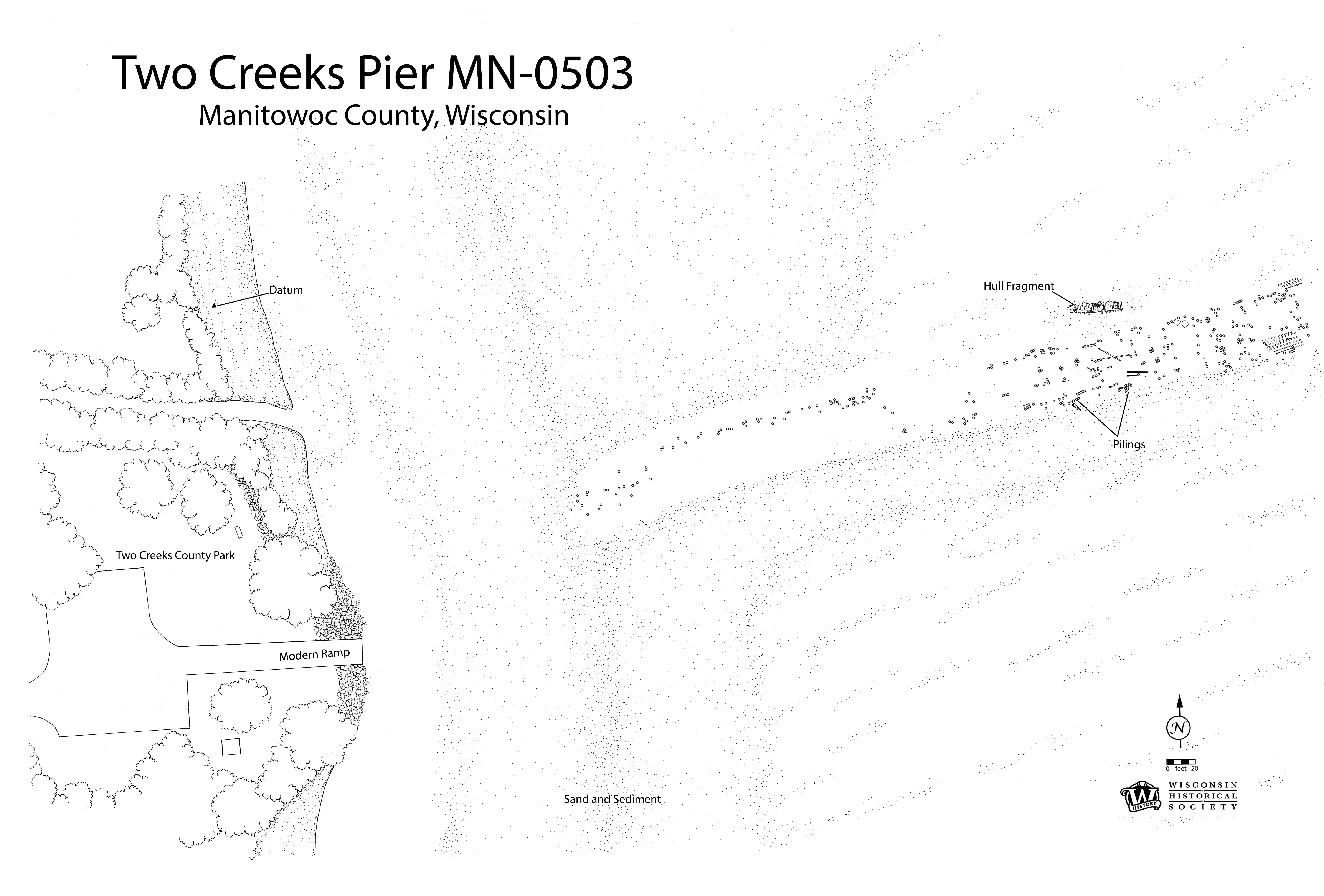
Two Creeks Pier Site Plan
img
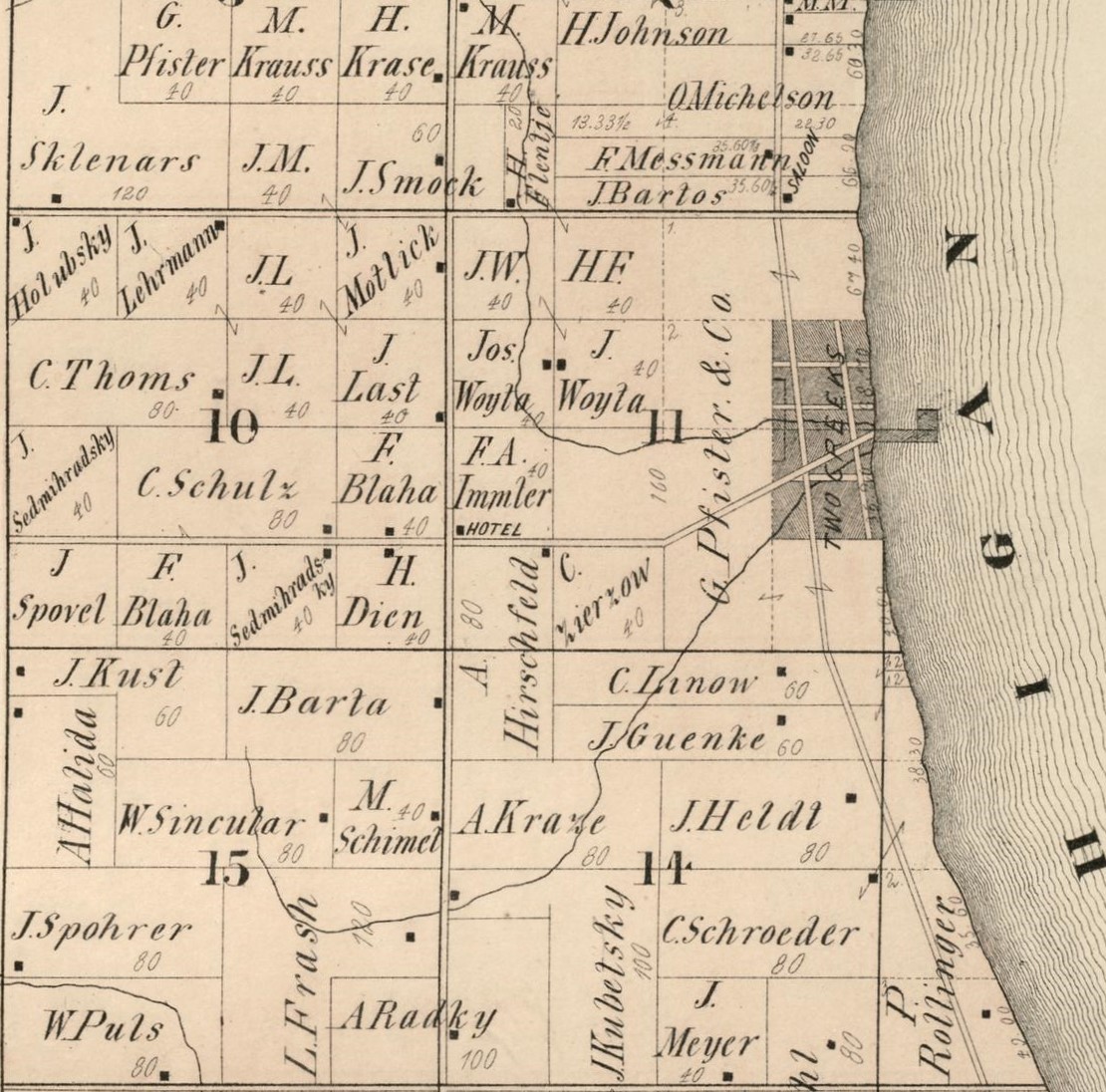
1878 Map of Two Creeks, Two Creeks Township, from "An Illustrated Historical Atlas of Manitowoc County, Wisconsin" by G. V. Nash.
img
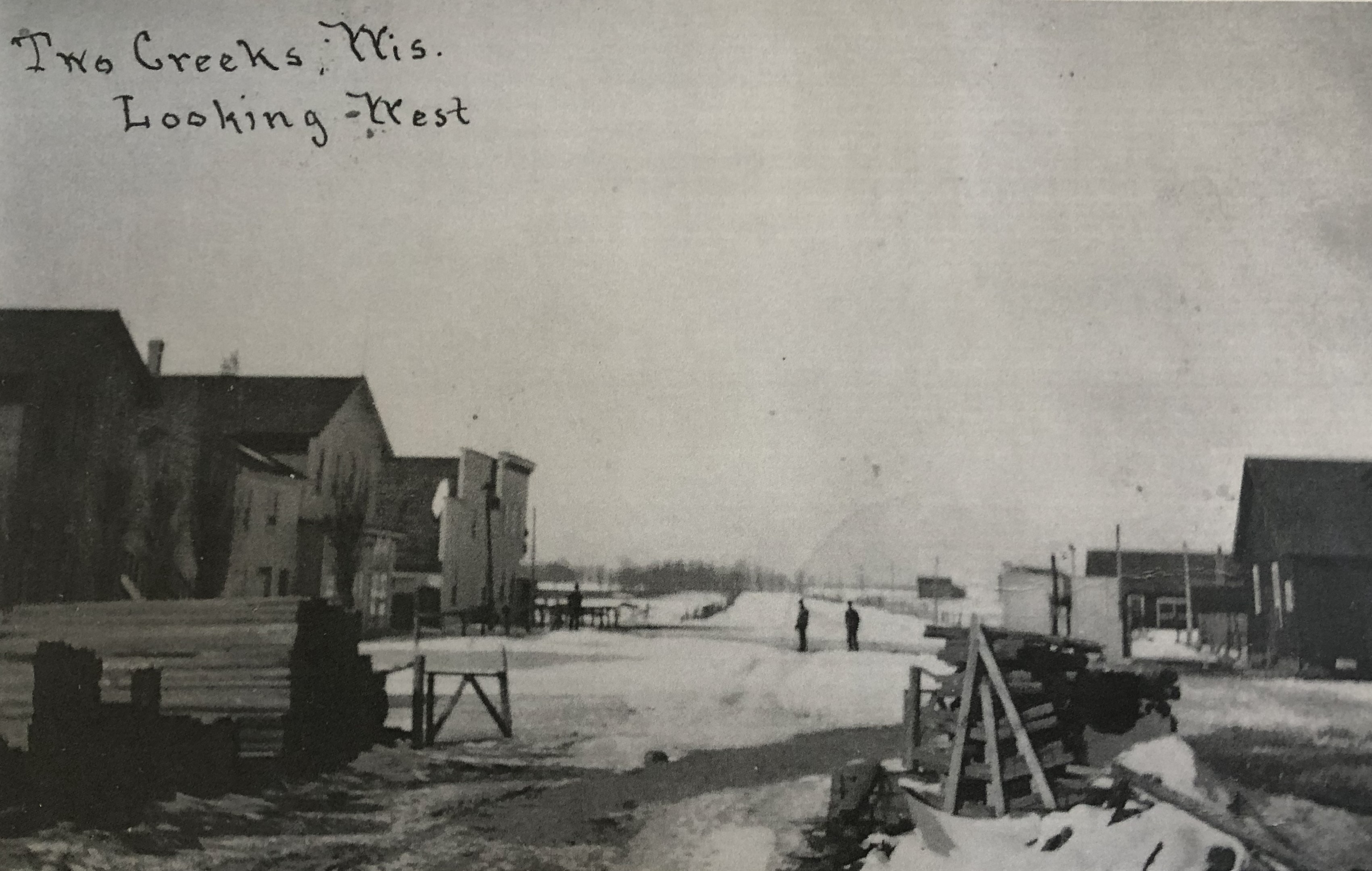
Looking west from Two Creeks Pier, 1880s (MCHS # 2012.30.181)
img
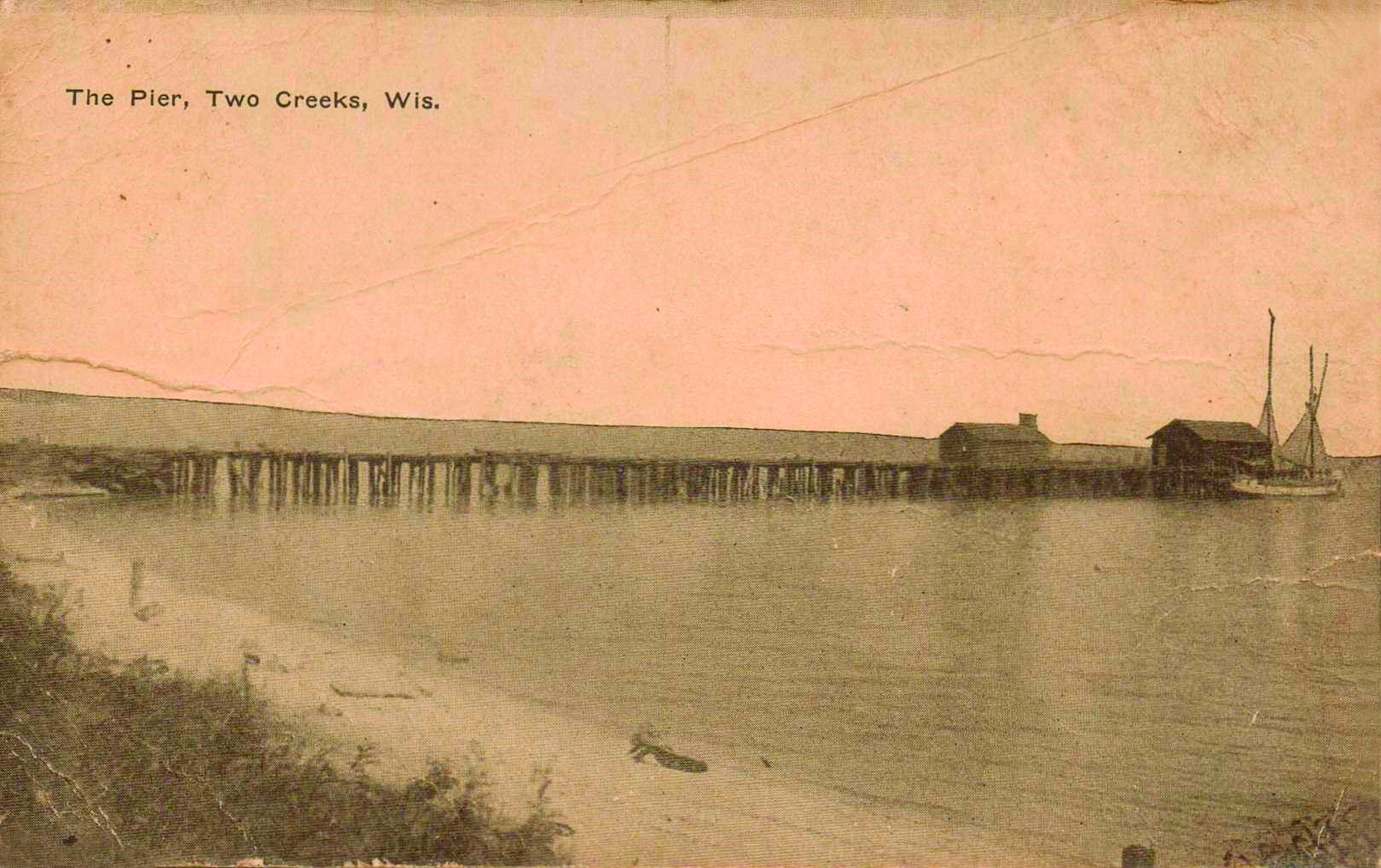
Two Creeks Pier with sailboats and warehouses, about 1890 (MCHS # 2011.58.39)
img
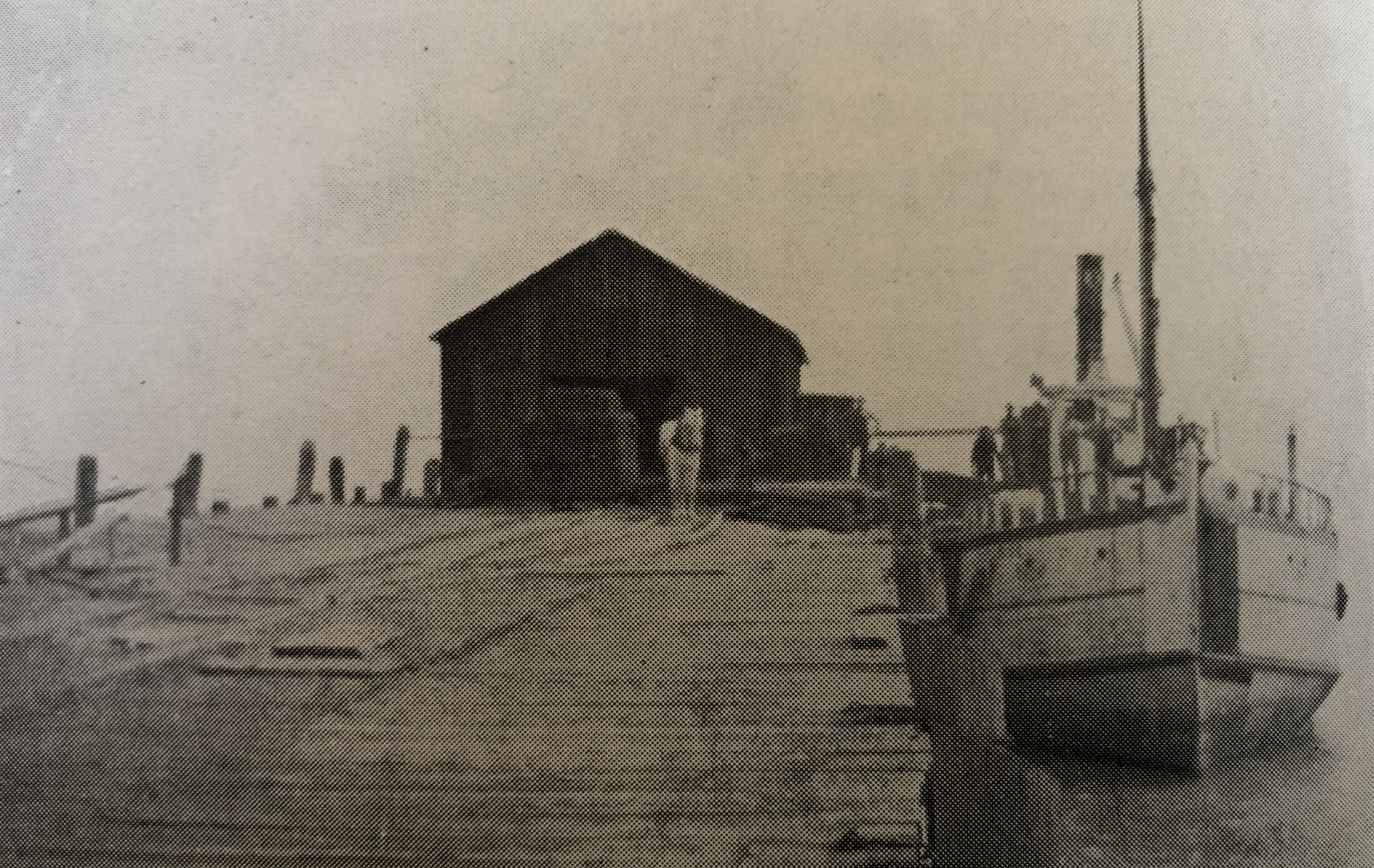
Steamer loading bailed hay or grain at Two Creeks, about 1900, from "A History of the Town of Two Creeks, Manitowoc County, Wisconsin" by Frank Wojta.
img
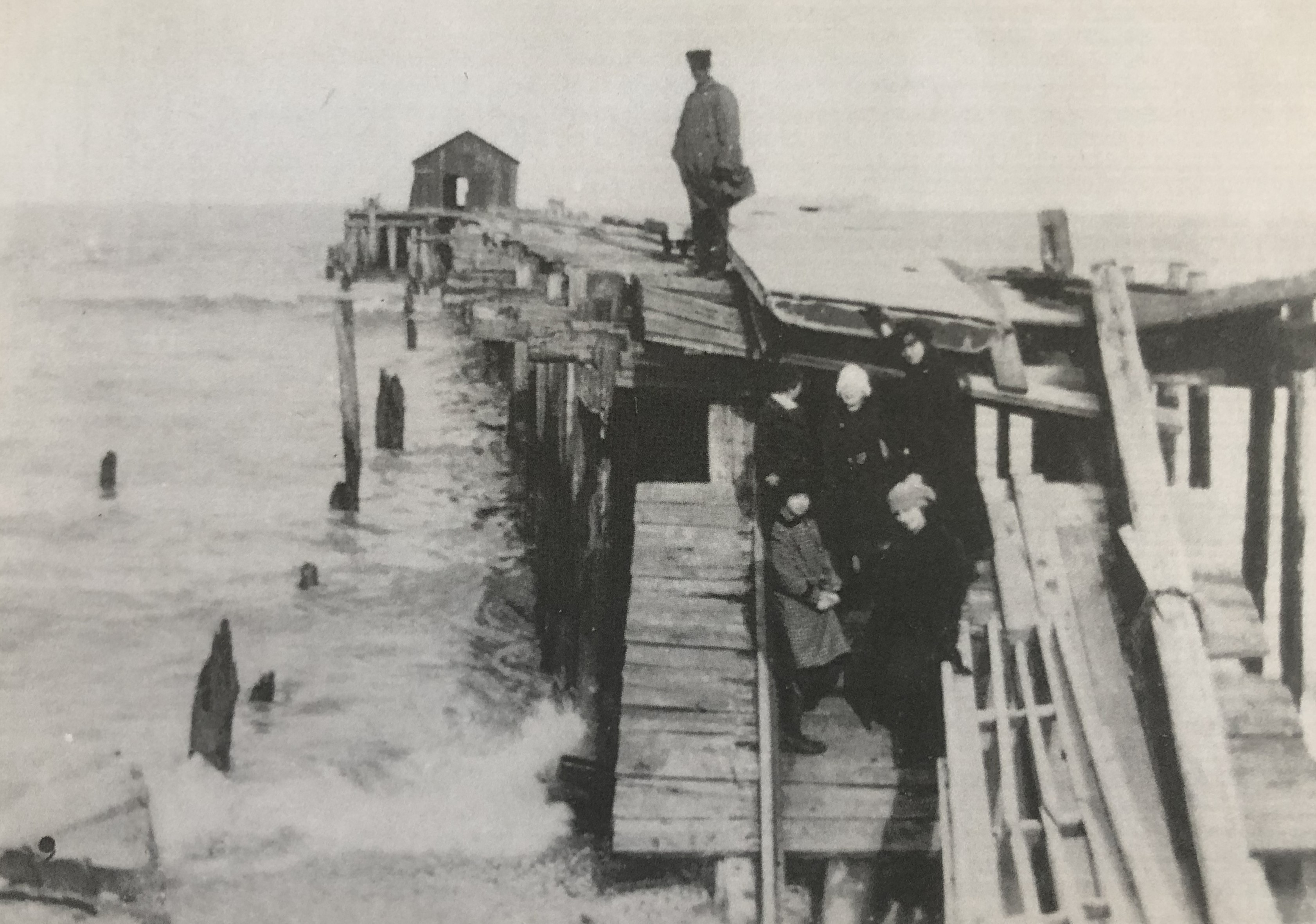
Broken pier at Two Creeks, about 1916 (MCHS # 2012.30.181). First row: Alice and Clara Wojta; Second row: Mayme Wojta, Lester Trossen, and Annie Wojta; On pier: Anton Wojta.

img
Underwater pilings at Two Creeks, July 2024
img
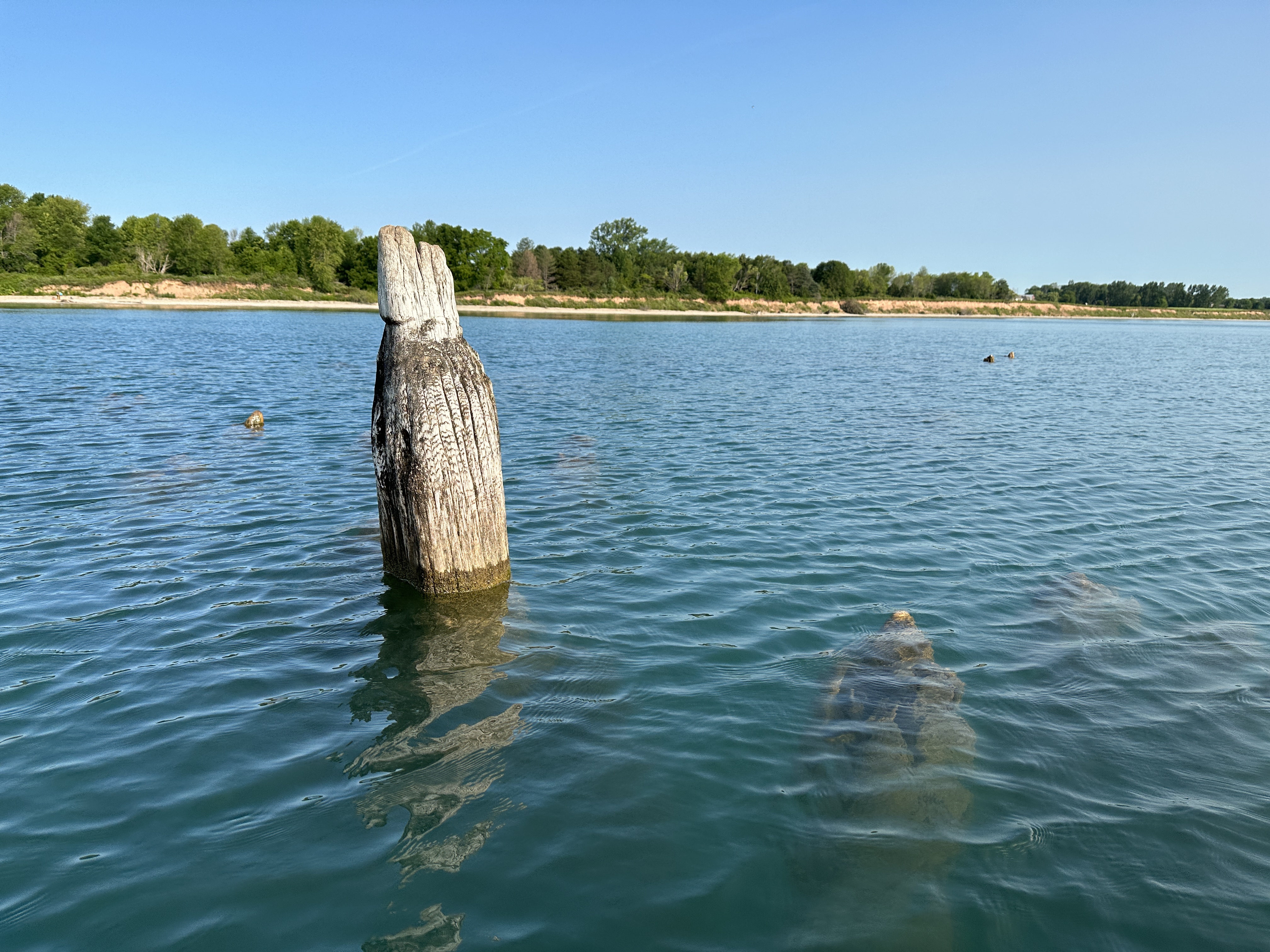
Exposed pilings at Two Creeks, July 2024
 
Attraction
Description
The historic village of Two Creeks was located in Manitowoc County, about 12 miles north of Two Rivers and two miles south of the Kewaunee County line. Today, a quaint county park exists where once stood a bustling tannery village. Milwaukee firm G. Pfister & Company (later known as the Pfister Leather Company and then the Pfister & Vogel Leather Company) – founded by Guido P. Pfister and Frederick Vogel, Sr. – bought significant tracts of land around Two Creeks and established a large tannery and a pier into the lake to take advantage of the area’s abundant hemlock tree bark, which provides the tannins needed for the tanning process. G. Pfister & Company also imported trained workers for the tannery, constructed worker housing, and built a sawmill and planing mill.

Exactly when G. Pfister & Company built the pier and other facilities at Two Creeks is uncertain, but research into marine shipping records shows that tanning bark, lumber, and shingles were being exported from Two Creeks to Milwaukee as early as 1856. General merchandise, including flour, was being imported to Two Creeks that same year. By 1857, Two Creeks had a steam sawmill, pier, and interior railroad, which terminated two miles west of Mishicot. This railroad was likely the gravity- and oxen-driven rail line mentioned in later sources, which stretched three to five miles from the Two Creeks pier into the forested interior. The Two Creeks tannery may have been in operation as early as 1862.

Vessels arrived at Two Creeks daily. Two- and three-masted schooners, scows, and steamers routinely called at the pier, bringing goods for residents and accepting cargoes for Milwaukee and other ports. Goods shipped from the pier included forestry products such as hemlock bark, railroad ties, fence posts, shingles, cordwood, and lumber along with furs, hides, bales of hay, dried peas, barley, wheat, and other grains. By 1866, Two Creeks had a population of around 200 people and facilities that included the tannery, pier, sawmill, and planing mill as well as the company general store, school, boarding house, tavern, blacksmith shop, shingle maker, wagon maker, tailor, shoemaker, telegraph office, meat market, post office, and dance hall. Thirty to forty tanners worked full-time at the tannery, producing about 22,000 sides of sole leather in a year. By 1867, the Two Creeks tannery employed 60 people and had 290 tanning vats that produced 30,000 to 40,000 sides of leather a season.

In October 1871, devastating fires ripped through northern Wisconsin and other parts of the upper Midwest. Although the best known of these fires is the Peshtigo Fire of Marinette County, itself overshadowed by the Great Chicago Fire, Manitowoc County suffered as well. Large stands of hemlock burned and entire stores of cordwood, bark, rail ties, and fence posts – which farmers had cut to sell at Two Creeks and other ports – went up in flames. Houses, farm buildings, stored grains, cut hay, furniture, clothing – anything residents couldn’t bury in rivers, lakes, or already burned-out fields was consumed by the raging inferno. The pier at Two Creeks survived the flames and then became a beacon of aid as schooners arrived over the next several months with relief supplies for devastated families, including clothing, shoes, quilts, hay, flour, potatoes, and other provisions.

Two Creeks initially rebounded after the fire, but conditions began to change and fortunes waivered in the second half of the 1870s. In July 1875, Pfister and Vogel laid off some of their workforce and curtailed business due to difficult economic conditions. Readily available timber was becoming ever scarcer and the post-fire building boom in Chicago was nearing an end. The Pfister and Vogel Leather Company at Two Creeks had diversified into agricultural products by this time, producing 3,000 bushels of oats, 500 bushels of wheat, 400 bushels of peas, 350 bushels of carrots, 350 bushels of potatoes, and a “considerable quantity of hay.” On 15 January 1881, the tannery burned to the ground, but the farm and some village businesses continued in operation.

On 2 February 1889, Guido Pfister died in Milwaukee at 71 years of age after a two-week bout of typhoid fever. On 23 October 1892, Frederick Vogel followed his business partner in death. Vogel, who had been spending the summer in Europe, died onboard the steamship Lahn while returning to America. Operations at Two Creeks continued despite the death of the company patriarchs. According to local history, from 1890 to 1900, Two Creeks was considered one of the major shipping ports on the western shore of Lake Michigan for farm products like hay, dried peas, and grain. By the early 1900s, local and regional newspapers rarely mentioned Two Creeks. Hay seems to have been the primary export from the village.

In the fall of 1918 during a period of severe heat and drought, fire tore through the community. Sparks or an improperly extinguished fire, possibly originating at the blacksmith shop, started a blaze that consumed the blacksmith shop, general store, tavern, dance hall, and five other buildings. Although residents initially attempted to rebuild, their efforts were unsuccessful. The Two Creeks pier survived the blaze but was probably already unusable from lack of maintenance. Farming continued in the township, and does to this day, but after 60 years of existence, the small company town of Two Creeks passed into obscurity.
 
Map
 
Nearby
© 2026 - Wisconsin Sea Grant, Wisconsin Historical Society