Lintz's Pier / Linzville
Gallery
img
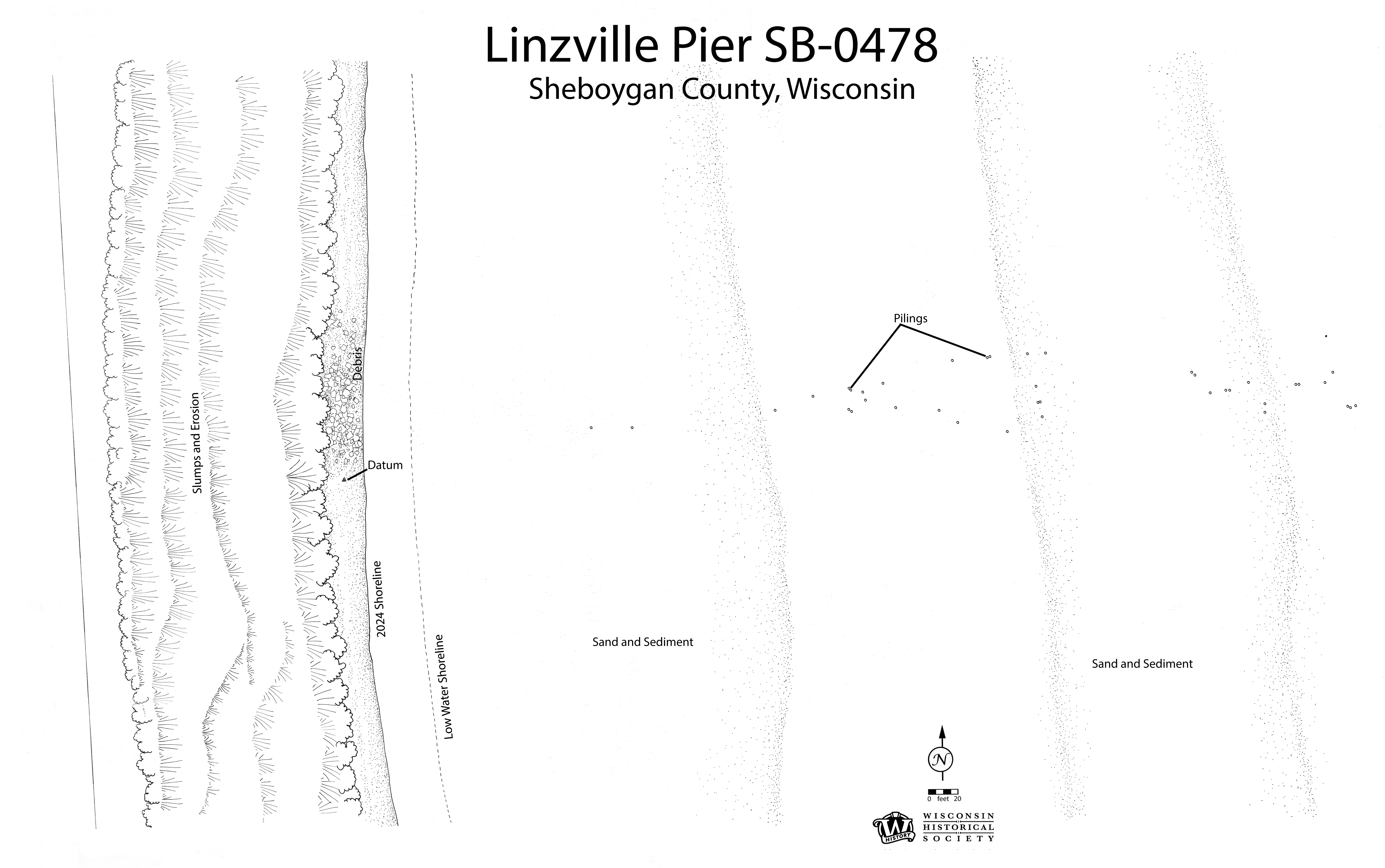
Lintz’s Pier Site Plan
img
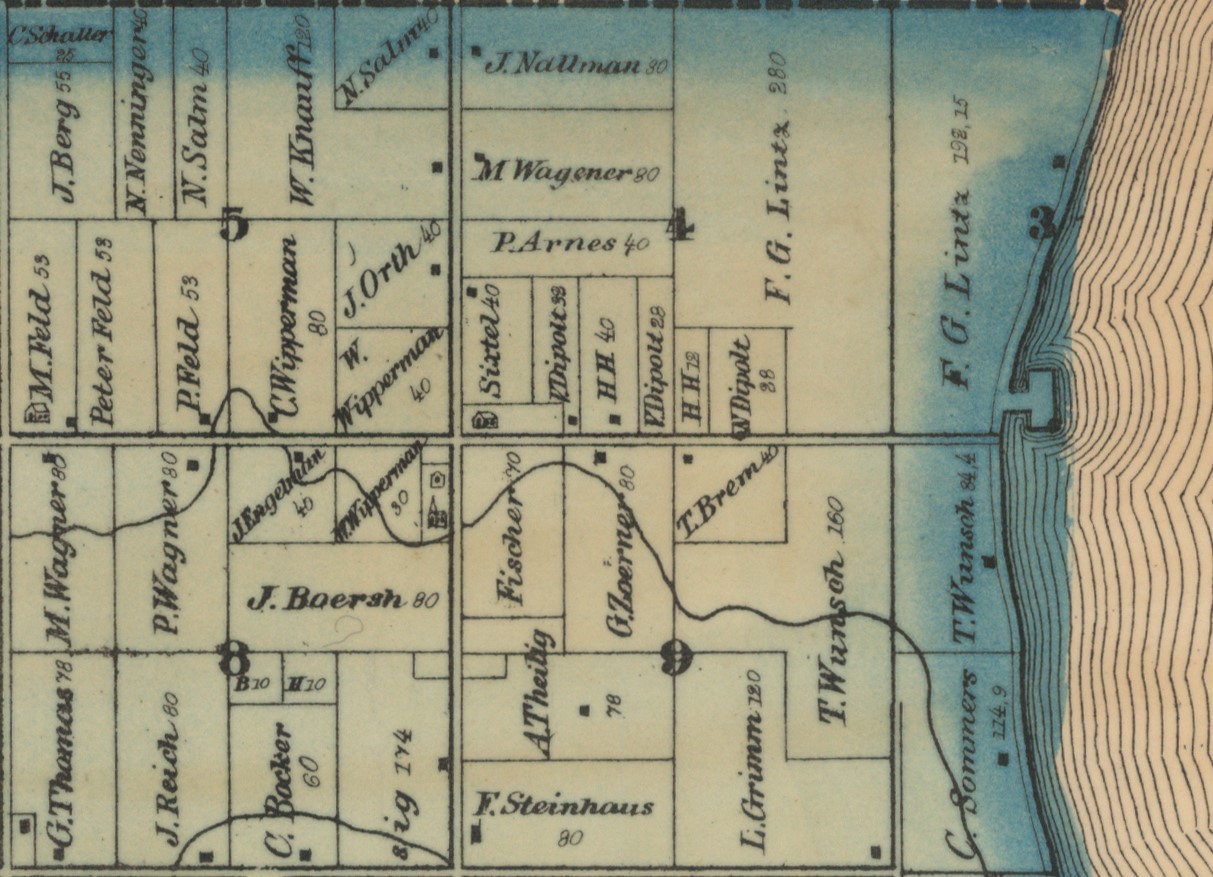
1862 Map of Lintz’s Pier, Mosel Township, from "Map of Sheboygan County, Wisconsin" by C. Palmer and E. M. Harney.
img
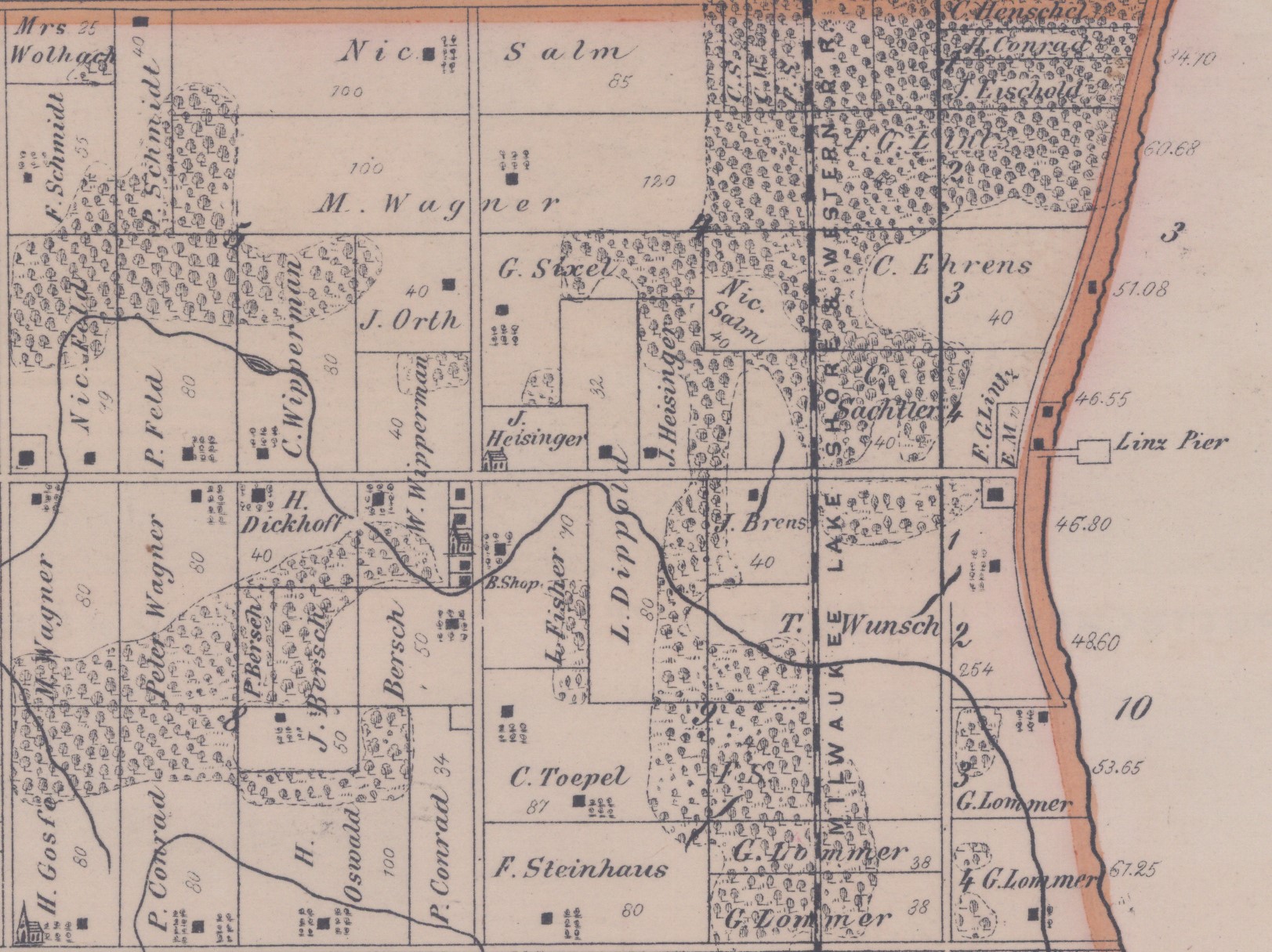
1875 Map of Lintz’s Pier, Mosel Township, from "Illustrated Historical Atlas of Sheboygan County, Wisconsin" by G. A. Randall & Company.
img
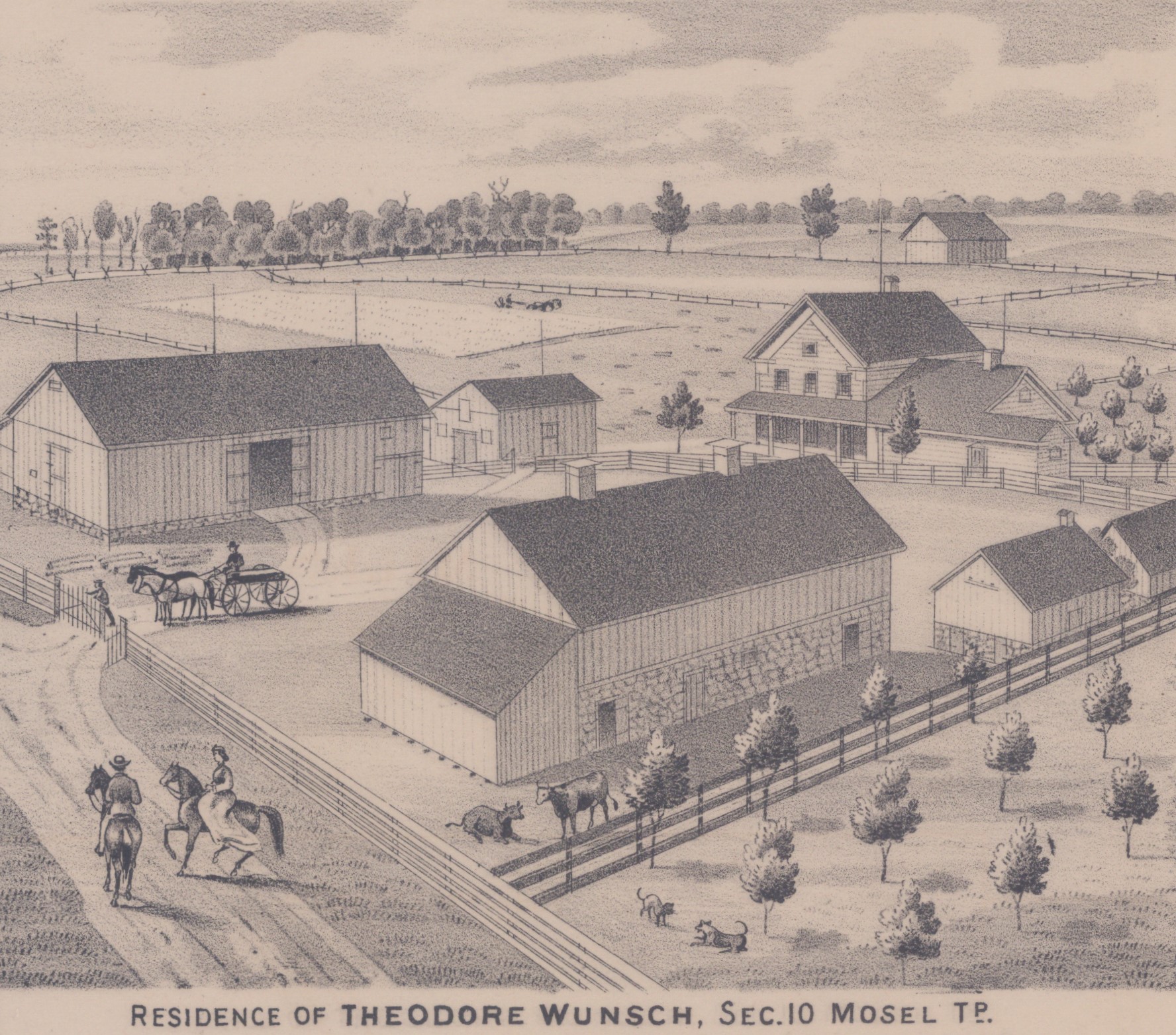
Theodore and Helena Wunsch’s Farm at Lintz’s Pier, 1875, from "Illustrated Historical Atlas of Sheboygan County, Wisconsin" by G. A. Randall & Company.
img
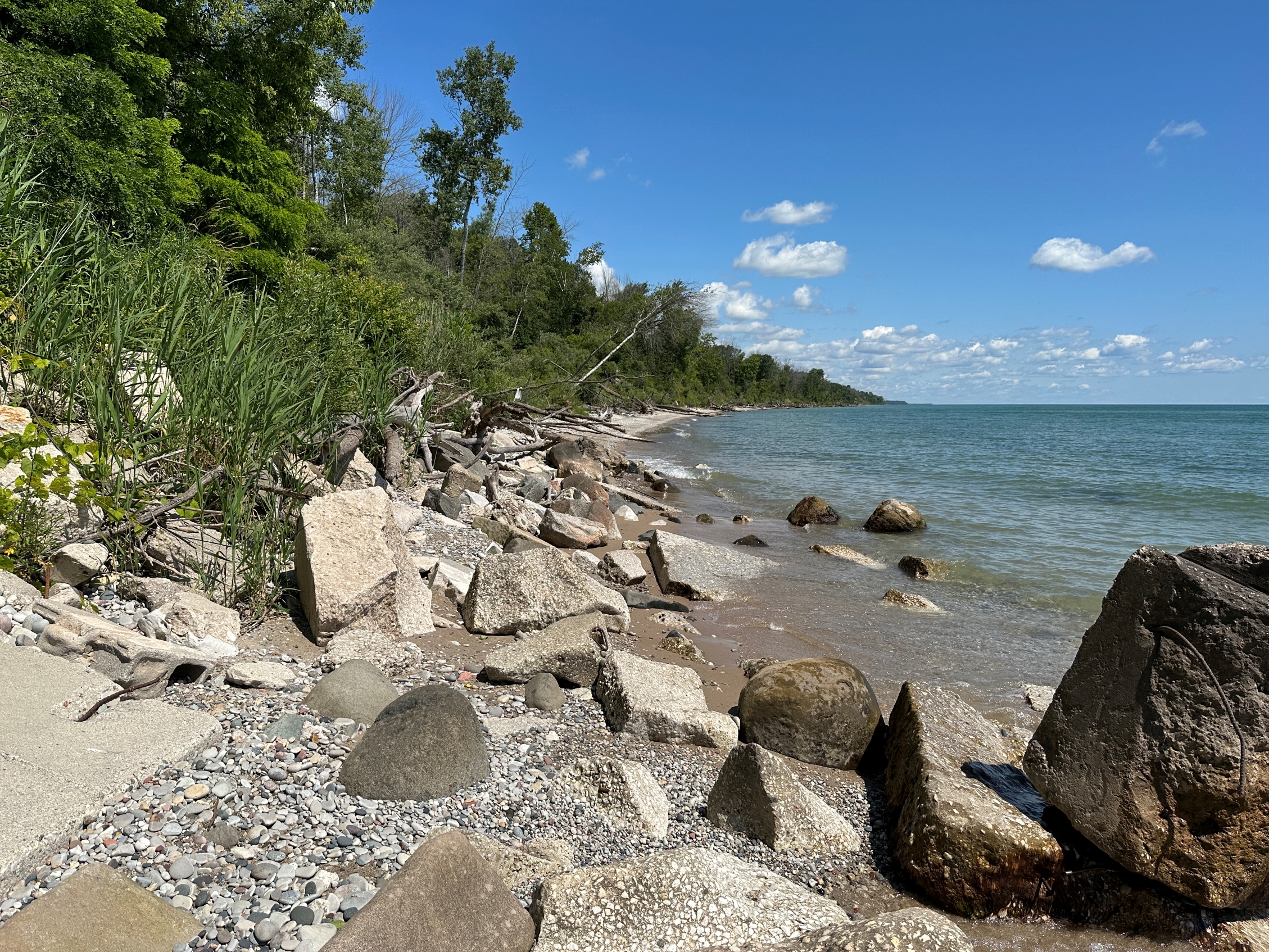
Shoreline at Lintz’s Pier, Looking North, July 2024
img
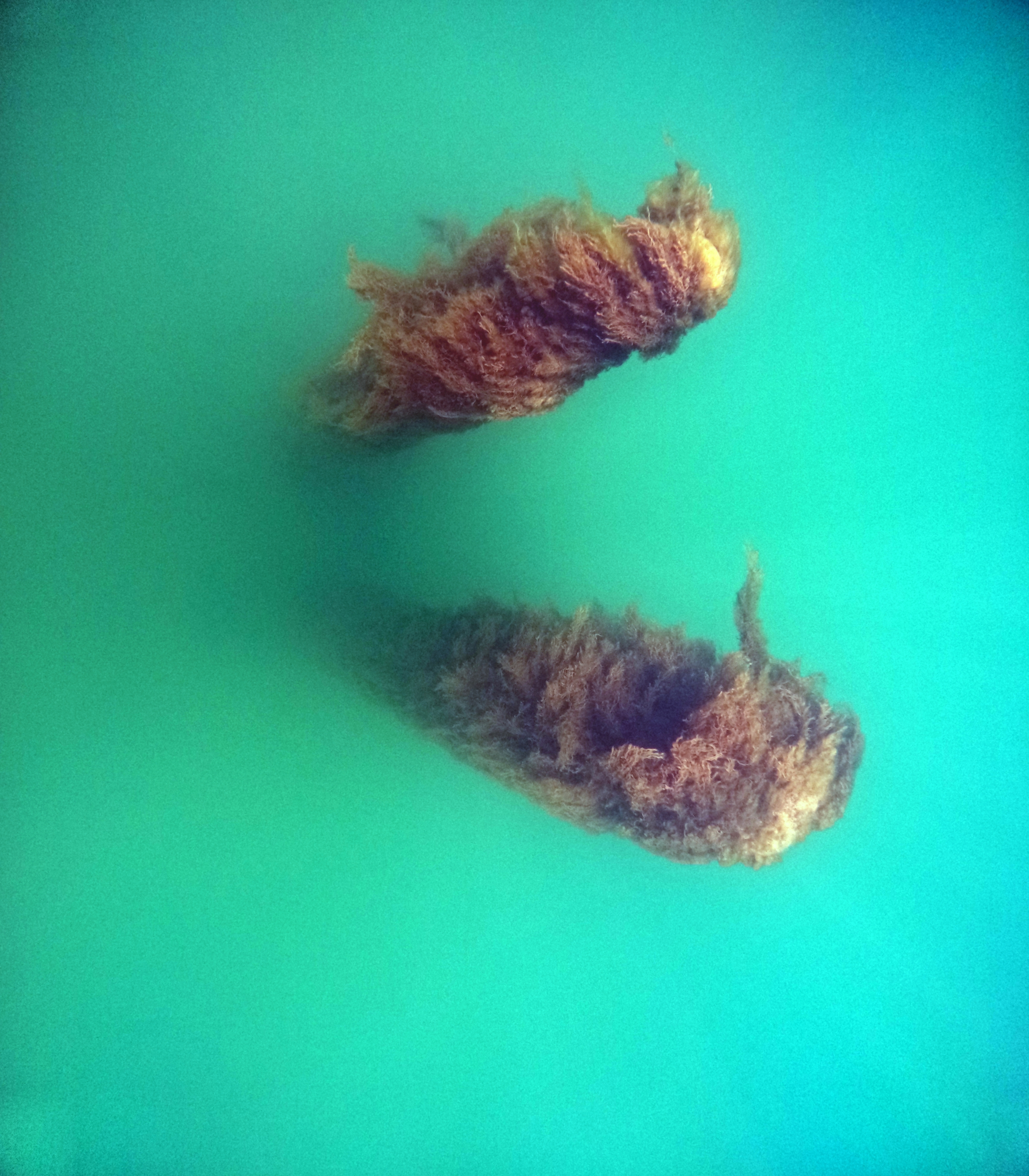
Underwater pilings at Lintz’s Pier, July 2024
 
Attraction
Description
Lintz’s Pier, or Linzville, is located near the modern intersection of Orchard and Lakeshore Roads in Sheboygan County about one mile south of the Manitowoc County line and nine miles north of the city of Sheboygan. The lake bluffs at Lintz’s Pier are steep and high. Between 1848 and 1849, Frederick Gustav Lintz and his wife, Anna Maria Kornreich, built the pier at Linzville. They may have partnered on the pier with fellow German immigrants and local landowners Theodore and Helena (Lena) Wunsch.

The Lintz family arrived in Sheboygan County in 1848 from Germany by way of the Great Lakes. Their first child, Anna, was born on Lake Erie on 21 August 1848, on the steamer Queen City while the family was traveling to Wisconsin. In addition to the pier, the Lintz family also established a general store and began accepting loads of forestry products from area farmers for shipment elsewhere, like so many other Wisconsin ghost ports. Although the contributions of women to Wisconsin’s vanished pier communities are seldom mentioned in historical documents, Anna Maria Kornreich Lintz is a rare exception. According to contemporary sources, Frederick Lintz came from a wealthy background and was more interested in travel, writing, and the arts than running a successful business. Anna Lintz was the true entrepreneur behind Lintz’s Pier. She conducted all the buying and selling, managed the operation, and was known as a woman of excellent judgment and business acumen. In 1853, the Lintz family moved to Sheboygan, but appear to have continued to manage the pier.

In 1866, the Lintz family sold the pier and adjacent land to their old neighbor, Theodore Wunsch, and Henry Grimm, who later operated Grimm’s Pier about 5 miles north of Kewaunee in Kewaunee County. The pier was sold again in 1867, this time to German immigrant Alexander Fisher. Fisher and his wife, Louise, operated the pier until 1870 when they sold it to Edward Neuhaus, formerly of Centerville. Neuhaus, who moved to the Town of Herman near Lintz’s Pier in 1851, ran a general store in a small community called Edwards on the Green Bay Road (now State Trunk Highway 42) about four miles north of Howards Grove. He took full advantage of Lintz’s Pier, which was only six miles distant via the Green Bay and pier roads. Neuhaus even owned a vessel that took cargos of forestry products from Lintz’s Pier to Milwaukee and Chicago, though the name of that vessel is unknown. When Fisher decided to sell out and move to Colorado, Neuhaus must have jumped at the chance to own the pier.

In 1873, the Milwaukee, Lake Shore & Western Railway – which Frederic Lintz had helped bring to Sheboygan County – came to the area. A new train station was built just four miles southwest of the pier and lake shipping was likely impacted by this new option. Neuhaus continued to operate his Edwards store through the mid-1890s, when he moved to Milwaukee. When Neuhaus ceased to operate Lintz’s Pier and/or when he sold the property is not known. The pier is not depicted on an 1889 plat map of Sheboygan County and the 10 acres of land adjacent to the pier belonged to Christian Ahrens by that time. Whether Ahrens operated the pier at any point after he purchased the property is unknown. In the end, about forty years after springing up on Wisconsin’s frontier lakeshore, Linzville disappeared, leaving only sandy beaches and lapping waves where a bustling business and pier once stood.
 
Map
 
Nearby
© 2026 - Wisconsin Sea Grant, Wisconsin Historical Society